Class 6: Learning and New Digital Literacy

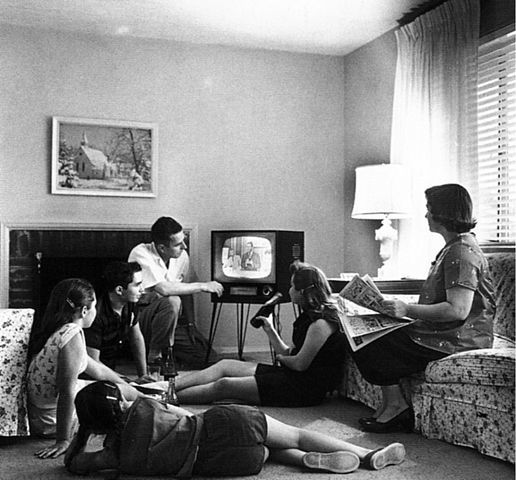
Family_watching_television_1958Class will open with a discussion of Snapshot of a modern learner and it’s implication for the classroom. I will offer a brief lecture detailing aspects of  the “new digital literacy.”

  • Find, decode and critically evaluate information.
  • Curate, store and responsibly share it.
  • Effectively filter information flow and stay focussed.

For more of my thoughts on the impact of digital on teaching and learning, see my post What Happens in Schools When Life Has become an Open-book Test? 

Students will have an opportunity to view GapMinder – a website that exemplifies redefined learning in the digital era. Students will get to use two additional transformative web-based research tools – NGram Viewer and NY Times Chronicle – to develop and test hypotheses. As part of an inclass demo of the power of  word frequency research, students will share their results via a Twitter hashtag: #WordFreq  

Here’s a Storify archive of our research

Books Ngram Viewer and NY Times Chronicle have many interesting applications in the classroom. For example, they can both be used to introduce the research method – form a hypothesis, gather and analyze data, revise hypothesis (as needed), draw conclusions, assess research methods. Working in teams students can easily pose research questions, run the data, revise and assess their research strategy. Students can quickly make and test predictions. They can then present and defend their conclusions to other classroom groups. All skills called for by the new Common Core standards. Ideas for classroom use Books Ngram Viewer and NY Times Chronicle. For more advanced searches using NGram Viewer click here.

Students will be introduced to Evernote a useful tool for curating and storing information and then sharing it with collaborative teams.
Evernote tutorials – Getting started.
How to use Evernote on web. (Use drop down menu to select other operating systems)

Assignment:
Preparations will begin for student design of document-based questions. At this phase students will be introduced to high quality online archives for World History and US  History. Students will create an Evernote Notebook to begin to collect source material for prospective DBQ projects. They will share their notebook with the instructor by eve of Sunday Oct 5. Note: At this point student topics are speculative. Final decisions on topics will not be due until 10/22.


Image Credit: Family watching television. Evert F. Baumgardner, ca. 1958 National Archives and Records Administration

Class 5: Historical Thinking Part II / Twitter #sschat

Across the continentThis class leads off with a live demo of the #sschat on Twitter (Mondays 4-5 PM Pacific). Chats are archived here.

Will use the event to begin a discussion of using Twitter to build a personal learning network (PLN). Students that have not already done so , will be asked to create Twitter accounts. More on Twitter hashtags here.

Next, we will turn our attention back to our exploration of teaching strategies for developing historical thinking skills. We will deconstruct The Battle of the Little Bighorn Lesson Plan from the Stanford History Education Group’s Reading Like A Historian and how it’s designed to teaching skills in Sourcing, Contextualizing and Corroborating. Keeping with our “western theme” we will take some time to develop lesson ideas for using “Across the Continent” an 1868 Currier & Ives print drawn by Frances Flora Palmer. [Above]

Finally we will turn do some peer editing of our shared Google presentation of collecting student-designed mini-lesson based on the Beyond the Bubble assessment model. Assignment | Product

Assignment for Class 6 – Shared Google presentation should be done by bed time 9/24. Blog post due by next class.

  1. Take the peer feedback and do a final version of your mini-lesson.
  2. Write a brief reflection on the process – it could include your take on historic thinking, the specific lesson model borrowed from SHEG, working with a shared Google presentation, peer review process, etc.
  3. Take all the content of your lesson plus the reflection and post it to our blog as your second authored post.

Reading assignment: Snapshot of a modern learner in SmartBlog on Education


Image credit: “Across the Continent” 1868 Currier & Ives print drawn by Frances Flora Palmer  Newberry Library


Class 4: Historical Thinking

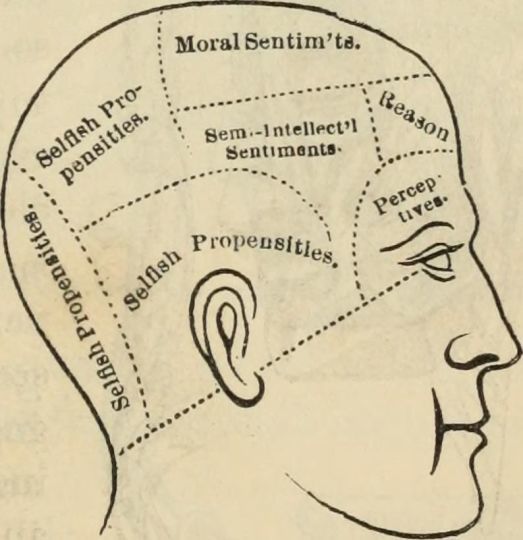
Phrenology-signs of characterOur class begins with a review of the Sam Wineburg reading and TEDEd flipped lesson Who is the historian in your classroom? That will also provide a chance to discuss the efficacy of flipping content. We will also consider the social media case study inspired by this lesson.

Today we begin our study of historical thinking skills based on the work of Sam Wineburg and the Stanford History Education Group (SHEG). We will focus on three key skills – Sourcing, Contextualizing and Corroborating. See historical thinking chart (pdf at SHEG).

You will work with a team to reverse engineer a few of the assessments found in SHEG’s Beyond the Bubble.

  • Spend a few minutes doing a scan of the lessons – and find a few that look interesting to you. (Be sure scan the “Same assessment types” for other ideas)
  • Find 3 questions that focus on any of these skills: Sourcing, Contextualizing and Corroborating
  • With your team diagram how the assessments are designed:
    How many historic sources, what types.
    What additional information are students given?
    How many prompts?
    What are students asked to do?
    How is the assessment designed to support the skills
  • Be prepared to share your finding with the whole class.

We will also look at How to Read Documentary Films  a lesson that I recently developed for the Uprooted Museum Exhibit.

Assignment for Class 5

You will each design a historical thinking mini-lesson based on the Beyond the Bubble assessment model.

We will use this assignment as a chance to create a shared Google presentation. I’ve prepared some brief Google Presentation video tutorials. You can find them at this YouTube playlist / Working with Google Slides.

Note: each of you will be contributing to the same Google Slides presentation. I’ve listed your names in alphabetical order in the presentation. You will turn that name placeholder slide into your mini-lesson title slide. You will insert additional slides in your section of the presentation as needed.

All mini lessons should include

  1. Title slide for your mini-lesson. Make it catchy!
  2. Your name as author of the mini-lesson on your lesson title (your lesson will take multiple slides in the presentation – have your name in small font at bottom of each slide)
  3. Target students – by grade level
  4. Indication of one (or more) of the historic skills to be studied – Sourcing, Contextualization, Corroborating
  5. One or more historic documents. Text, image and videos can be inserted into the slide. Longer documents can be linked to via URL or saved in Google drive with link to it.
  6. Source URLs for all documents used
  7. Guiding questions for students to use with document(s)
  8. Brief description of how the document(s) and question(s) should reinforce the targeted historic skill(s)

My recommended sources for this assignment are the Primary Source Sets found at the US Library of Congress. These sets are organized by theme and include a wide variety of source types. Here’s a few examples of the sets:

Baseball: Across a Divided Society
Song sheets, video clips, images, trading cards, and photographs tell the story of how baseball emerged as the American national pastime. Featured primary source items show Americans from different backgrounds and social experiences embracing the sport.

Maps From The World Digital Library
Explore maps from different cultures and eras to discover diverse perspectives on the world’s geography. All the items in this set are from the World Digital Library, a project that makes available significant primary materials from countries and cultures around the world.

Women’s Suffrage
Sound files, sheet music, photographs, letters and maps help students better understand women’s suffrage

You may also wish to take a look at Teacher’s Guides and Analysis Tool that offer questions for each type of source material.


Image from S. Wells,
New Physiognomy, or Signs of Character…, NY, 1871

Class 3: Peer Review / WordPress Tutorial

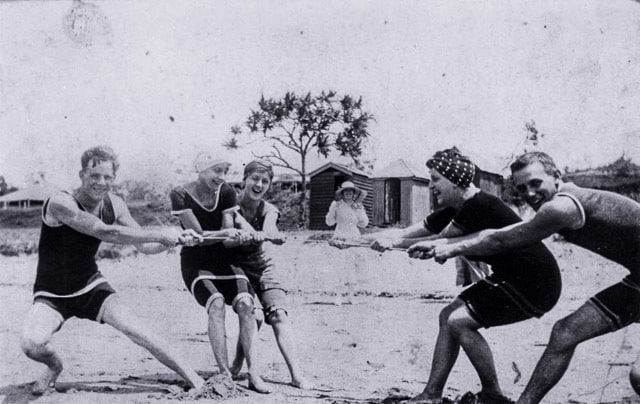
Beach tug of war at Southport, 1917

Peer Review

Last week’s class introduced key elements of lesson design and assigned Lesson Study I.  This week we are going to conduct two peer reviews of each lesson study, before it gets “turned in.” This models the student centered approach – with your peers sharing their higher-ordered review of your work – analyzing and evaluating it’s content. Following their feedback, you get to reflect on your work before turning it in.

We’ll manage the lesson study this way:

  1. You should bring in 3 copies of your 1st draft. (two to share and to one keep their notes on).
  2. You will be randomly put in the first peer review paring
  3. Meet and greet: exchange a quick 1 min intro to your lesson study – grade, subject, scope (one class lesson or a larger unit?)
  4. Exchange written drafts and study for 3 mins. Mark up your copy if you see typos or want to add suggestions. Develop 3 questions  you will ask for clarification.
  5. Student A questions B. Student B responds 3 mins
  6. Discussion / Brainstorming / B takes notes to captures modifications 3 mins
  7. Reverse roles with Student A’s work under review
  8. This should take us about 20 minutes to review each other’s work. You will then be assigned to another student to repeat the peer review process

After everyone has completed two reviews you will then have about 20-30 minutes to make revisions to you lesson study. (A good time to talk to the instructor as well). You should also write a personal reflection on what they learned in developing their first lesson study and participating in the peer review process

Submitting lesson study as blog post: See results here

Students will turn in their revised Lesson Study I assignment as a post on this blog by 10 PM Sept 10th. It should include their lesson study as well as personal reflection. Each post should also have a historic photograph (public domain with citation) that matches the theme or subject of their lesson study.

I’ve prepared some brief WordPress video tutorials. You can find them at this YouTube playlist / WordPress tutorials for using our class blog These tutorials were made with a free Chrome Plug in called SnagIt.

Assignments for class 4 on historical thinking
I’ve used the TEDEd flipped lesson feature to curate a existing YouTube and turn it into a lesson to support next week’s class on historical thinking: Who is the historian in your classroom? Another way to flip a class.

Also do one online reading Thinking Like a Historian By Sam Wineburg


Image source:

Beach tug of war at Southport, 1917
State Library of Queensland link