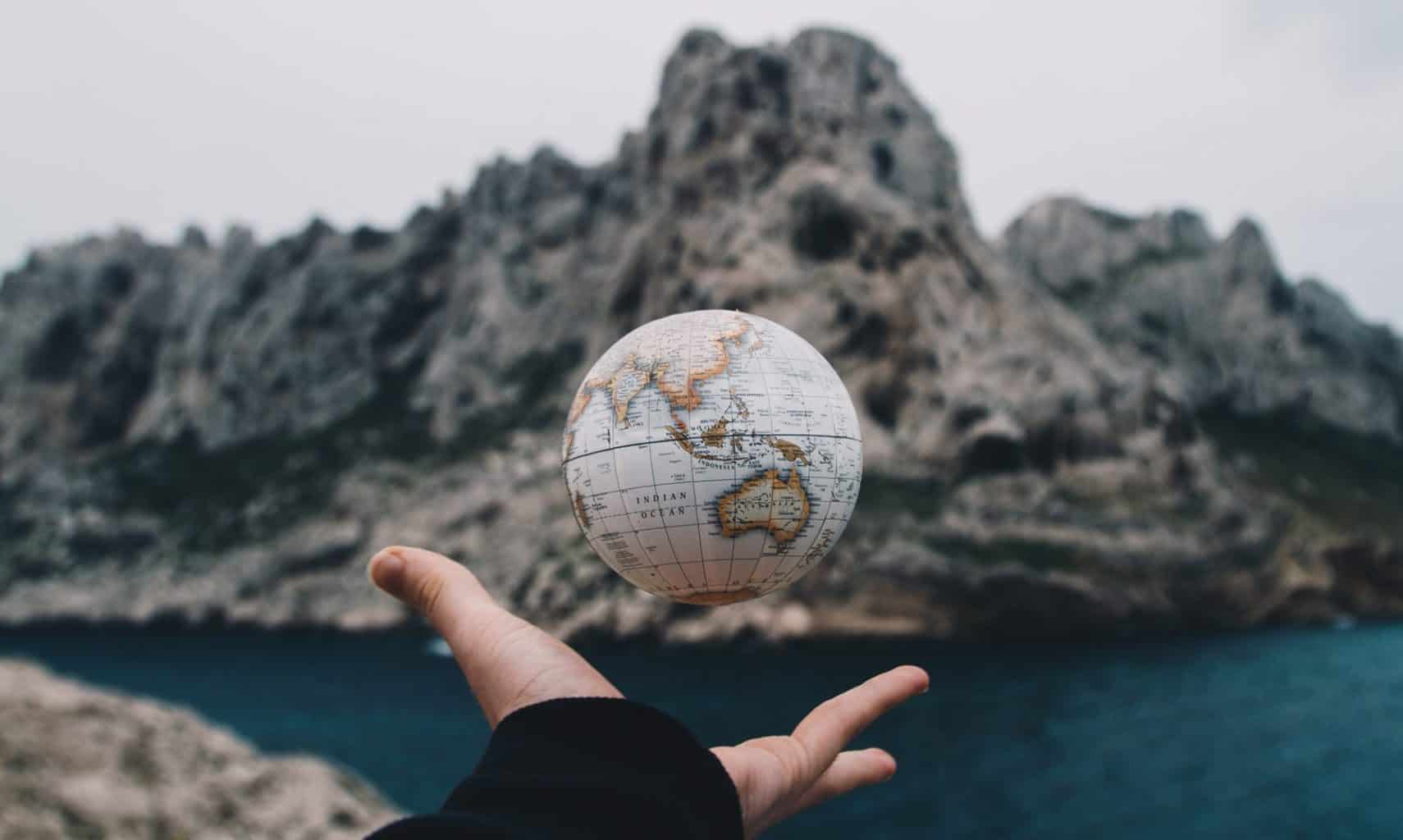
Native American Residents and European Explorers: How Did Cultural Exchange Occur?

By: Tom Malone

How did cultural exchange occur between Native American residents and European conquerors upon first contact?

This is the question I want my students to tackle. By utilizing documents and artifacts from both sides of the cultural exchange, students will be able to develop a multi-perspective viewpoint on European/Native American contact as opposed to the Eurocentric viewpoint that most students in the U.S. experience.

For this academic adventure, students will look at European exploration documents (Columbus’ journal entries, European artists’ depictions of initial contact, financial records, etc.) and Native American resident documents (Aztec interpretations, oral history that has since been written, paintings depicting a Native American perspective, etc.). Students will explore an equal number of European and Native American documents. These documents will not be nation-specific, but will look at contact across the North American and South American Atlantic Coast.

The exercise will allow students to develop a more complete view of this segment of history by developing perspectives from various lenses. Students can explore narratives from both sides, find textual and visual evidence to show these statements, and interpret these observations in order to develop their worldview more completely.

Through group discussions and written analysis, students will be able to share their experiences with these documents and artifacts.

Oregon Council of the Social Studies Fall Conference

Hello fellow Social Studies educators,

For those of you who have not met me, my name is John Zingale and I am a former UP MAT grad from this past year.  While on my journey to become a Social Studies teacher I had the pleasure to meet Peter Pappas through my Methods teacher and a couple of EdCampPDX’s.

I am currently teaching Social Studies and Language Arts at iTech Prep Middle School in Vancouver, Washington.  I am teaching Social Studies in a STEM & project-based environment.  I am also a member of the Oregon Council of the Social Studies (OCSS) and I am here to promote our fall conference which is this next Saturday, October 5th.  At the conference I am presenting the research that I conducted while at University of Portland last year.  My topic is iHistory and integrating Digital Storytelling and Apple iPads into Social Studies classrooms.

I hope that you might be able to come and enjoy a day of exploring different Social Studies content and networking.  You can find out more information here.  Attached is a PDF with info on the fall conference as well.

2013-Fall-OCSS-Conf-Program-FINAL

Thanks for your time,

– John M. Zingale

iTech Prep

iHistorywithmrjz.com

@iHistorywmrjz

Class 6: Work Session at Nikkei Legacy Center

Saito Fish Market

We will be serving as curriculum consultants to the Portland’s Nikkei Legacy Center. The center is dedicated to “Sharing and preserving Japanese American history and culture in Portland’s Old Town neighborhood, where Japantown once thrived.”

Tonight’s class met at the Legacy Center to work with their staff to plan our projects – Todd Mayberry (Director of Collections and Exhibits) and Kim Blair (Education Manager). Our task to is to use our instructional design skills to assist the Center in creating curriculum material. More on our project-based approach.

At this point we are considering four  projects:

  1. Self-guided instructional activities for middle school museum visitors.
  2. A teacher’s curriculum / activity guide to accompany a historic document filled suitcase that goes out on loan to the classroom.
  3. Online archive of documents with guiding questions and activities
  4. Selecting historic materials for inclusion in an iPhone App tour of Portland’s historic Japantown neighborhood.

Nikkei

Students explore exhibit of WWII incarceration camp room at Nikkei Center

Above: Saito Fish Market (Taken circa 1915)
Mr. Saito driving the Saito Fish Market car. Saito Fish Market was located in Portland’s Japantown on what is now NW Fourth Avenue.
ONLC 1497, gift of Rose Niguma.
Image credit / Oregon Nikkei Endowment

Class 5: Exploring Project Based Learning

Henry Sakamoto

Henry Sakamoto
For video interviews and more go to Densho Digital Archive. Use free guest login.

The Densho Digital Archive holds a wealth of visual history interviews and other materials that broadly document the Japanese American experience. These unique primary sources cover a span of history from immigration in the early 1900s through redress in the 1980s with a particular focus on the World War II mass incarceration.

Students explore their world with an expectation of choice and control that redefines traditional notions of learning and literacy. Increasingly educators are discovering that they can motivate students with a project (or problem) based approach that engages their students with the opportunity to think like professionals while solving real-world problems.

Here’s 6 reasons why PBL works:

  1. Traditional instruction is based on “teaching as telling.” PBL creates learning more immersive experiences.
  2. A new information “culture” demands a new literacy. PBL can build those skills
  3. We need to increase the rigor in the classroom. PBL moves students to higher levels of Blooms.
  4. PBL makes learning relevant – student take responsibility for their progress.
  5. Usually the audience for thinking is the teacher – PBL shifts the focus to real world application.
  6. PBL can gain added impact by inspiring and empowering student as change agents in their community.

Instead of simply talking about PBL, our class will be undertaking a PBL project that embodies all the elements above. We will be serving as curriculum consultants to the Portland’s Nikkei Legacy Center. The center is dedicated to “Sharing and preserving Japanese American history and culture in Portland’s Old Town neighborhood, where Japantown once thrived.”

Our task to is to use our instructional design skills to assist the Center in creating curriculum material. At this point we are considering three possible projects:

  1. Self-guided instructional activities for middle school museum visitors.
  2. A teacher’s curriculum / activity guide to accompany a historic document filled suitcase that goes out on loan to the classroom.
  3. Selecting historic materials for inclusion in an iPhone App tour of Portland’s historic Japantown neighborhood.

A PBL experience always needs a good kick-off entry event to get students engaged in the task. We will begin our project with a classroom visit by Henry Sakamoto, who grew up in  Japantown and was attending high school at the time of the Pearl Harbor attack. Henry and his family were subjected to FBI search, transfer to the Portland Assembly Center and eventually interred at Mindoka Concentration Camp in Idaho.

Henry will be introduced by Kim Blair, education manager of the Nikkei Legacy Center. Next week’s class will be held at the Center where we will be able to tour the museum and work with Kim and Todd Mayberry, Director of Collections.

Update: Unfortunately Mr Sakamoto could not make it to our class. We discussed our project work with Kim Blair, education manager of the Nikkei Legacy Center.

Then we did a bit of “speed dating” of our ideas for the DBQ Assignment. Students formed two lines and had 2 minutes to pitch their DBQ design idea to each other and share some feedback. Then one line shifted and we repeated the pitch exchange. In all students pitched their idea three times.