One Minute to Midnight: Decision-Making During the Cuban Missile Crisis


Target Students:
11th and 12th grade

Historical thinking skills: This lesson develops students’ sourcing and contextualization skills.

Essential question: On what bases did the US and USSR make decisions leading up to and during the Cuban Missile Crisis?

Context within Curriculum: To participate in this lesson students must be familiar with the broad contours of post-WWII global politics. In particular, students should be able to describe key differences between the US and USSR, be aware of the existence of NATO and the Warsaw Pact, and have basic knowledge of nuclear weapons.

Primary documents:

  1. CIA Special National Intelligence Estimate, “Major Consequences of Certain U.S. Courses of Action on Cuba,” October 20, 1962.
  2. Prime Minister Fidel Castro’s letter to Premier Khrushchev, October 26, 1962.
  3. USSR, Cable, TOP SECRET, Dobrynin Report of Meeting with Robert Kennedy on Worsening Threat, October 27, 1962.

All sources via The Harvard Kennedy School of Government’s Belfer Center at

Key Documents

Scaffolding questions:

  • Who (or what) wrote/produced these documents?
    • How does the identity of the author change the way we interpret the documents?
    • What were the author’s goals or purposes?
  • These documents are very different from one another. How does their form affect the way we interact with them as historians?
  • Who would have read these documents and what kind of information would they have wanted from them? How might that information have been used?
  • What can we infer about the relationship between Cuba and the USSR from Castro’s letter? Further, what do we know about US-Cuba relations at this time?

Goals: Students will synthesize what they know about Cold War history (context), international relations, and that which they can infer using these documents to develop an explanation of the Cuban Missile Crisis:

  • The US, USSR, and Cuba all sought security
    • The documents support this (compromise re: NATO missiles in Turkey; Cuba’s fear of invasion by the US; US worries that its actions could provoke retaliation by the USSR)
  • Governments make decisions, predictions, with limited information
    • Implication: Decisions cannot be perfectly rational; based on predictions about others’ behavior

Students produce:

Students will be divided into four smaller groups, two groups assuming the role of the US and two becoming the Soviet Union. The individuals within each of these small groups will work collaboratively to analyzing all three documents included in the lesson. These groups are then asked to develop a cohesive “policy proposal” to the entire class. These proposals can take a wide range of forms, although it is essential that students identify 1) a “policy priority” that is rooted in a group’s reading of the primary material (e.g. removal of US missiles in Turkey) and 2) a rationale that details the group’s reasoning for making the specific recommendation that they have chosen (e.g. “we recommend invading Cuba because the CIA report indicates…”).

Reflection:

With this activity I set out to use an exciting, high-profile incident to guide students to a broader understanding of the machinations of international politics. The process of developing the lesson and, the helpful feedback I have received from peers in particular, has helped me to identify major shortcomings that have both improved this lesson and will help me produce stronger lessons in the future. To fully realize the potential of learning through primary documents, I have found that it is essential that lessons be appropriately sequenced and scaffolded. Striking the balance between frustrating students by presenting them with materials they are ill-equipped to understand and over-scaffolding to the point of boredom will be a focus of mine as I grow as a teacher.

Title Image: EXCOMM meeting at the White House Cabinet Room during the Cuban Missile Crisis on October 29, 1962
 

“Gone In A Day” – The Vanport Flood 1948

Vanport

Target Students: 3rd Grade

Historical Thinking Skill: Corroborating

Guiding Questions: How did the people of Vanport react to the flood? How did the Government react to the disaster?

Lesson Context: This lesson is intended to to be an introduction/exposure to primary sources for my class of third graders. Students will be given two videos to watch: one deals with personal interviews about the people living in Vanport, and the other is video of the flood. Students will also be given one primary source textual document to read. Students will use these three sources to discus the reliability of each source and the idea of what constitutes a source.

vanport people

Video Sources: 

Guided Question related to the video:

  1. How can we tell that the interview from the video reflects what happened on that day?
  2. Can we trust the video?
  3. What are your thoughts about the flood?

Purpose: The purpose of the video guided questions is to get students to think about what a primary source is and how it can be used. Since this is students first introduction into primary sources it is important to stop after each video and discuss as a class the above questions letting students guide the conversation as much as possible.

Primary Text: 

vanport pdf

Scaffolding Questions: 

  1. When was the video made? When was the document written?
  2. Which source is more reliable?
  3. What don’t we know from the reading and the video? Where else could we look?

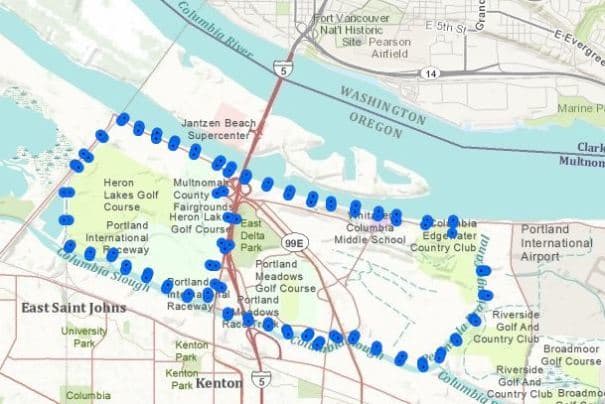
vanport map

The scaffolding questions are the meat of the lesson. The overall goal is getting students to compare the information that is in both videos versus the information that the text document gives them. The lesson is primary based on conversation rather than product. For a product have students write down their own answers to the scaffolding questions before conducting the conversation.

Reflection:

The combination of videos and the text document is to show students that primary sources can come in all forms and that just because something is not a written text it can still be used as a primary source. As technology advances our sources will too. I did not want to overload my third graders with a bunch of long text, and spend half of the day going over every piece of information in the text. Instead I wanted them to see what information they could pull out that was related to the question.  This lesson would follow the water cycle unit in science so that students will have a base knowledge of how a flood works and where on all the water came from.

I found the design process for this mini lesson a bit challenging. I wanted to do something related to my current student teaching; however, third graders do not have the skills or base knowledge to do anything advanced with primary sources. If I could get them to just be exposed to a primary sources and show them how to compare them that it would be about the right starting point for third graders to get exposed to historical thinking. I anticipate that I would have to spend a lot of time front loading different aspects of a primary source.


Sources: 

Abbott, C. Vanport (1st ed.). The Oregon encyclopedia. retrieved September 25, 2015  Link

[guruburgess]. (2014, 12 6). Oregon’s Memorable Century 1948 Vanport Flood [Video File]. Retrieved from  Link

Map [online image]. (2015). Retrieved September 25, 2015 Link

Peski, Brain Van. (2008). Vanport: Oregon’s Lost City [Video File] Retrieved From Link

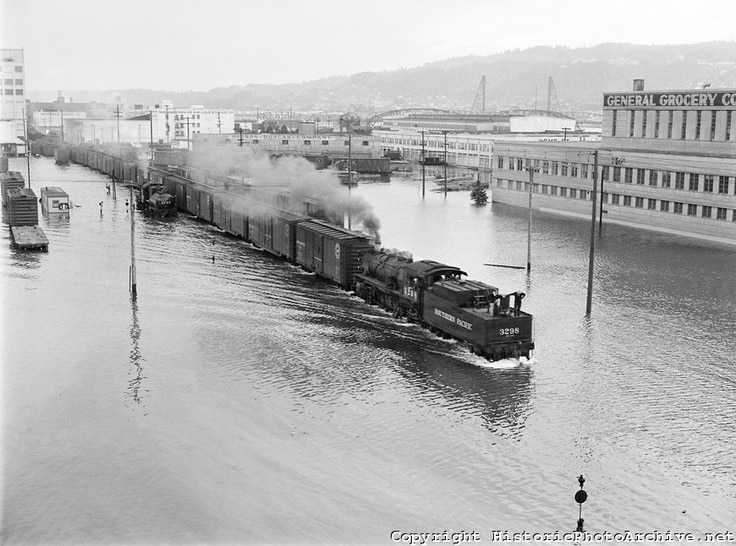
Portland Flood, with switching trains [online image]. (1948). Retrieved September 25, 2015 Link

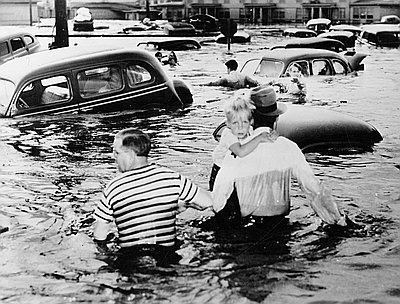
Vanport, Vanport Flood of 1948 [online image]. (1948). Retrieved September 25, 2015 Link

“I Can Be Your Hero, Baby [America]:” Thomas Hutchinson and Colonial Perception

Thomas Hutchinson

Grade Level: Grade 11 American History

Lesson Context: This lesson is intended to conclude discussion of the loyalists as a part of the American Revolution. The lesson asks them to analyze different images from the colonial period to get a better understanding of loyalism and its impacts in the American colonies.

Essential Question:Was Thomas Hutchinson the villain that many American patriots made him out to be or was he an American hero?

Historical Thinking Skill: Contextualization and Sourcing

Primary Sources: Cited in Bailyn, Thomas Hutchinson in Context, The Ordeal Revisited

The Virtuous Patriot
Image 2 – Nathanael Low’s The Virtuous Patriot,
1775, cited in Bailyn article above
Revere Wicked Statesman
Image 1 – Paul Revere’s Wicked Statesman,
1774

Click to enlarge images

Scaffolding Questions (used for both images):

  1. What kinds of imagery does the artist use to depict Thomas Hutchinson?
  2. What kinds of things would you assume from this print about what people thought of Hutchinson?
  3. Do you think this image is representative of the feelings of all American colonists about Hutchinson?

Rationale: Students will be encouraged to consider the types of images and metaphors that each artist uses to describe Thomas Hutchinson in each image. Students should compare/contrast them.

Scaffolding questions for discussion:

What has changed from image 1 to image 2?

What was going on in the colonies and Great Britain between 1774 and 1775, when these two sources were published?

What other questions would you ask about these sources to better understand Thomas Hutchinson as a historical figure?

Suggested assignment for further analysis:

Based on discussion and students’ answers to the scaffolding questions for each individual image, students should chose the image they find more compelling, and create their own image that reflects similar themes.  For instance, if they decide that loyalists such as Thomas Hutchinson were patriots who wanted freedom but also wanted to maintain relationship with Great Britain, they would choose the second image, and use similar metaphors in their own drawing.

Reflection:

With this particular lesson, it is important to bring the two historical thinking skills (contextualization and sourcing) to the forefront of discussion. Students should begin to recognize that the sources, produced in 1774 and 1775 respectively, by different artists, both in Boston, reflected changing perceptions of loyalists during the war. By 1775, the drama of the American Revolution had escalated, and Thomas Hutchinson was no longer the governor of Massachusetts. The second image, rather than representing his death, represents instead his fall from power, and the mourning of those loyalists who supported him.


Image Credit:

Wikimedia Commons

Massachusetts Colonial Governor, Thomas Hutchinson

1741 by Edward Truman

Wretched Refuse of the Teeming Shore: America’s longest love/hate relationship

4immigrants
Four immigrants and their belongings, on a dock, looking out over the water; view from behind 1912

Target Students: 10th grade

Historical thinking skills: Corroboration and close reading

Guiding question: How did Americans react to the immigrants at the turn of the century?

Background: The 10th graders have started a unit on the Progressives at the turn of the century. To start this unit, I gave a lecture setting up a framework for the students to be thinking about but also gave them some background information about the era. In specific relation to the issue of immigration, we talked about the rise in immigrants to the country between the years of 1880 and 1920. We briefly touched on the hardships many immigrants faced upon arriving in the country but I wanted to give the students a chance to see if from the American’s perspective and the Progressive perspective. I would also hope to tie this lesson to conversations currently happening in the country around immigration, but for this lesson probably not beyond picking out the similarities.

Continue reading “Wretched Refuse of the Teeming Shore: America’s longest love/hate relationship”