Digital History K.O.s Traditional History in Round One

ED 533 digital tools

Prompt: Write a blog post in response to our class on digital history.

With today’s globalized communication, it is not surprising that many of the old educational teaching methods are become a thing of the past. No longer are students needing to memorize details  such facts, dates, concepts, or theories. Instead students have access to all of this information at their finger tips. Electronic devices, whether you like it or not, are attached to most student’s hip. With instant access to the information, why are we so afraid of moving forward and embracing the future of information gathering?

There are several different tools available on the internet that students can use to not only gather information, but compare or share that information in ways that was not possible in the past. Tools like GapMinder, NY Times Chronicle, Twitter, and many other websites allow for this. By using these tools students have a way to compare information in a way and make critical comprehension of relationship between data set that would otherwise never been compared of before. As Historians, it is our duty to question and re-evaluate the past. We must take both old and new data, and examine it in a way to see if concept “X” effect concept “Y”.  As teachers in today’s environment it is more important to teach students to question what they have seen and read about; take the concepts and have a debate with fellow scholars around the world. This kind of debate can be done with Twitter. Students would get more out of lesson if they where forced to defend their reasoning behind a theory that they came up with, than they would by writing a paper about something that happen in the past.  That being said it is still important to not forget to teach students how to hold onto facts and use them in a way not only teaches them, but helps them think critically about the historical evidence.

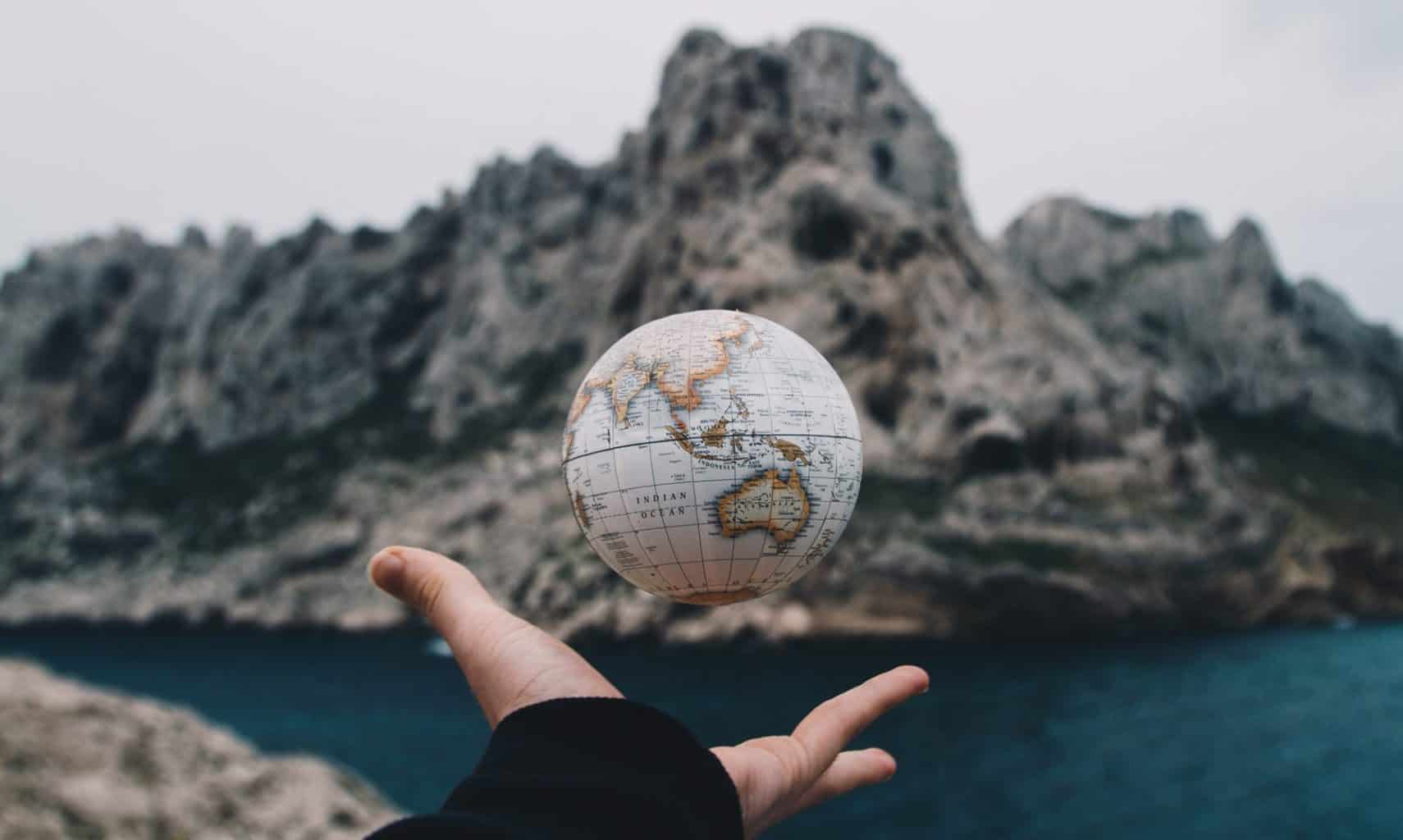
Benedick, Keven. Image. The Digital Transformation Imperative. Web Access November 1, 2015. Web Retrieved Link

Exploring the New Frontier

The use of "Happy Holidays" versus "Merry Christmas" in the history of the New York Times. Created using the NYT Chronicle website.
The use of “Happy Holidays” versus “Merry Christmas” in the history of the New York Times. Created using the NYT Chronicle website.

Prompt: Write a blog post in response to our class on digital history.

Last time in our Social Studies Methods class, we found ourselves trying many new things. From participating in a twitter chat, to exploring websites like GapMinder,  NYT Chronicle, and Google Ngram Viewer. These tools, while interesting to use in making comparisons also present new ways of examining information.

When I first took a look at each of these sites, I had fun seeing that you can take different pieces of information and see how they might relate with each other. I saw how you could take a site like NYT Chronicle and search words like “Happy Holidays” and “Merry Christmas” and examine their usage throughout the history of the New York Times. It showed how word usage and word choice are important things in our culture and history. With something like a Twitter chat, I saw the chance for easy collaboration and reflection on how I am doing as a teacher. Twitter chats present the chance for interaction on a scale that goes beyond the classroom.

I would like to use these tools in my own future classroom. I find that these tools offer the chance for students to look at information and make inferences about what that information tells us about history. If you take the example mentioned in the previous paragraph, then it could become an example where I ask students why we added the use of “Happy Holidays” in our writing. I might also ask students why usage of “Merry Christmas” has seemingly gone up over time. In learning about these different sites, I have found that there are plenty of new resources emerging to get students engaged and asking questions related to history and social studies.

Class 9: Digital History

The Kaiserpanorama is a form of stereoscopic entertainment medium - 19th century
The Kaiserpanorama is a form of stereoscopic entertainment medium – 19th century

Digital historians:

  • Find, decode and critically source information.
  • Responsibly curate and archive collections with available digital tools.
  • Collaborate and share their findings with the world.

This class leads off with a live demo of professional networking on Twitter.  Social studies teachers make frequent use of of the hashtag #sschat. Adding it to their tweet makes it searchable by others. On Mondays 4-5 PM (Pacific) many social studies teachers log into Twitter at the same time and post using #sschat. Chats are archived here.

 We’ll use the event to explore how to use Twitter to build a personal learning network (PLN). Students that have not already done so , will be asked to create Twitter accounts. More on Twitter hashtags here. Article on Twitter for teachers here.


Next I will give a demo of GapMinder – a web tool that provided easy access to and visualization of historic economic, social and demographic data. GapMinder for Teachers here.


Finally, students will work with NGram Viewer and NYTimes Chronicle – web tools that quantify and visualize word usage. More on using nGram viewer and NYTimes Chronicle 


As part of an in-class demo of the power of  word frequency research, students will share their results via a Twitter hashtag: #WordFreq   We did this activity in our fall ’14 class and used Storify to curate a social media stream and create a Storify archive of our research Need some Storify ideas? 4 Ways to Use Storify in the Classroom

Books Ngram Viewer and NY Times Chronicle have many interesting applications in the classroom. For example, they can both be used to introduce the research method – form a hypothesis, gather and analyze data, revise hypothesis (as needed), draw conclusions, assess research methods. Working in teams students can easily pose research questions, run the data, revise and assess their research strategy. Students can quickly make and test predictions. They can then present and defend their conclusions to other classroom groups. All skills called for by the new Common Core standards. Ideas for classroom use Books Ngram Viewer and NY Times Chronicle.


Assignments for class 11

  1. By 11/1 write a blog post responding to our exploration of digital history in today’s class.
    What’s your reaction to using tools like Twitter, Storify, GapMinder, Books Ngram Viewer or NY Times Chronicle? How can historians leverage new digital tools for research, instruction, or professional growth?  Or you might design a short lesson using one of these tools.
  2. Come to our class on 11/2 with an idea for a flipped lesson. That night we will meet in the Digital Lab to design a flipped lesson using either a QuickTime screencast Samples or TEDed lesson built from a YouTube video Sample. You will have class time on 11/2 to create your flipped lesson, but you should arrive with an idea.

Image credit: The Kaiserpanorama (or Kaiser-Panorama) is a form of stereoscopic entertainment medium used chiefly in the 19th and early 20th centuries, a precursor to film, invented by August Fuhrmann (1844 – 1925). It was patented by the inventor ca. 1890. There would be a number of viewing stations through which people would peer through a pair of lenses showing a number of rotating stereoscopic glass slides. By 1910 he is said to have controlled exhibitions in over 250 branches across Europe, and in the central archive have up to 100,000 slides stored.

Class 6: Learning and New Digital Literacy

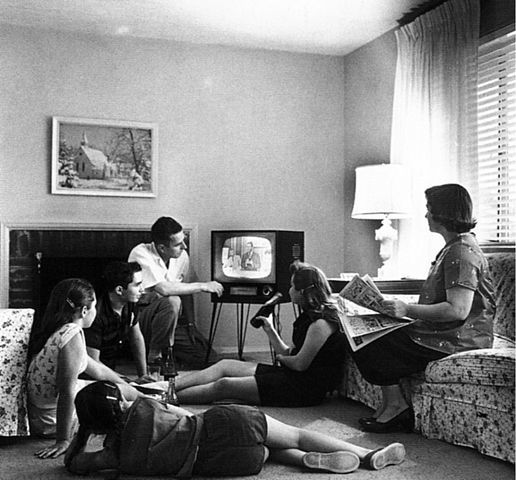
Family_watching_television_1958Class will open with a discussion of Snapshot of a modern learner and it’s implication for the classroom. I will offer a brief lecture detailing aspects of  the “new digital literacy.”

  • Find, decode and critically evaluate information.
  • Curate, store and responsibly share it.
  • Effectively filter information flow and stay focussed.

For more of my thoughts on the impact of digital on teaching and learning, see my post What Happens in Schools When Life Has become an Open-book Test? 

Students will have an opportunity to view GapMinder – a website that exemplifies redefined learning in the digital era. Students will get to use two additional transformative web-based research tools – NGram Viewer and NY Times Chronicle – to develop and test hypotheses. As part of an inclass demo of the power of  word frequency research, students will share their results via a Twitter hashtag: #WordFreq  

Here’s a Storify archive of our research

Books Ngram Viewer and NY Times Chronicle have many interesting applications in the classroom. For example, they can both be used to introduce the research method – form a hypothesis, gather and analyze data, revise hypothesis (as needed), draw conclusions, assess research methods. Working in teams students can easily pose research questions, run the data, revise and assess their research strategy. Students can quickly make and test predictions. They can then present and defend their conclusions to other classroom groups. All skills called for by the new Common Core standards. Ideas for classroom use Books Ngram Viewer and NY Times Chronicle. For more advanced searches using NGram Viewer click here.

Students will be introduced to Evernote a useful tool for curating and storing information and then sharing it with collaborative teams.
Evernote tutorials – Getting started.
How to use Evernote on web. (Use drop down menu to select other operating systems)

Assignment:
Preparations will begin for student design of document-based questions. At this phase students will be introduced to high quality online archives for World History and US  History. Students will create an Evernote Notebook to begin to collect source material for prospective DBQ projects. They will share their notebook with the instructor by eve of Sunday Oct 5. Note: At this point student topics are speculative. Final decisions on topics will not be due until 10/22.


Image Credit: Family watching television. Evert F. Baumgardner, ca. 1958 National Archives and Records Administration