Now and Then: Comparing life in old Japantown to students’ lives today

Image

Japanese Community Queens Court, 1931.

Writing lesson plans for elementary students was simple. The kids lack the cognitive development of secondary students, so one does not have to bother with exploring abstract ideas. Instead, the lessons can be more basic and focus on developing skills students will rely upon as they progress through school and life. I had two goals when writing my lessons: don’t bore the students, and let them create something.

The Lessons
Both lessons were designed to be used in conjunction with the photographs included the Nikkei Center’s traveling suitcases. One lesson is targeted at lower elementary, the other at upper. Both lessons challenge students to analyze what they see in the photographs, make connections between the past and their lives, and create a product demonstrating their understanding. Overviews of the lessons and links to PDFs are provided below.

Lower Elementary:
This lesson offers students a chance to develop their critical thinking skills and make connections between their community and the Japanese community that existed in Portland in the first half of the 20th century. Students will draw where they live, examine the photographs in the suitcase, create a second drawing depicting life in Japantown, and finish by comparing their two pieces and presenting their findings to the class.

Comparing Community

Upper Elementary:
In this lesson students will explore how personal experience can vary based on the community in which you live. Students will imagine they live in Portland’s old Japantown. They will examine the photographs in the suitcase to develop an interpretation of life there during the early 20th century. Using what they learned, students will write a letter to a friend describing their life in Japantown.

Letter to a Friend

Image credit:  These girls are the Japanese Community Queens Court, voted for by the Japanese community, 1931. From left: Emi Somekawa, Frances Maeda, Fumie Marumoto (queen), Chizuko Inouye, and Takako Saito. The queen and princesses ride on the Japanese community’s float in the Rose Festival floral parade.

Oregon Nikkei Endowment on Flickr

Bringing Primary Sources to the Classroom: Nikkei Center Suitcase Lesson

           ImageFor the EdMethods class a few peers and I have created a set of lessons for the Nikkei Legacy Center (a museum located in Portland, OR) to pair with the museum’s suitcases. Educators can check out the suitcases, which contain numerous primary sources about Japanese Americans in Portland and their time spent in incarceration camps. The lessons we created range from elementary, middle to high school level.

Creating lessons is always a bit of a challenge but it is even more of a challenge when making them for someone else. The suitcase project has been a great way to practice my lesson making skills by making sure the lessons are thorough in explanations, complete in resources but still flexible so teachers can adapt them to their classrooms.

My lesson is for a middle school social studies classroom. The lesson (that can be broken up into two days) focuses on the incarceration of Japanese Americans from a cultural perspective. The lesson will show students the daily life of internees. The lesson uses readings, videos, and primary source documents with individual and group activities. The lesson would be best used in a class that has already covered World War II.

Here is the procedure of the lesson. For a PDF of the whole lesson click here Suitcase Lesson. (138KB pdf)

Overview: Today’s lesson will focus on the incarceration of Japanese Americans from a cultural perspective. This lesson would fit in after learning about WWII.

Goals: To understand the experience of Japanese Americans being incarcerated during the WWII.

Objective(s): Students will be able to identify the key aspects of life for Japanese Americans in incarceration camps during WWII.

Standards:

CCSS.ELA-Literacy.RH.6-8.1 Cite specific textual evidence to support analysis of primary and secondary sources.

CCSS.ELA-Literacy.RH.6-8.2 Determine the central ideas or information of a primary or secondary source; provide an accurate summary of the source distinct from prior knowledge or opinions.

CCSS.ELA-Literacy.RH.6-8.9 Analyze the relationship between a primary and secondary source on the same topic.

CCSS.ELA-Literacy.RH.6-8.7 Integrate visual information (e.g., in charts, graphs, photographs, videos, or maps) with other information in print and digital texts.

Resources: suitcase, pencil/pen, paper, projector, internet access, printed documents included in lesson plan

Procedure:

  • Ask students if they know the following terms: interned, incarceration, Japanese-American, Nisei and Issei. If not, go over as a class making the definition together using previous knowledge.
  • Read them Scenario A. Have them write a short paragraph on how they would feel, what would they do. Then share with a partner. Have a few students share with the class aloud. [Attached to lesson plan. Called “SCENARIO A”]
  • Have students read brief background on why the Japanese Americans were incarcerated. Either read aloud, popcorn style or at teacher discretion. [Attached to lesson plan. Called “HISTORICAL CONTEXT”]. Answer follow up questions.
  • Have students watch a short interview with George Takei about leaving behind his life to go to an incarceration camp. Answer follow up questions [Attached to lesson plan. Called “Video Questions.”]
  • Have students read about life in the incarceration camps. Split up students into different groups based on the sections. Then have them create a poster depicting their section. Share with class. Have class answer as a whole the follow up questions. [Attached to lesson plan. Called Behind the Fence: Life in the Incareration Camp]
  • Show pictures of incarceration camps. Have students draw connections between what they read and what they see in the pictures. Have class discussion. [Pictures in suitcase. Choose from the following images: G3, G2, I6, I5, D2, I3, I4, H2, F2, G1]
  • For the remainder of class and homework, have students write a letter home to a friend pretending to be an incarcerated Japanese American. Have them use material that they learned about from the day. Have them express their feelings of being interned, and have them tell their friend if they still feel like an American after this experience.

Formative Assessment: Students will answer follow up questions to readings, and the class will go over them as a whole.

Summative Assessment: Students will write a letter pretending to be an incarcerated Japanese American.

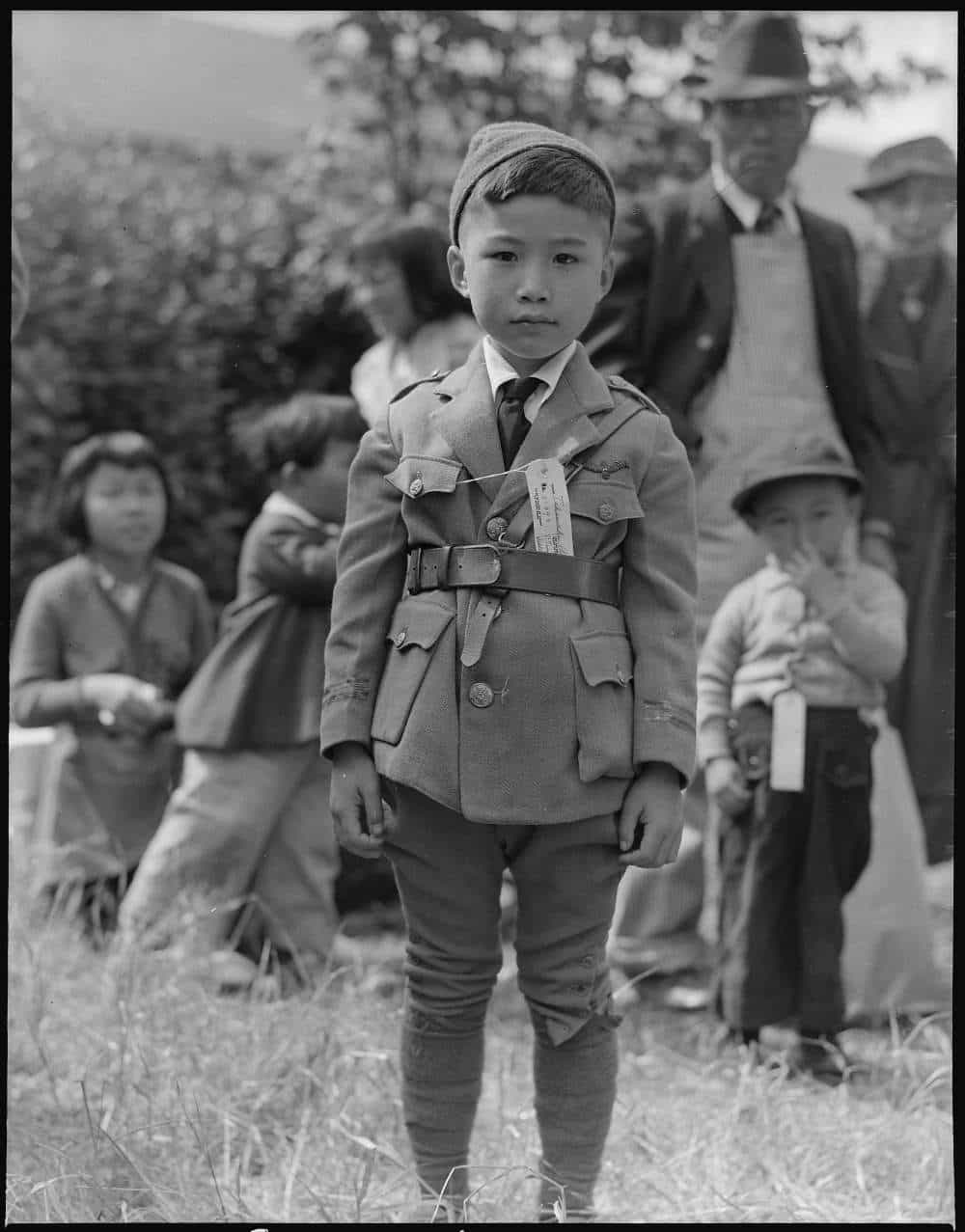
Photo Credit: A Japanese Child in an incarceration Camp from http://all-that-is-interesting.com/japanese-internment-camp

Class 8: Report, Regroup, Goal Setting

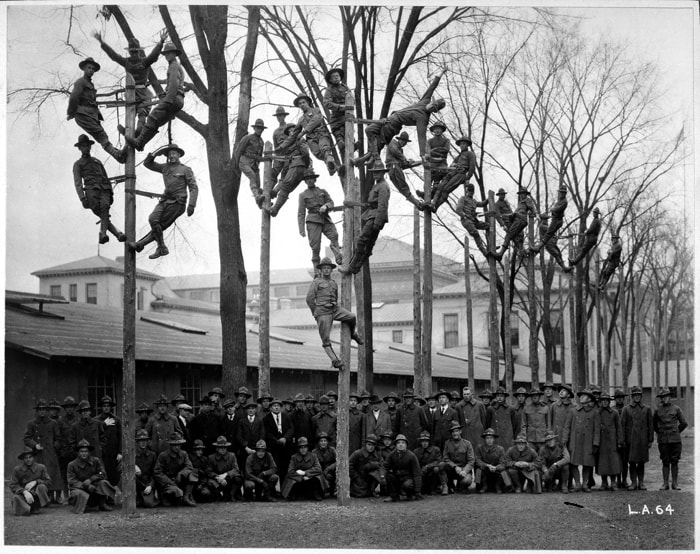
Class in Pole-ClimbingThis class was was devoted to taking stock of what we had accomplished and making plans for the rest of the semester.

We reported back on progress on the Nikkei project. See Peter’s post on the project – Student Consultants Design Museum Curriculum and Mobile App

Erin, Sam and Peter did a presentation at the OAtS Conference at OHSU. Teena and Amit Jain (from Gamma Point) were there as well. We got some great feedback on the app – features, navigation and uses. Aram and Tom took some photographs in the neighborhood after meeting with Todd at Legacy Center. Todd’s been focusing on finalizing material available from Nikkei archives.

Each team met during class to set goals for their component of the project. Kyle and Peter zeroed in on their intended audience for their virtual museum. Collin, Aram, Tom and Sam discussed feedback from the conference presentation and discussed next steps in the app design.

The “Museum in a Suitcase” team (Christina, Kristi, Cory, Heather, Erin and Damian) – discussed the scope of the lessons they will design. See update in Christina’s comment below

We conducted our second lesson study  with Kyle, Peter and Tom in the “Fishbowl.” Their classmates observed from outside the fishbowl. They used a T chart to track two items – lesson strengths and challenges. Feedback from in and outside the fishbowl will be used by students to improve their lesson idea.

Peter reviewed expectation for the upcoming DBQ design assignment and demonstrated use of the Learnist website that students will be using to present their DBQ’s.  He also shared the sample DBQ he posted at Learnist. Incarceration of Japanese Americans During WWII 

Image Credit:

Class in Pole-Climbing in the course for telephone electricians, with some of their instructors. University of Michigan., ca. 1918
Original Caption: Vocational training for S.A.T.C. in University of Michigan, Ann Arbor.
U.S. National Archives’ Local Identifier:165-WW-119A(1)
Created By: War Department.

Nikkei Project Update

Erin and Sam presenting

Erin, Sam and Peter did a presentation at the OAtS Conference at OHSU. Teena and Amit Jain (from Gamma Point) were there as well. We got some great feedback on the app –  features, navigation and uses. Here’s a post Peter did on the Nikkei project.

Todd - Aram

Aram and Tom took some photographs in the neighborhood after meeting with Todd at Legacy Center. Todd’s been focusing on finalizing material available from Nikkei archives.

Aram-Tom