Discussion Reflection

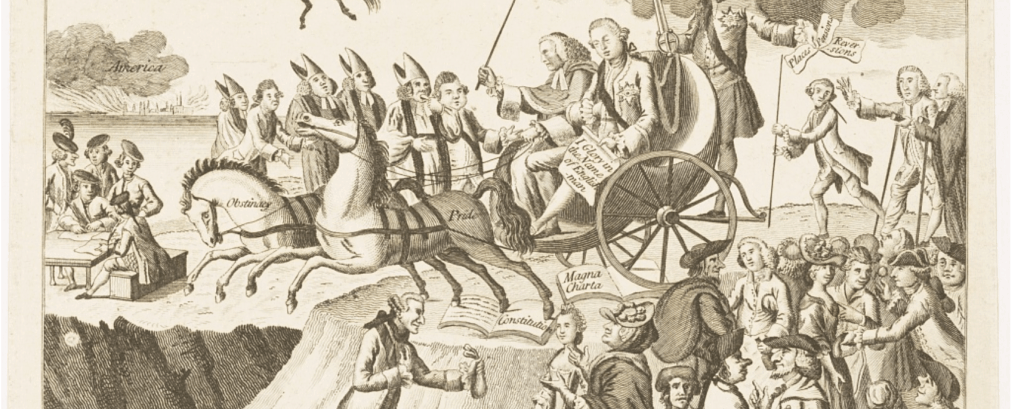
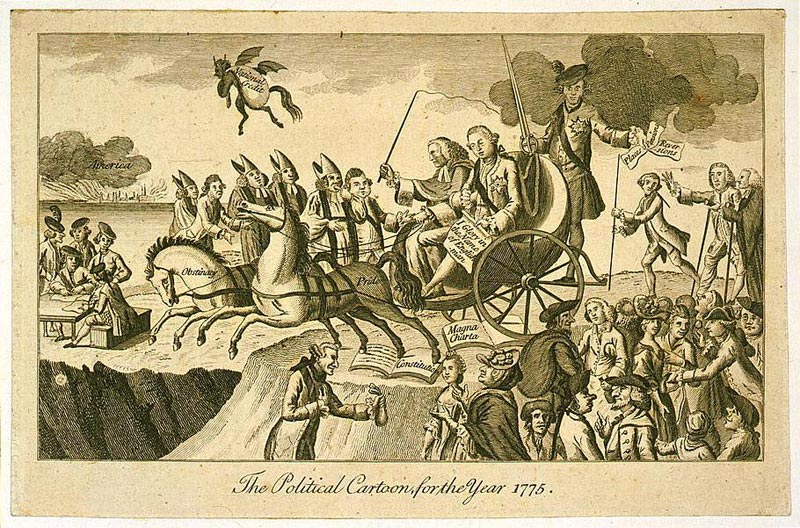
The first classroom discussion I’ve ever led was for a sophomore year government class who were learning about the early stages of the formation of the US. The discussion was simple; I asked them to analyze a photo below, and I had guiding questions to help spark discussion at the start of the class period.
Source

In the source, there were key documents that we spent time analyzing earlier on in the year, specifically the Magna Carta and the Constitution. I asked the students to analyze specific symbols within the picture (which I allowed them to find themselves) all in an effort to understand the perspective and message of the author. Using a simple think-pair-share strategy, I gave the students 4 minutes to discuss and find some key evidence that would allow them to provide an answer to the question, and I walked around during this period helping them with some scaffolding questions.

While the discussion provided some fruitful responses, I feel I did not help my students enough in learning how to analyze the source. I could have provided more scaffolding questions to the class, or better yet, I could have modeled the actions I wanted the students to take when analyzing the source. In a future discussion on the Colombian Exchange, I actually modeled how a source can be examined, and my students conducted a lengthier and more fruitful discussion, despite the fact that they were freshman as opposed to the sophomores who analyzed the photo above.

Modeling, proper scaffolding, and time devoted to small group discussions prior to bringing the discussion to the entire class has proved to be much more effective for me in my more recent discussions I’ve held.

Teaching Reflection #2

In my lesson, my students and I examined the question How do Artists Construct Political Cartoons to Convey a Message? Learning from the constructive feedback from my last lesson, the “Political Cartoon Activity” lesson went much more smoothly than my first lesson I presented, especially in the second half portion of the class.

The biggest positive from this lesson occurred in the final activity, as the lesson wrapped up in a conclusive and definitive manner. As opposed to last time where I didn’t have a clear ending to our lesson, there was a hard stop time, where the students presented their political cartoons for the entire class. Another positive to this class was that I was a more adaptive in my lesson, as when I realized during the lesson that we were running short on time, I decided to make the final activity a group activity to speed up the pace of the class.

A part of my teaching that can use quite a deal more refinement, which I’ve noticed from the delivery of this lesson and my time working at my high school, is modeling my directions for key activities. While deconstructing the political cartoon at the beginning of class in a sense was a model for how to construct a political cartoon, I could have clarified the creation of political cartoons activity by making one myself and using it as an example.

Although this activity was designed for only 25 minutes, I can easily imagine scaling it to the 91 minute period lessons I use for my high school students. Making it an individual activity would slow down the pace substantially, and the biggest positive to having a longer time period would be the ability to talk about the political cartoons afterwords, as many students created clever cartoons that sparked discussion questions.

Political Cartoon Activity

The lesson I’ve created is meant to be somewhere in the middle or the end of a unit on the American Revolution, where the students, anywhere from 9th to 10th grade, have been practicing analyzing primary sources in detail for the first time.

In this lesson, the essential question I’d like our class to discuss is How do Artists Construct Political Cartoons to Convey a Message?

During this lesson, students will first learn deconstruct a political cartoons in pairs by looking at the political cartoon “The Political Cartoon for the Year 1775” and discussing the 3 following questions with their partner: What Message is this Political Cartoon Conveying? How is the cartoon conveying this message? What does this political cartoon mean to you? After spending time with their partner, there will be a class-wide discussion regarding the same questions, where everyone will share their analysis about the cartoon. Following this period, I will give students the opportunity to create their own political cartoon, where they will use the guiding questions from the first activity to help them create their own political cartoon on one of the following 3 events: The Boston Tea Party, The Boston Massacre, or the Battle of Lexington and Concord, where they will create their political cartoon either from the perspective of a loyalist or a patriot from the United States in 1775. They will present their cartoon if time permits.

In terms of specifics, the first 7 minutes will be allotted to the intro activity of deconstructing a political cartoon. Discussing the directions for the “Create your own Political Cartoon” activity will take the next 3 minutes, where the directions will also be posted on the projector for students to refer to throughout the process of the creation of their political cartoon. The next 10-12 minutes will be time for students to work individually on their political cartoons, and the remaining time will be available for students to present their political cartoon to the class.

Timeline:

00:00-07:00 – Focus Activity

07:00-10:00 – Directions for “Create your own Political Cartoon” Activity

10:00-20:00/22:00 – Work-time for “Create your Own Political Cartoon” Activity

20:00/22:00-25:00 – Presentations

Source

Teaching Reflection

In my lesson, I had 2 primary questions that I wanted us to discuss: What story do maps tell and How do maps reflect history, politics, and economics? While some aspects of my lesson worked better than expected, other portions of the instruction could have been better.

In terms of the positives regarding my teaching, I felt I did a good job with clear instructions and directions. This is something I struggle with quite a bit in my actual teaching placement. I tend to struggle to get the class under control while simultaneously giving proper guidance and directions to guide the lesson while working at my high school; being able to focus solely on giving directions rather than dividing my attention onto classroom management while teaching my peers made life a lot easier in this department.

The “draw the world activity” and the initial focus question activity were very effective at setting up the themes of the class and getting engagement from my students. The conversations they had and their contributions to the class were near perfect for me to segway into the next portion of my instruction, and while it is unlikely I would have gotten such constructive responses during the focus activity from my class at high school, the “draw the world” activity would have engaged everyone in the class and served as a perfect segway into the final stretch of the instruction.

My end activity, where we compared our maps to the map of China, could have gone better. However, aspects of this activity were still positive. There were clear connections between the ways in which the students created their maps to how the cartographers of china created theirs, and while I was able to bridge these connections at times, I could have done a much better job at relating the two activities. Some pre-thought guiding questions would have helped me substantially, as I was essentially scrambling while teaching at this part as I didn’t have the foresight to think to create these guiding questions for this portion. And finally, the weakest part was definitely the ending to my lesson. Essentially, I had no planned conclusive ending. I had a good idea in the activity that I created, as well as the flow of the lesson, but I had no ending activity that would have helped to sum up the activities of the day. Perhaps an exit slip or a google forum would have been a perfect ending, but I failed to include such an activity.

While I was satisfied with my workflow and delivery (other than the final activity), I feel my timing can still use a lot of work. The activities, especially at the end, felt a little rushed. I also felt the initial conversation could have benefited from using more time. While I have 91 minutes to work with at my high school, I need to be able to scale down and scale up the amount and duration of activities I plan so they properly fit within the time limits I am given.

From my experience, I learned that my timing still has quite a bit of work, and I need to experiment with effective ways to end my lessons. Many positive things I tried out also worked, such as my directions being written on the smartboard, using the document camera, and working alongside my students. I’m excited to put what I’ve learned into my next lesson plan, and I hope to learn just as much as I did this time.