
Literacy DBL Design Project

An A B C, for baby patriotsWorking as individuals or in 2 person teams, students will design a document-based lesson (DBL) question suitable for inclusion in our iBook (available at iTunes).

See Class  6 for recommendations for DBLs and Teaching with Documents. Your DBL will include:

  1. Introduction of the DBL with brief historic context as needed.
  2. Generative / essential question
  3. About 5 – 8 related documents (image, text, video, audio) that will assist the students in answering the generative question
  4. Clear statement of what students will be asked to do
  5. Close reading scaffolding question for each document to assist the student in examining the document

A good example of a DBL is Progress and Poverty in Industrial America  This is a pdf version of one of my iBooks. (note: you will not have full function of all the gallery and video widgets). It uses 11 documents, which is a bit more than I expect for your DBL.

The DBL Design Assignment will be accomplished in steps:

Step 1: Develop a proposal which will be submitted for peer review. You should be prepared to deliver a 2 min pitch to class. (not a written assignment to be turned in)
Due date:  10/12.

We’ll do a bit of “speed dating” of our ideas for the DBL Assignment. Students will form two lines and have 2 minutes to pitch their DBL design idea to each other and share some feedback. Then one line will shift and we repeated the pitch exchange. In all students will pitch their idea three times.

The goal of this phase is to gather feedback from peers regarding the following:

  1. You have an interesting generative / essential question worth answering.
  2. Your initial appraisal indicates there are suitable documents available.
  3. You have an idea for how students will be asked interpret your documents.

Step 2: Submit a preliminary idea for your DBL design project for Peter’s feedback by 10/19. It should be posted to a shared Google folder.

Here’s a short video on using shared Google folder

It can be in the form of a Google doc that addresses:

  1. Where will you use it?  Grade, course, etc
  2. An interesting generative / essential question worth answering.
  3. 3 -5 suitable documents (include links).
  4. A brief explanation of “what are the kids going to do?”

Note: This is not intended to be a fully developed lesson. Just an idea of where you intend to go.

Step 3: Prepare content for iBooks Author lab session on 11/23

Workflow? See this guide Getting Ready for iBooks Author 57KB pdf

Step 4: iBooks Author design session 11/23

Step 5: Peer review of draft iBook 11/30

Step 6: Write a reflection on your DBL design process and post to our blog (your final post). It will also be added to your iBook chapter – due 12/6.

Step 7: Final design session in Digital lab 12/7


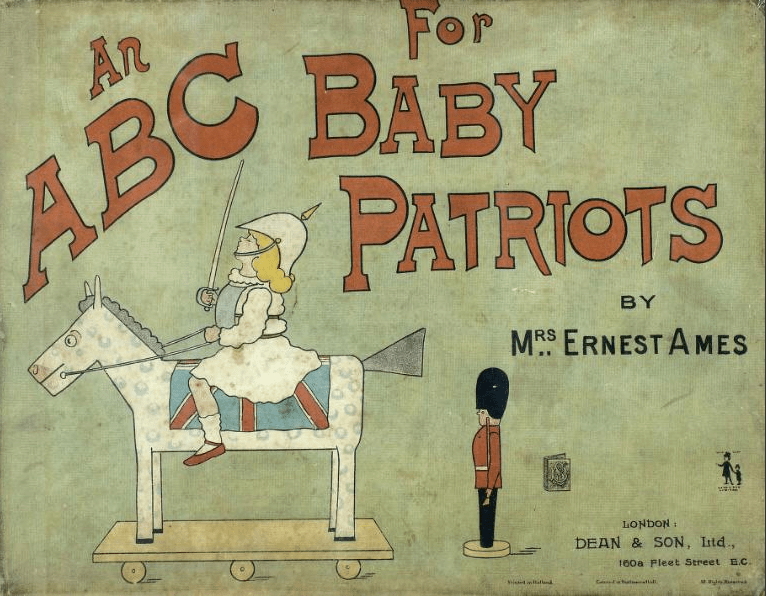
Title: “An A B C, for baby patriots”
Creator: Ames, Mary Frances
Publisher: Dean & Son
Place of Publication: London (160a Fleet Street E.C.)
Publication Date: [1899]
Archive: University of Florida UF00086056:00001
Assignment: DBQ Design

An A B C, for baby patriotsWorking as individuals or in 2 person teams, students will design a DBQ question suitable for inclusion of our DBQ iBook (available at iTunes).
See Class  7 for recommendations for DBQs and Teaching with Documents. Your DBQ will include:

  • Introduction of the DBQ with brief historic context as needed.
  • Generative / essential question
  • About 5 – 8 related documents (image, text, video, audio) that will assist the students in answering the generative question
  • A scaffolding question for each document to assist the student in examining the document

A good example of a DBQ is Progress and Poverty in Industrial America  This is a pdf version of one of my iBooks. (note: you will not have full function of all the gallery and video widgets). It uses 11 documents, which is a bit more than I expect for your DBQ.

The DBQ Design Assignment will be accomplished in steps:

Step 1: Develop a proposal which will be submitted for peer review.
You should be prepared to deliver a 2 min pitch to class. (not a written assignment to be turned in)

Due date:  10/20.

We’ll do a bit of “speed dating” of our ideas for the DBQ Assignment. Students will form two lines and have 2 minutes to pitch their DBQ design idea to each other and share some feedback. Then one line will shift and we repeated the pitch exchange. In all students will pitch their idea three times.

The goal of this phase is to gather feedback from peers regarding the following:

  1. You have an interesting generative / essential question worth answering.
  2. Your initial appraisal indicates there are suitable documents available.
  3. You have an idea for how students will interpret your documents. “What does it say, how does it say it, what’s it mean to me?”

Step 2:  Students will share their revised idea as a blog post at EdMethods by Sunday Oct 26th. It should explain how you intend to address the 3 questions above. You may wish to include a sample document and related scaffolding question. Or you might want to focus on the “big picture” of what you are trying to accomplish with your DBQ. Feel free to note the challenges you face.

Step 3: Students will peer review a selection of classmates DBQ proposals in class on 10/27.

Step 4: Students will open an account at Learnist in class on 10/27 and use the site to post their working draft DBQ. 
Due date: Nov 3rd.

Learnist is a web-based curation site with built in social media tools – it can collect and comment on videos, blogs, books, docs, images or anything on the web. (Think Pinterest for education?)

Your Learnist board should be tightly focused on documents that help students answer the DBQ’s generative question. Each document should include one or two scaffolding questions which help the student to use the documents to answer the DBQ’s generative question.
For a sample of a Learnist board see your instructor’s Incarceration of Japanese Americans During WWII 

Your peers will be able to make comments after each document on your Learnist board to help you focus the DBQ. Since Learnist is open to the public, you can expect that others outside our class may comment as well.

Phase 5: Students will finalize their DBQs for inclusion in our iBook showcase.


Title: “An A B C, for baby patriots”
Creator: Ames, Mary Frances
Publisher: Dean & Son
Place of Publication: London (160a Fleet Street E.C.)
Publication Date: [1899]
Archive: University of Florida UF00086056:00001

Thinking Like A Historian: Lesson Collection

Beginning in Class 4, we began a study of historical thinking skills based on the work of Sam Wineburg and the Stanford History Education Group (SHEG). We focussed on three key skills – Sourcing, Contextualizing and Corroborating. Students were assigned the task of designing their own historic thinking skills lesson based on that model and collecting them in a shared Google presentation. We took time in Class 5 to do some peer evaluation of the work. As a final assignment, students were asked to reflect on the process and use their lesson as the basis for a blog post. See them all here.

Class 12: Publishing our DBQs with iBooks Author

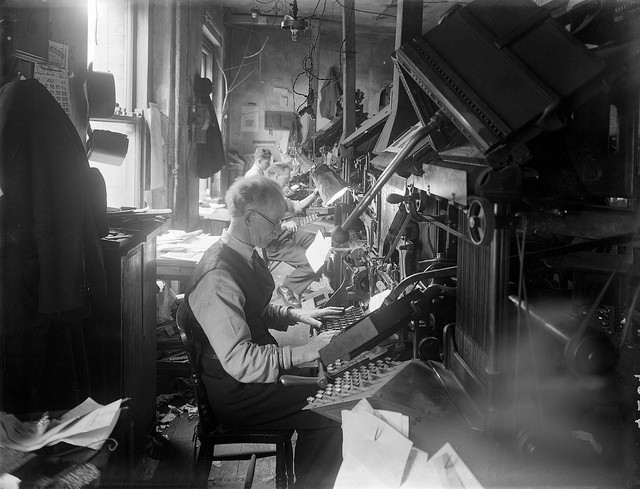
Typesetters working  linotype machines Waterford NewsOver the next few classes we will devote time to editing / formatting our DBQs for iTunes publication of a class DBQ collection. Peter will provide instruction in using iBooks Author. Students will use  material from their DBQ Design project as the foundation for their contribution to one chapter of the class iBook. Peter will arrange for publication on iTunes with all student work credited. DBQ assignment here.

Project Reflection at Ed Methods
Students willing write a reflection on their DBQ design project. That will be done in the form of a blog post to Ed Methods – due by class time 11/25. Students should be sure to go back and quote their original DBQ post and note how their project evolved over time by answering three questions:

  1. What were the learning goals of this DBQ – what skills or content did you want students to master?
  2. To what extent did your final project achieve those goals?
  3. What did you learn about the DBQ lesson design process? (Note: do not discuss the merits of Learnist. It’s about the teaching not the technology.)

The DBQ design blog post should include an image from their DBQ and a link back to their DBQ on Learnist. This post will introduce their DBQ to the world. Peter will also re-publish their post as a guest blogger at Copy / Paste to broaden the audience for their work.

Class DBQ iBook
As a group, the class will review each other’s work before inclusion in the iBook collection of DBQs. Each student (or team) will contribute one DBQ in the form of a book chapter. It will include the project reflection as a way of introducing the DBQ. Students will collaborate on book design decisions and Peter will include a sample chapter and an introduction to the book.

Technical aspects
The iBooks will be designed using iBooks Author in the Mac lab. Students will bring digital versions of their DBQs to the lab – including all image and sound files, text files, citations and URLs. Note: YouTube videos will be inserted into the iBooks using ibooksgenerator.

For more see:

Image credit: Typesetters working on linotype machines at the Waterford News. Date: Friday, 29 July 1938.
This newspaper was set up in 1848, and is still going strong as the Waterford News and Star in print and online.
National Library of Ireland Ref.: P_WP_4269