
The Art of Fear Mongering – America and the Red Scare

Document Based Question Assignment:

This assignment was to choose a topic in history, around any time period or issue, and begin to construct a DBQ project around it. Given that the frame around the assignment was large, almost overwhelmingly so with possibility, our distinguished instructor gave us some pragmatic advice which I found helpful. His advice was to choose a topic that unites two key principles: a topic that is engaging, and a topic that has a profusion of useful and available forms of primary sources.

Keeping those two principles in mind, I began to rack my brain for the intersection where they meet for me. When I began to think about designing this lesson or unit for my current and future students of history, I start by thinking of today. What is going on around us now? What are we in the USA tweeting about and musing about around the water cooler right now? The first thing I thought of was the recent headlines and attention being paid to the Ebola crisis in Africa. Some Americans with access to a radio wave or television show microphone, have seemed intent on riling American’s fear on the topic. While others work to calm the fears of American’s and alleviate possibly unnecessary hysteria. That’s where my brain was when it found it, fear. The American propensity to be afraid. It isn’t a new condition or situation. The world is a scary place no doubt but it often seems to me, with our access to 24 hour news cycles and many hours to fill, fear has transformed itself into a new form on entertainment or viewership scheme. This idea of fear mongering in America caused me to look back in our history to other significant times where American’s were afraid. That is how I ended up at the Red Scare being the focus of my assignment.

Anti-Communist Propaganda

I believe the Red Scare adequately fulfills the two principles of access to resources and level of engagement. It was a fascinating time of extremes. On one hand you have post-war America, often idolized today as a simpler time bathed in the golden glow of retrospect. While on the other hand it was a fiercely turbulent time in world politics and world history. There were poodle skirts and soda shops to be sure – but also the lingering fear everyone was going to get wiped off the face of the earth and communists were lurking behind every corner.

Key questions I will work to refine and develop for the unit:

  • What is fear mongering in America? What does it look like, does anyone profit from it?
  • Who and what spread the ideas of fear during the Red Scare?
  • Did Americans during the Red Scare and the Cold War have a legitimate reason to be afraid? Why or Why not?
  • Communism still exists in the world today. Why aren’t we raised to be afraid of it anymore? Has something else replaced it?

Reflection:

One concern I have as I craft this unit is that I work to maintain a focus and align my collected materials toward a central theme. There are many avenues one could take when providing primary documents to facilitate learning about the Red Scare and communism. I will endeavor to edit myself and the documents I choose, to make sure they align with the questions I am posing. I also think it would be great to track down some pro-communist propaganda of the time and do my best to weave in both sides of the anti and pro-communist narrative. We shall see how it evolves as I continue to explore the possibilities.
America is this Correct?

mqdefault

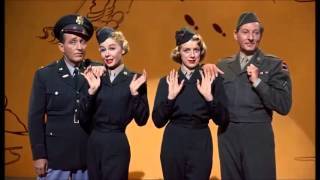
“Gee, I Wish I Was Back in the Army” by Irving Berlin


In 2006, I was riding in a friend’s car down a major thoroughfare in the town in which we lived. We had grown up down the street from each other, had both entered the Army, and had recently ended up as roommates. On this day, a large group of protestors had gathered in the parking lot of a large grocery store near a major intersection. The messages on their placards enraged my friend, who had served in Kuwait, and she rolled down her window to engage in a less-than-friendly conversation with the protestors. One sign in particular grabbed my attention because it stated that soldiers should come home where they belonged, and not be off fighting in a war. What on earth do they think soldiers do? I wondered. War is what we train for, it’s why we spend weeks on end at the range perfecting our marksmanship skills, it’s why we study land navigation and push ourselves to our physical limits during training. It’s not what we want to do, but it’s what we are prepared to do on behalf of our country. How could they say they support soldiers without an awareness of what soldiers do?

I had forgotten about this memory until I began working on a topic for a DBQ project. Initially, I was interested in exploring the theme: What is American manhood? However, after spending time sharing ideas with my fellow classmates, I honed in on a slightly more specific theme to explore: Who is the American soldier? Some of the related questions that came to mind were:

  • How are soldiers expected to behave?
  • How are soldiers viewed (public perception) and treated?
  • How has race changed the makeup of the American military force?
  • How has gender changed the makeup of the American military force?
  • How do socioeconomics relate to the composition of the American fighting force?

As a veteran of the United States Army Reserve, I believe I am uniquely qualified to address this line of questioning. I am well versed in military jargon and familiar with the structure of Field Manuals and other TRADOC (training and doctrine) materials. I am neither embittered or in love with the U.S. military. I also remember many of the early sources of my own information on what it means to be an American soldier. It is an image created from Ernest Hemingway’s A Farewell to Arms, Neil Simon’s Biloxi Blues, and Irving Berlin’s White Christmas. It is an idea informed by Alfred Eisenstaedt’s photograph of a sailor kissing a nurse in Times Square and John Filo’s photographs of Ohio National Guard troops firing on student protestors at Kent State. It is a picture that first formed after watching an Army advertisement on television as a small child, when I misheard the lyrics, and thought that the happy faces of young soldiers were being accompanied by a song that said “be all that you can be, you can lose your life in the Army,” and wondering if the soldiers in the ad knew what lie in store for them.

As I begin assembling this project, I don’t have an established answer in mind. My plan is to follow the documents to see where they lead. Thus far, I have found a wealth of sources related to popular culture, in the form of movies, songs, articles in Time magazine, and Disney and Looney Toons animated cartoons. I plan to explore political cartoons, newsreels, speeches, and newspaper articles. I have not set a specific time frame, but there is such a plethora of documentation for the twentieth and twenty-first centuries that it may be extraneous to include the Revolutionary War, the American Civil War, and the Spanish-American War.

Blame the Loser

British_Empire_Union_WWI_poster

A DBQ design Process by Erik Nelson

The DBQ design process has already proved an enlightening process for me. I have been painfully learning to shift from a gatekeeper of information to an architect of a learning experience for students. At first approaching this project I wanted to pick an interesting topic for students to cover. My original topic did not lead to enough possible student questioning, so I needed to expand the question that would drive the DBQ (and consequently expand the topic being covered).

The essential question of this unit will be: How should the losing side of a war be treated? Though I don’t know if students will find this interesting, I certainly think it is an important question to deal with. This question will use the Treaty of Versailles and post-WWI Germany as the topic for this question. I wanted to choose content material that teachers would find probably want to include in a high school course, while also designing a process that would engage students in asking questions about the documents.

There are tons of documents available on the Treaty of Versailles, and more importantly how Germany was impacted in that process. There are letters, newspaper articles, political cartoons, even some video clips, though I am not totally sure how to access those in the public domain.

In talking with my classmate Sam Kimerling, we decided to parallel our DBQs to create easily accessible teaching materials for teachers. As we discussed our projects we were struck by how different the decisions made towards Germany were after WWI and WWII. Because those two topics are popular in history classes, we thought creating DBQs that teachers could use that connected both the Treaty of Versailles and the Marshall Plan, having students ask the same questions of both topics, and potentially drawing larger scale conclusions in the process.

Through this process it is likely that students will be challenged in their thinking about resolving international conflicts. Students will be asked to focus centrally on the impacts of the strict reparations Germany was forced to pay, as well as issues like the guilt clause while questioning ideas of guilt in international war. One thing I will want to address is how much background knowledge students bring into the DBQ as they work to create interpretations of the source material.

Questions for the project will be:

  • Do the victors in war have responsibility to the losers?
  • Can one side in war be blamed more than another side?
  • How does national debt hurt economic development?
  • Why might national pride influence national policy?

Moving forward from this point, I will need to narrow the documents I want to use, and also narrow the scope of some of my ideas. At this point I need to focus on what questions I want students to ask, and how to best guide them through a series of documents.

Nothing More or Less Than A Big Brothel

Topic

Originally, I designed by DBQ around Operation PBSuccess when the American CIA helped stage a coup in Guatemala in 1954. However, it became clear after speaking with the professor that this topic would not be feasible due to the sources available and the background knowledge required to answer the generative questions.

I thought instead about what primary sources I had easily available that did not require extensive prior knowledge to understand. Fortunately, as part of the Senior Thesis in history, I have accumulated a wealth of letters written by Anzacs in World War I from Egypt that provides accounts of racial tensions.

As a dominion of Great Britain, Australia was called to serve the metropole– a call 320,000 answered most proudly. The Anzacs are most famous for participating in the Campaign of Gallipoli when the Entente Powers attempted to open up the Dardanelles in order to send supplies to Russia via ships. In the end, they were defeated and thousands of Australian soldiers lost their lives. However, this event is regarded as the birth of Australian nationhood. Rather than focus on this particular event which has already been studied extensively, I want to direct my students to Egypt where the Australians trained for Gallipoli.

In Egypt, many Australians were quick to raise sales in alcohol, narcotics, and brothels. However, their opinion of the local people who provided these goods and services was very low to the point they nearly burned down the red light district of Cairo. Anzac letters provide extensive details on the locals that are less than flattering. Generally, these letters see whites as superior based on hygiene, intelligence, and morality.

For my DBQ, I hope to have students examine these letters in order to figure out the what and why.

Example of Source

Questions

  • What did the Anzac soldiers think of the Egyptian “natives?”
  • What were their opinions informed by?
  • Are these letters reliable sources?
  • Do the Anzac letters corroborate each other?

Looking Ahead

In order to further my DBQ, one goal is to narrow down my sources. There are dozens of letters available, but I want to select the most powerful and descriptive letters.

Secondly, I would like to see if there are any letters that speak to the contrary and describe the Egyptians in a much more positive light in order to provide contrast. I do not want to encourage students to generalize Australian soldiers in World War I and I think finding other points of view will prevent that from happening.

Overall, I feel that this topic is much more appropriate for the task at hand than my previous one and I look forward to continuing to modify and improve my DBQ.