March 5, 1770: “Massacre” or “Incident”?

The events that occurred the evening of March 5, 1770 are referred to as “The Boston Massacre” by Americans and “The Incident on King Street” by the British.  Which is it?  The purpose of this assignment rests in deciding just that, within sourcing and corroborating primary sources from the event.  The target grade level is high school.

At the beginning of the lesson, I will show the following clip from the HBO original series John Adams.

boston massacre

Click here to view the clip – 3:22-end

Next, students will first examine Paul Revere’s engraving, “The Bloody Massacre perpetrated in King Street, Boston on March 5th, 1770.”

riveres_large

Image source

  1. How would you describe the behavior and actions of the crowd? the British Soldiers?
  2. Compare the portrayal of the events in Boston on March 5th, 1770 to the portrayal of the same events in the video. How are they alike, and how are they different? Consider the time period both were produced in. (Revere 1770, HBO 2008)
  3. How can pictures be a powerful way to express an event, rather than a written testimony?
  4. Paul Revere, an American patriot, made this engraving.  Why is this important to consider when interpreting this piece of art?

The students will then move on the testimony from Sam Adams, John Hancock, and others:

“On Friday, the 2nd instant, a quarrel arose between some soldiers of the 29th and the rope-makers journeymen and apprentices, which was carried to that length, as to become dangerous to the lives of each party, many of them being much wounded. This contentious disposition continued until the Monday evening following, [March 5th] when a party of seven or eight soldiers were detached from the main guard, under the command of Captain Preston, and by his orders fired upon the inhabitants promiscuous lyin King Street, without the least warning of their intention, and killed three on the spot; another has since died of his wounds, and others are dangerously, some it is feared mortally, wounded. Captain Preston and his party are now in jail. An inquiry is now making into this unhappy affair . . .”

Excerpt from the Colonial Williamsburg Foundation

  1. What emotion is expressed in this account?  What observations do they make that indicate their anger at the British?
  2. What facts does this account report?  Why did the committee include some of these facts and not reporting others?
  3. How might reading only this account influence someone’s view of what happened on March 5, 1770?

Finally, the students will examine the testimony from British Captain Thomas Preston

“About 9, some of the guard came to and informed me the town inhabitants were assembling to attack the troops, that that the bells were ringing as the signal for that purpose . . . In my way there, I saw people in great commotion, and heard them use the most cruel and horrid threats against the troops. They immediately surrounded the sentry [British soldier] posted there, and with clubs and other weapons threatened to execute their vengeance on him. . . . the unhappy affair took place without any loading in their pieces [muskets]; nor did I ever give orders for loading them. The mob still increased and were more outrageous, striking their clubs…and calling out, come on you rascals, you bloody backs, you lobster scoundrels, fire if you dare . . . fire . . . At this time I was between the soldiers and the mob, parleying with and endeavoring all in my power to persuade them to retire peacefully, but to no purpose.”


Excerpt from the Colonial Williamsburg Foundation

  1. From the point of view of Captain Preston, what was the intent of the unruly crowd?
  2. How did Captain Preston try to settle the matter?
  3. What facts did Captain Preston include in his report that influence the view of what happened March 5, 1770?
  4. What is different about Captain Preston’s report than the Committee’s report?  What is the value of these differences? How they demonstrate the differing perspectives of both sides?

Lesson Reflection: This lesson reminded me how important it is to show students that history is much more than facts and dates.  Showing them pieces of the past and having them examine it like evidence helps students feel more connected to the past, since they’re handling pieces of the past right in their hands.  The topic I picked was rather easy for primary source evaluation, since it was so controversial and contains several different points of view.  In the future, I look forward to doing this activity with historical events that do not appear to be so controversial at first, to show students the value of looking at primary sources, as well as facts in a history book, with a critical eye.

Damming the Nation

Image: Albert Bierstadt: "Hetch Hetchy Valley from Road", oil, undated c.1870. Link Here.
Image: Albert Bierstadt: “Hetch Hetchy Valley from Road”, oil, undated c.1870. Link Here.

A Historical Assessment Lesson by Erik Nelson
Adapted from SHEG’s Beyond the Bubble assessments site.

Historical Content: Hetch Hetchy Dam Controversy: 1908-1914
Historical Skills: Corroboration, Sourcing

Image Credit: John Muir. Photographer unknown. Library of Congress. Link Here.

Intended Grades: 9-12
Directions: Use the excerpt to answer the questions that follow.

Source Background: In 1906 a massive earthquake and subsequent fires devastated the city of San Francisco. Debate arose between political and business leaders who called for a dam to be built to supply water to the city and the environmental advocates. In his book The Yosemite (1912), John Muir joined the debate.

Source Text: “These temple destroyers, devotees of ravaging commercialism, seem to have a perfect contempt for Nature, and, instead of lifting their eyes to the God of the mountains, lift them to the Almighty Dollar. Dam Hetch Hetchy! As well dam for water-tanks the people’s cathedrals and churches, for no holier temple has ever been consecrated by the heart of man.”

Question 1: Explain why a historian might not believe that Muir’s view alone provides enough evidence to understand the debate surrounding the dam.

Question 2: Three documents are described below. Explain whether each document could be used to support John Muir’s view, or why the document could not be used to support his position.

Image: pg. 489 of “Review of reviews and world’s work (1890). Link Here.
  1. Testimony before the House Committee on Public Lands by former San Francisco Mayor James Phelan about the utilitarian needs of San Francisco’s citizens.
  2. A letter from Robert Underwood Johnson to the Chairman of the House Committee on the Public Lands explaining the need of the country “to uphold its best ideals and its truest welfare against shortsighted opportunism and purely commercial and local interests.”
  3. A letter from the San Francisco Fire Department Widows and Orphans and Mutual Aid Associations, Inc, asking for the right to use the much needed water that would be supplied by the dam.

About the Assessment: This assessment asks students to source and corroborate a document. Students evaluate an excerpt of a 1912 book arguing against damming the Hetch Hetchy Valley in the Sierra. Question 1 asks students to evaluate whether the excerpt provides enough evidence to draw conclusions about the dam debate as a whole. To answer this question, students must source the document to determine whether the account can be thought of as conclusive evidence. Question 2 asks students to evaluate whether additional documents could be used to corroborate the argument.

Source Credits:

John Muir. The Yosemite. From the Sierra Club Web archive. Link Here.

Phelan Testimony and Johnson Letter: From American Social History Production, Inc. Link Here.

San Francisco Fire Department Letter: From the US National Archives Online. Link Here.

Lesson Reflection: As an aspiring architect of social studies classes that engage students in activities to promote historical thinking, it is often hard to brainstorm lessons or activities that address specific ways of thinking as a historian. I relied heavily (entirely) on the model created by Stanford History Education Group to build this lesson. It was very helpful to reverse engineer their assessment model, and I am grateful for the horizons they have opened for me in terms of assessment possibilities. I am also grateful to my Ed. Methods classmates for their help in editing this lesson. Their guidance again helped me to see that my first draft in crafting questions for high school students is never fully comprehensible. Our group worked collaboratively through Google Slides to build these lessons, which was a first big step in content generation. I also realize that reading my questions aloud, and having them read back to me in person, helped me to consider this lesson from a potential student’s point of view. Heavy revision and redirection was needed for clarity.

Thinking Like A Historian: Lesson Collection

Beginning in Class 4, we began a study of historical thinking skills based on the work of Sam Wineburg and the Stanford History Education Group (SHEG). We focussed on three key skills – Sourcing, Contextualizing and Corroborating. Students were assigned the task of designing their own historic thinking skills lesson based on that model and collecting them in a shared Google presentation. We took time in Class 5 to do some peer evaluation of the work. As a final assignment, students were asked to reflect on the process and use their lesson as the basis for a blog post. See them all here.

Class 6: Learning and New Digital Literacy

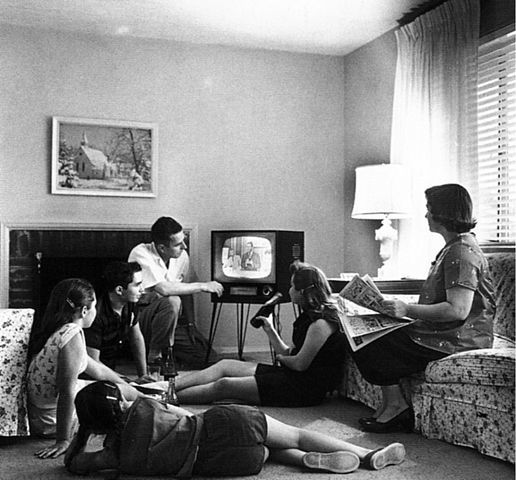
Family_watching_television_1958Class will open with a discussion of Snapshot of a modern learner and it’s implication for the classroom. I will offer a brief lecture detailing aspects of  the “new digital literacy.”

  • Find, decode and critically evaluate information.
  • Curate, store and responsibly share it.
  • Effectively filter information flow and stay focussed.

For more of my thoughts on the impact of digital on teaching and learning, see my post What Happens in Schools When Life Has become an Open-book Test? 

Students will have an opportunity to view GapMinder – a website that exemplifies redefined learning in the digital era. Students will get to use two additional transformative web-based research tools – NGram Viewer and NY Times Chronicle – to develop and test hypotheses. As part of an inclass demo of the power of  word frequency research, students will share their results via a Twitter hashtag: #WordFreq  

Here’s a Storify archive of our research

Books Ngram Viewer and NY Times Chronicle have many interesting applications in the classroom. For example, they can both be used to introduce the research method – form a hypothesis, gather and analyze data, revise hypothesis (as needed), draw conclusions, assess research methods. Working in teams students can easily pose research questions, run the data, revise and assess their research strategy. Students can quickly make and test predictions. They can then present and defend their conclusions to other classroom groups. All skills called for by the new Common Core standards. Ideas for classroom use Books Ngram Viewer and NY Times Chronicle. For more advanced searches using NGram Viewer click here.

Students will be introduced to Evernote a useful tool for curating and storing information and then sharing it with collaborative teams.
Evernote tutorials – Getting started.
How to use Evernote on web. (Use drop down menu to select other operating systems)

Assignment:
Preparations will begin for student design of document-based questions. At this phase students will be introduced to high quality online archives for World History and US  History. Students will create an Evernote Notebook to begin to collect source material for prospective DBQ projects. They will share their notebook with the instructor by eve of Sunday Oct 5. Note: At this point student topics are speculative. Final decisions on topics will not be due until 10/22.


Image Credit: Family watching television. Evert F. Baumgardner, ca. 1958 National Archives and Records Administration