The One Thing You Should Know

3g10232v2

Prompt: Students were asked to design a flipped lesson and then write a blog post that showcases their flipped lesson and reaction to designing it.

For my unit that I will teach in student teaching, I am covering World War One. As I was designing this unit I wanted to think of interesting ways to present the information to students. My cooperating teaching uses a loose flipped classroom model anyway; the students do the reading for homework (they have two days since we are on a block schedule) and then we have discussions, or activities, in class.

For this unit I have probably over done it on the readings; I wanted to give them a broad understanding of things that were happening during the war and a chance to read the primary sources to figure out their own opinion of what happened. This is how I started the unit, in the middle we are taking a look at various historians perspectives on the war to give the students a broad scope and help to shape their ideas.

I’m hoping that by giving them the primary sources first and allowing for deep analysis in class, they will better be able to judge the historical accounts and take what they need out of them for their final paper of the unit.

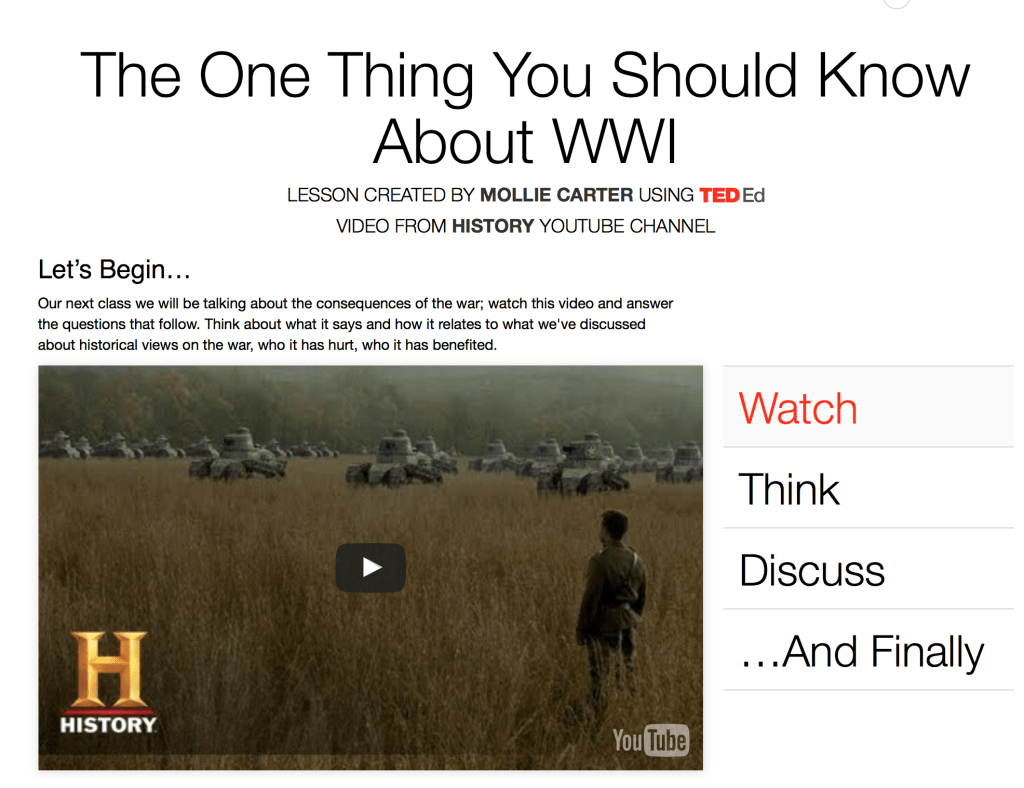
At the tail end of the unit, we will be discussing the consequences of the war and the lasting effects. That’s where a flipped lesson comes in The One Thing You Should Know About WWI.
one thing about wwi

I picked yet another historians perspective on the entirety of the war, but in video form with the use of other visual media to make their points. It’s from the History Channel and it’s entitled “The one thing you should know about WWI”, similar to this post. Following the video there is a short (and easy) quiz and a discussion. As far as their homework goes this is easy.

The next day in class we will be working on an in-class group presentation about preventing this history from repeating itself. I will preface the class with some modern examples of similar actions or conflicts; the students are supposed to be keeping up on current events. And then they will divide into groups to create a sticky-poster about what lessons from WWI modern politicians should keep in mind as they govern their nations.

As an aside, designing the lesson on TEDEd was incredibly easy and, as a peer pointed out, very supportive. There are lots of options as to what to include with the video lesson whether that is a quiz or a discussion or an area to include further links. You can add a lot of depth to the lesson, if one so chose.

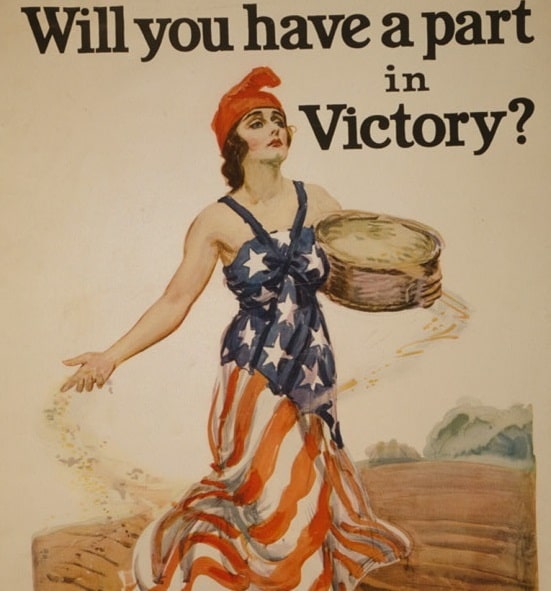
Source: Library of Congress
Title: Will you have a part in victory?
Creator:James Montgomery Flagg
Year: 1918
(Picture is link to source)
Flipped Lesson to Defeat the Manticora Elder Scrolls Online

Prompt: Students were asked to design a flipped lesson and then write a blog post that showcases their flipped lesson and reaction to designing it. 

Screen Shot 2015-11-03 at 6.30.43 PM

Click to play video

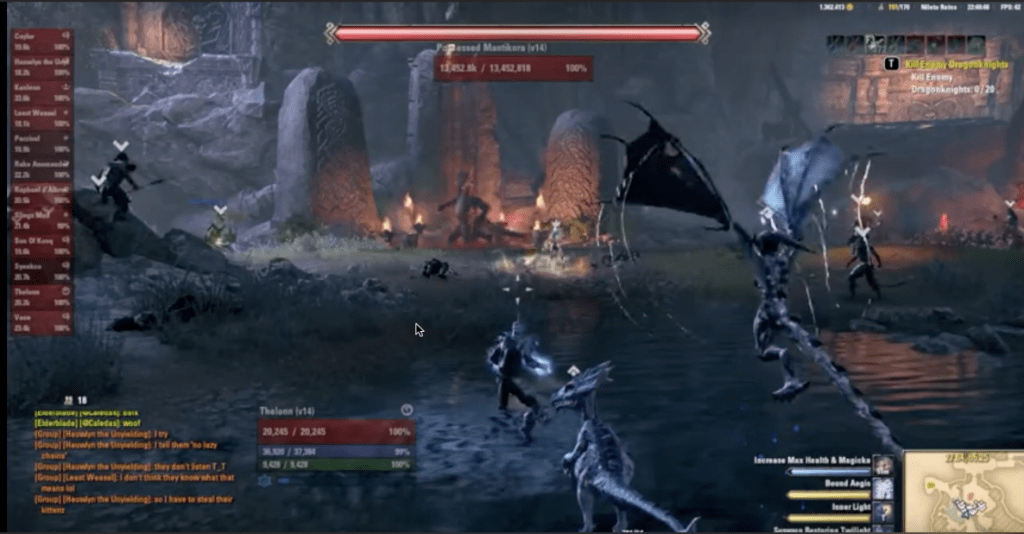
Above is a flipped lesson that I designed using Quicktime on a Mac. I used an already uploaded video from youtube featuring the boss fight of the Manticora from Elder Scrolls Online. In my flipped lesson I go over details on how to defeat the boss using the burn method.

I decided to use the Quicktime program because it seemed more suitable for the lesson that I wanted to teach. The program was a bit confusing at first, but this is do to my lack of experience using a Mac computer. After figuring out how the program worked, I am really pleased with the final product. I could see myself using this program again for my classroom. In fact I did a lesson today on how to use a globe in order to answer question about our planets geography. I believed a flipped lesson of this would have been better then me standing in front of the class lecturing for 20 minutes.

The issue I can see with using the flipped classroom method is that if I was just going to play the video in class I might as well lecture. Instead I would want my students to do the lesson at home. This becomes a concern in having my students do the assignment at home, and do they have access in order to do this assignment at home. The flipped lesson using quick time does not take very long to create. If I was going to use this in the future I would write out my question before hand and model the video a few different times.

For a class project for upper grade level I would like them to use Quicktime to create a presentation rather then having them do an oral presentation. I can see using flipped classroom as more of a project base Jig Saw for the students to create rather then something I would use.

The Technology of History

Classroom-technologies
Classroom Technologies

Prompt: Write a blog post in response to our class on digital history.

During the week of 10/26 we explored digital means that can be used to diversify our lesson material.  Of particular interest in this class was the use of websites and engines designed to show trends over time.  Such websites include the following: GapMinder, NGram Viewer, and the NYTimes Chronicle.  The trends that these programs are capable of showing are of use to us as educators because it allows show some of the material we would otherwise lecture about.  For example it is one thing to say that the use of various racially charged words spiked during times of strife; however, by using utilizing NGram Viewer to search the collection of digitized literature available through Google it is possible to show this.

I can see these sites being of particular use in an social studies inquiry class because of their ability to coalesce data into an easy to understand format for the students to digest.  An example of this would be if a student wished to examine the origins of certain controversies.  By searching the language of various forms of literature (books, newspapers, magazines and journals) NGram Viewer and NYTimes Chronicle give the students access to what seemed to be hot topics from various periods in our history.

Personally, I greatly enjoyed the use of these tools in class and am going to incorporate them where I can in my various placements.

Despite the amazing things that technology can bring to the classroom we must be wary of its ability to take control of the classroom.  Technology can make things easier but its use needs to be regimented so that it supplements not instructs.  Like I said before, being able to show what you are talking about is a great idea.  That is what technology should be for the classroom.

Image Credit: Hets Virtual Plaza

The Trends of Technology

cool

Prompt: Write a blog post in response to our class on digital history.

This week in class we discussed digital history. We have been focusing a lot on how we can use modern technology within the classroom in order to teach history. This particular week, we looked into resources that reveal historical trends. Technological tools can be a powerful source in teaching history to our students. Not only do they provide an alternative visual, but they are also often times hands-on, allowing students to interact with the tool and discover trends on their own agenda. I think that there are many benefits in allowing students to use different technological tools. First of all, provided with the proper resources, students can use these tools individually, instead of one visual up on the board. These days there are excellent hands-on tools that students can interact with on their own. Therefore, instead of the teacher showing students what they want their students to get out of the graph or visual, students can come to their own conclusions and create their own ideas about what they see. In the GapMinder for teachers page, we watched a video about students exploring a GapMinder graph called “Wealth & Health of Nations.” These students reflect on their own conclusions and conjunctions about what the graph is revealing to them.

I am a firm supporter in emphasizing trends throughout history when we teach history. It is a crucial aspect of looking at stories of the world. It helps students to make connections and to see the bigger picture. History doesn’t only need to be viewed and taught by time periods. It can also be taught by specific topics and factors that we can explore throughout time. Sources like gapminder, Google nGram Viewer, and New York Times’ “Chronicle” allow students to explore trends throughout time. Chronicle is an excellent source that shows how often a specific word was mentioned in New York Times newspapers throughout American history. For example, the frequency of which the word feminism was mentioned spiked during the1910’s and the Women’s Suffrage Movement, and then was barely mentioned again until the 1970’s. This can help students to infer a lot about feminism in American history. However, I think that this is a limited source because it only refers to the frequency of words in this one newspaper, therefore Ngram Viewer is a good alternative, featuring all written literature.

All of these tools provide teachers with alternative sources. Teachers nowadays are no longer limited to their own sources and ideas, as these tools are created and shared online. Furthermore, technology also opens up the doors for professional collaboration. The internet is now an ever-updating source of useful tools shared by fellow teachers. The possibilities for teachers now seem to be endless as they share and benefit from each other’s sources and ideas.

Photo: January 15, 2012

Alan Levine. It’s Cool Here