
Learning about Primary Sources

Bruce_Crandall's_UH-1D

Hello! I am working with a group 8th grade students in a 90 minute Language Arts/Social Studies  block. Which is what I had in for this lesson study.

Content: Students will read a letter from the book Dear America: Letters Home from Vietnam.                                                                                                                                                                         This lesson has the following elements:

  1. Examining and analyzing primary sources.
  2. Understanding the role of written letters in peoples’ lives
  3. Applying knowledge of the Vietnam war to primary sources
  4. Understanding the changing perspective of the war in Vietnam
  5. Learning how to work in groups and discuss

Process: In this lesson, students will choose a letter from a small selection of letters (3-4) from Dear America. After they have picked their letter they will read it and highlight what they believe to be important. Students will then share with each other and discuss what they learned from their letter (what was something new that they learned, or what surprised them about the letter). Then as a class we will discuss what the letters are about and how it reflects what we will have learned/read in class. The students will then do a short 1/2 page write up summarizing what they learned about soldiers’ lives during the Vietnam War.

Product: The end product will be a short write up that would include the letter they examined. The letter should show signs that they highlighted and some notes on what they felt to be important.

Evaluation: Learning will be assessed via a rubric, which will be used to grade their short paper and letter examination. This evaluation will show them how well they did at writing and understanding the process that we were going through. Some informal assessment will also come from student participation in both group and class discussion.

What kinds of thinking will students need to do to participate in the lesson?          The students will need to do higher order thinking through analysis and evaluation of primary sources. Students will have to do some kind of reflection on what they think is important when learning about a complicated historical event like the Vietnam War

To what extent do students have options or choices regarding these lesson components?                                                                                                                                                         This activity allows for students to have a choice in the primary source that they analyze. It also allows them to draw their own connections to history.

Reflection: After having gone through the peer review process with this assignment, I made some changes that are reflected in this post. Before these changes, I don’t think my lesson would have worked very well with eighth graders. In my initial lesson study the activities would have been better done with high schoolers. I think with the changes that I have in this post, I would make this an engaging activity for middle schoolers.

Image Credit: Bruce Crandall’s UH-1D
Class 4: Historical Thinking

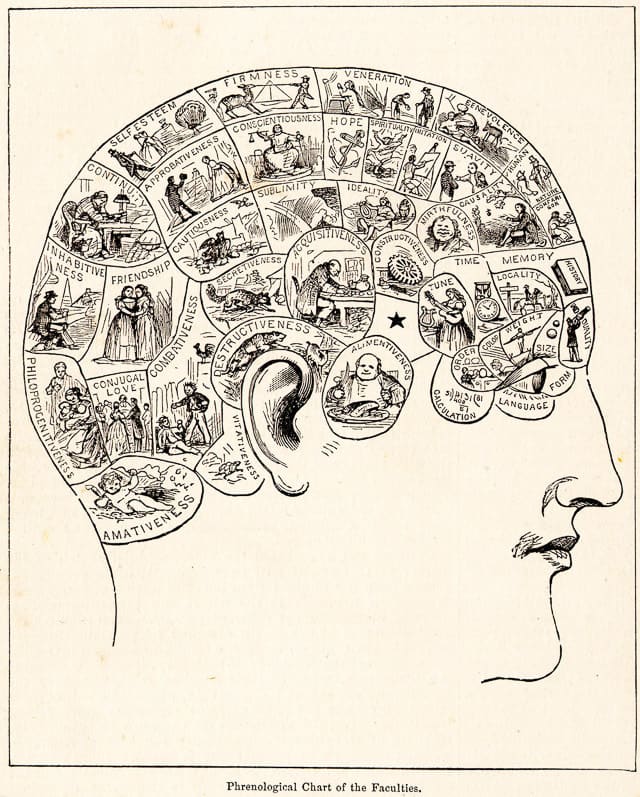
PhrenologyPixOur class begins with a review of the Sam Wineburg reading and TEDEd flipped lesson Who is the historian in your classroom? That will also provide a chance to discuss the efficacy of flipping content.  What are the challenges and opportunities for that approach?

Today we begin our study of historical thinking skills based on the work of Sam Wineburg and the Stanford History Education Group (SHEG). We will focus on three key skills – Sourcing, Contextualizing and Corroborating. See historical thinking chart (pdf at SHEG).


Assignment for Class 5

You will each design a historical thinking mini-lesson based on the Beyond the Bubble assessment model.

We will use this assignment as a chance to create a shared Google presentation. I’ve prepared some brief Google Presentation video tutorials. You can find them at this YouTube playlist / Working with Google Slides.

Here’s the Fall ’14 project that you can look at (but not edit). Can you do better?

Note: each of you will be contributing to the same Google Slides presentation. I’ve listed your names in alphabetical order in the presentation. You will turn that name placeholder slide into your mini-lesson title slide. You will insert additional slides in your section of the presentation as needed.

All mini lessons should include

  1. Title slide for your mini-lesson. Make it catchy!
  2. Your name as author of the mini-lesson on your lesson title (your lesson will take multiple slides in the presentation – have your name in small font at bottom of each slide)
  3. Target students – by grade level
  4. Indication of one (or more) of the historic skills to be studied – Sourcing, Contextualization, Corroborating
  5. One or more historic documents. Text, image and videos can be inserted into the slide. Longer documents can be linked to via URL or saved in Google drive with link to it.
  6. Source URLs for all documents used
  7. Essential question
  8. Scaffolding questions for students to use with documents
  9. Brief description of how the documents and scaffolding questions should reinforce the targeted historic skill(s)

I’ve collected some great websites that include many of the major archives from around the world.

Best Sites for Primary Documents in World History

Best Sites for Primary Documents in US History


Image credit: Phrenology diagram Wikipedia
Source From People’s Cyclopedia of Universal Knowledge (1883)

Psychology Research Methods: The Lesson

Milgram_experiment_v2.svg

Content

This lesson is intended to introduce students to research methods in psychology that they will be using throughout the semester. It will also give them a context to evaluate psychological studies that they will encounter throughout the course. At the end of this lesson, students should be able to identify each of the three major research methods and their components, evaluate for efficacy in certain situations, and demonstrate understanding of the week’s vocabulary (which includes aspects of the research methods).

Process

This lesson will begin with a PowerPoint lecture on the research methods—descriptive research, correlational research and experimental research—and the important aspects of each that will be assessed later in the semester (including vocabulary, such as independent variables, control variables, and hindsight bias). Because the majority of the students will have already been exposed to the vocabulary words and may have a working understanding of some of the concepts to be covered, the lecture is intended to be brief and interactional—the teacher will engage with students to share what they already know rather than be handed the information all over again. See attached PowerPoint presentation.)

Following the lecture, students will be broken into their pods (small groups of 3). Each pod will be assigned a particular descriptive method that was just discussed in the lecture, and given a worksheet (attached). Students will have about 15 minutes to design a study within their group that describes High School cafeteria behavior. Their study should be a representation of the kind of research method they have been assigned. Once they have completed the questions regarding the design of their study, they should have their design signed off by the teacher. Once it is approved, students will share their study with another group in the class who was given a different kind of study. Students will be encouraged to ask questions and evaluate the other group’s study for problems, e.g.  are there any confounding variable they did not think about; is their study clear enough; is there any bias? Students will then turn in their worksheet as an example of their proficiency in descriptive methods of research.

Product

Students will complete a worksheet. The first portion asks them to determine variables in a psychology experiment. The second section relates to the study each group designs during class.

Evaluation

Student learning will be assessed informally by the teacher when they receive approval for the study they design. They will be assessed as proficient if they can use the correct vocabulary in their description and their newly designed study meets the standards of a good psychological study (they have accounted for confounding variables, they have limited all sources of bias, etc.).

What kinds of thinking will students need to do to participate in the lesson?

Students will start by showing understanding of the concepts they took notes on earlier in the lesson. They will also engaging in some application when they design their study for a particular topic. They will be encouraged to discuss their study with other groups and evaluate that study for problems or bias.

To what extent do students have options or choices regarding these lesson
components?

Students will have the greatest amount of choice in the designing of their study. There are numerous ways to describe behavior in a high school cafeteria, and numerous ways to run a study with the particular method they were randomly assigned.

 
Reflection

The activity at the end of this lesson was the second or third iteration of the activity. As I discussed my ideas with my fellow Ed Methods classmates, we were able  to refine it and narrow it in scope. I was able to do that more so after discussing my ideas with my cooperating teacher. The activity went well; students were engaged and interested. They appreciated having the responsibility to be creative in  designing their own study.

The lecture was a bit difficult for the class. Based on the worksheet and conversations with individual students, they had a good grasp of the content. However, since it was an extended period of time where they were only supposed to take notes, it was a bit difficult for them to focus at times. This was a good lesson for me in breaking the lecture into pieces and using more examples.


 Image Credit: Wikimedia Commons

Description: Illustration of the setup of a Milgram experiment. The experimenter (E) convinces the subject (“Teacher” T) to give what he believes are painful electric shocks to another subject, who is actually an actor (“Learner” L). Many subjects continued to give shocks despite pleas of mercy from the actors.

Date: 6 September, 2014

Mad Scientist 101: Introducing The Scientific Method to 5th Graders


Mad Scientists at Work

Overview:
The following lesson plan introduces the scientific method to 5th graders for the first time. I took the approach asking the kids, “who wants to be a doctor, nurse, teacher, scientist, astronaut” etc? This then led to a discussion about challenges we all face in life, no matter what career field or background we come from. All these career fields, and a host of others, use problem solving skills, research, and testing; also known as the Scientific Method to help them solve every day challenges. Included are the 2 handouts I used in bringing this lesson to life.

Candidate: John Buckley Catholic School, Portland, OR
Class/Topic: Science: Introducing the Scientific Method Time: 1:20-2:00
Grade Level: 5th Grade Date: 9/18/2015

Content:
Goal:
A. This central focus of the learning segment is introduce students to the Scientific Method and its’ key areas.
B. The essential skills and/or knowledge to be developed in the learning segment are to identify steps in the Scientific Method and apply it in a scenario.

National and State Standards:
Scientific Inquiry 5.3 ODE
5.3S.1 ODE
5.3S.2 ODE

Objective:
-SWBAT:
-Identify and discuss key aspects of the Scientific Method today (5.3 ODE)
-Explore key vocabulary words related to the Scientific Method.
-Write data results related to their in-class experiment scenario. (5.3S.2 ODE)

-Analyze data and results in a group setting and discussion. (5.3S.1 ODE)

Connections:
A. Requisite skills(s) needed to develop this strategy are.
B. This lesson builds on previous lesson
C. Students make connections between skills by
D. This lesson scaffolds student learning toward the next lesson in the learning segment by

Literacy Integration:
A. The language function addressed in the segment as a whole is
B. Key Concepts/ Vocabulary terms are: hypothesis, experiment, data, and conclusion
C. Other Academic Language that is important in the entire segment is

Evaluation
Formal/Informal Assessment:
Informal Assessment: Ask kids what they think Scientific Method is?
-(Have student scribe write answers on board)

Modifications/Accommodations/Differentiation: Have students work in pairs to assist those with poor reading skills/language comprehension. Will also help build collaboration and teamwork among students in a scientific setting.

Instructional Resources and Materials:
1. Scientific Method Worksheet,
2. Mike’s Bad Breath Worksheet
3. Use of Overhead for Scientific Method Worksheet

Process
Instructional Strategies:
Pre-assessment:
-Opening Prayer
-Introduce Vocabulary words: hypothesis, experiment, data, and conclusion. Have new scribe write vocabulary on board and record the students’ guesses. Give sticky note with vocabulary words to scribe.
-Have student hand out Steps of the Scientific Method Worksheet.
-Compare their vocabulary guesses to the worksheet/discuss differences and similarities. Have scribe update definition on board as needed.

1:30-1:50
-Have students pair up with a neighbor
-Have student hand out Mike’s Bad Breath worksheet
-Read and Discuss Mike’s Bad Breath Scenario
-Have student pairs complete the worksheets. Walk around classroom and be available for questions and guidance.

1:50-2:00 PM
-Discuss worksheet, answer any student questions
-Review key aspects of Scientific Method in question/answer and funny scenario/role play
-Have students put worksheets away and clean their area

Product
Next Step:
SWBAT discuss key aspects of the Scientific Method and apply the basic principles in small groups while working through worksheet experiment.

Reflection: I did teach this lesson 2 weeks ago and it went over very well. Having lots of interaction as far as assessment vocabulary words to measure where the kids were on the subject matter, and also having a great deal of questions and answers and learning feedback helped out tremendously. Both worksheets were effective though next time I teach the lesson I would spend more time developing hypothesis with the kids and coming up with examples on the board as a class. Overall, two thumbs up and I would teach it again.

Mike’s Bad Breath Worksheet Link

Image Credit: http://www.loc.gov/pictures/item/2001699130/