The Pig War: How America Killed a Pig and Won Some Islands

The Pig War, you forgotten piece of American History.

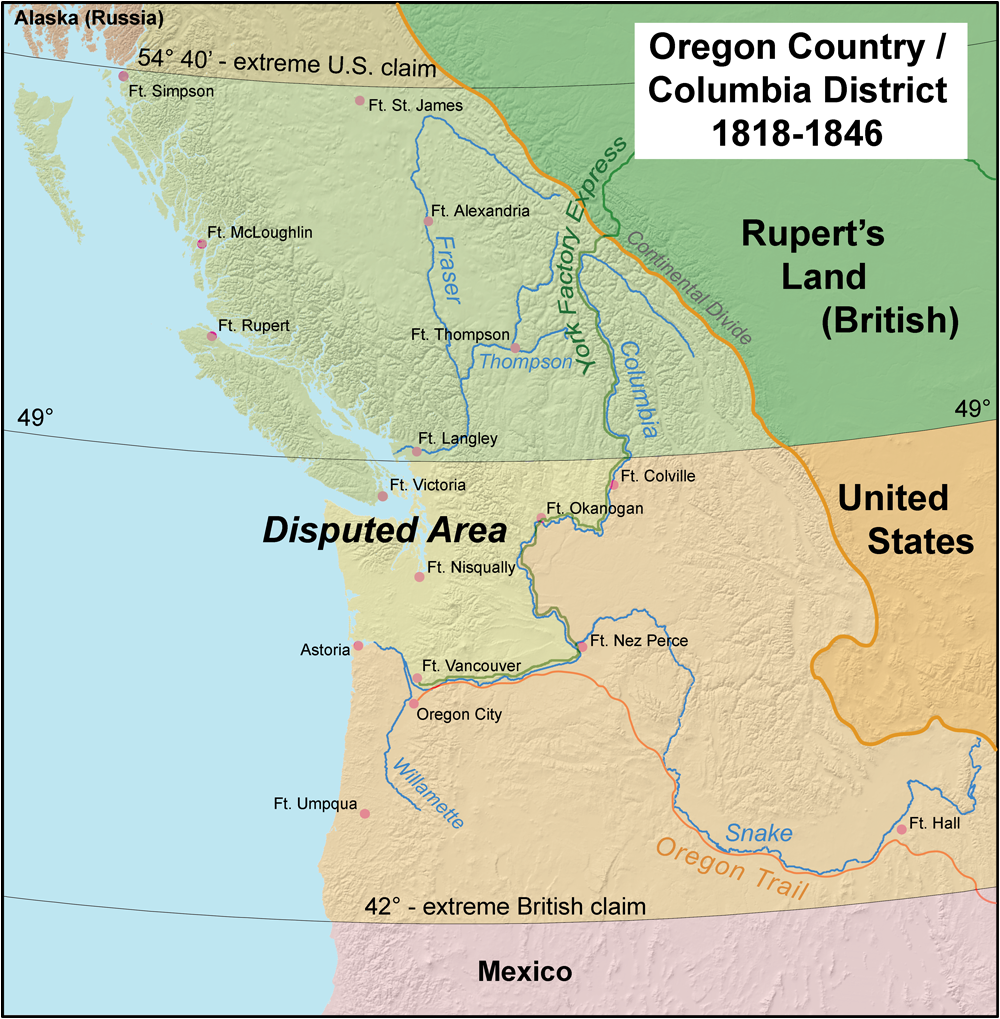
Competing claims in Oregon Country, 1846

How can you even go wrong designing a DBQ based off of the Pig War?  It was an armed conflict between the United Kingdom and the United States in which the only casualty was a British pig — no figurative language here: the only living thing that got shot was a pig who was eating some American’s root vegetables.  Nonetheless, the death of this Suidae would trigger a decade-long joint occupation of San Juan Island and would nearly lead to a shooting war between British and American forces.

The amazing thing about this conflict is that it was bloodless.  Cooler heads prevailed.  Despite having orders to engage the enemy, the British commander refused to go to war over a pig.  Neither side was willing to fire the first shot.

Another intriguing thing about the Pig War is the personalities involved.  George E. Pickett may be best remembered for his blunders in the Battle of Gettysburg, but he honed his military command skills as a leader of the American forces on San Juan Island.  Henry Martyn Robert had plenty of time to think up his “Rules of Order” while stationed at American Camp.  Geoffrey Honby may never have made Admiral of the Fleet if he’d obeyed his orders to rout the Americans.

As a DBQ, there should be be sufficient primary source documents on the Pig War to make for a rich and generative topic.

The American Revolution

The American WarTopic:

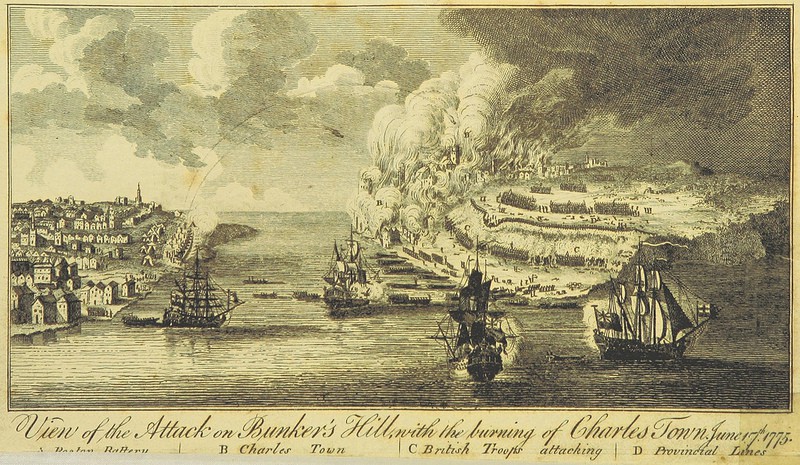
The class I am student teaching in just finished a unit on the Colonial period in America. We are now beginning a unit on the American Revolution, so I thought the topic for my Document Based Question, or DBQ, assignment should be the American Revolution. Using this topic will give me ideas and help me plan future lessons for my class. The essential question I want my students to answer in the DBQ is: Did the American Colonists have legitimate motivations for initiating war and separating from Britain? There are countless documents available for this topic and question, so it is important for me to pick documents that students will be able to interpret questions, such as: What does it say? How does it say it? And what’s it mean to me? I want the students to use evidence to support their answers to the questions pertaining to each document and form an argument based on what they have learned and think. I will use documents such as letters, speeches, governmental records, and pictures so students have a variety of documents from different sources. While I develop my DBQ, I have to make sure I put the students in the role of the historians.

Example Document:

Association of Members of the Late House of Burgesses, 27 May 1774

We his Majesty’s most dutiful and loyal subjects, the late representatives of the good people of this country, having been deprived by the sudden interposition of the executive part of this government from giving our countrymen the advice we wished to convey to them in a legislative capacity, find ourselves under the hard necessity of adopting this, the only method we have left, of pointing out to our countrymen such measures as in our opinion are best fitted to secure our dearest rights and liberty from destruction, by the heavy hand of power now lifted against North America: With much grief we find that our dutiful applications to Great Britain for security of our just, antient, and constitutional rights, have been not only disregarded, but that a determined system is formed and pressed for reducing the inhabitants of British America to slavery, by subjecting them to the payment of taxes, imposed without the consent of the people or their representatives; and that in pursuit of this system, we find an act of the British parliament, lately passed, for stopping the harbour and commerce of the town of Boston, in our sister colony of Massachusetts Bay, until the people there submit to the payment of such unconstitutional taxes, and which act most violently and arbitrarily deprives them of their property, in wharfs erected by private persons, at their own great and proper expence, which act is, in our opinion, a most dangerous attempt to destroy the constitutional liberty and rights of all North America. It is further our opinion, that as TEA, on its importation into America, is charged with a duty, imposed by parliament for the purpose of raising a revenue, without the consent of the people, it ought not to be used by any person who wishes well to the constitutional rights and liberty of British America. And whereas the India company have ungenerously attempted the ruin of America, by sending many ships loaded with tea into the colonies, thereby intending to fix a precedent in favour of arbitrary taxation, we deem it highly proper and do accordingly recommend it strongly to our countrymen, not to purchase or use any kind of East India commodity whatsoever, except saltpetre and spices, until the grievances of America are redressed. We are further clearly of opinion, that an attack, made on one of our sister colonies, to compel submission to arbitrary taxes, is an attack made on all British America, and threatens ruin to the rights of all, unless the united wisdom of the whole be applied. And for this purpose it is recommended to the committee of correspondence, that they communicate, with their several corresponding committees, on the expediency of appointing deputies from the several colonies of British America, to meet in general congress, at such place annually as shall be thought most convenient; there to deliberate on those general measures which the united interests of America may from time to time require.

A tender regard for the interest of our fellow subjects, the merchants, and manufacturers of Great Britain, prevents us from going further at this time; most earnestly hoping, that the unconstitutional principle of taxing the colonies without their consent will not be persisted in, thereby to compel us against our will, to avoid all commercial intercourse with Britain. Wishing them and our people free and happy, we are their affectionate friends, the late representatives of Virginia.

The 27th day of May, 1774.

Signed by 89 members of the Late House of Burgesses.

Document Link

Example Document Questions:

  • What does this document say about the colonists?
  • Is there a tone within the writing of the document?
  • What actions of the British upset these people?
  • What did these colonists recommend be done?
  • How did these Virginia colonists feel about what was happening in Massachusetts?
  • What does this document mean to the future of the Colonies and British relationship?

Reflection:

The process we have used to peer review my ideas have been really helpful. I received great feedback from the “speed dating” of our ideas activity, which helped me further develop my DBQ. The challenges I have faced are coming up with quality questions for each document that will connect back into my essential question. From this process, I am learning to always make sure the student is the historian in the classroom and to make sure I am asking higher level thinking questions for my students. This assignment builds upon the work we did on historical thinking earlier in the semester because I constantly refer to the SHEG website and historical thinking chart. I have to make sure the students are involved in historical thinking skills such as sourcing, contextualization, corroboration, and close reading.

Image credit:

Image taken from page 6 of ‘The American War; a poem in six books, etc. [By G. Cockings.]’ 1781
The British Library 003734518

The Art of Fear Mongering – America and the Red Scare

Document Based Question Assignment:

This assignment was to choose a topic in history, around any time period or issue, and begin to construct a DBQ project around it. Given that the frame around the assignment was large, almost overwhelmingly so with possibility, our distinguished instructor gave us some pragmatic advice which I found helpful. His advice was to choose a topic that unites two key principles: a topic that is engaging, and a topic that has a profusion of useful and available forms of primary sources.

Keeping those two principles in mind, I began to rack my brain for the intersection where they meet for me. When I began to think about designing this lesson or unit for my current and future students of history, I start by thinking of today. What is going on around us now? What are we in the USA tweeting about and musing about around the water cooler right now? The first thing I thought of was the recent headlines and attention being paid to the Ebola crisis in Africa. Some Americans with access to a radio wave or television show microphone, have seemed intent on riling American’s fear on the topic. While others work to calm the fears of American’s and alleviate possibly unnecessary hysteria. That’s where my brain was when it found it, fear. The American propensity to be afraid. It isn’t a new condition or situation. The world is a scary place no doubt but it often seems to me, with our access to 24 hour news cycles and many hours to fill, fear has transformed itself into a new form on entertainment or viewership scheme. This idea of fear mongering in America caused me to look back in our history to other significant times where American’s were afraid. That is how I ended up at the Red Scare being the focus of my assignment.

Anti-Communist Propaganda

I believe the Red Scare adequately fulfills the two principles of access to resources and level of engagement. It was a fascinating time of extremes. On one hand you have post-war America, often idolized today as a simpler time bathed in the golden glow of retrospect. While on the other hand it was a fiercely turbulent time in world politics and world history. There were poodle skirts and soda shops to be sure – but also the lingering fear everyone was going to get wiped off the face of the earth and communists were lurking behind every corner.

Key questions I will work to refine and develop for the unit:

  • What is fear mongering in America? What does it look like, does anyone profit from it?
  • Who and what spread the ideas of fear during the Red Scare?
  • Did Americans during the Red Scare and the Cold War have a legitimate reason to be afraid? Why or Why not?
  • Communism still exists in the world today. Why aren’t we raised to be afraid of it anymore? Has something else replaced it?

Reflection:

One concern I have as I craft this unit is that I work to maintain a focus and align my collected materials toward a central theme. There are many avenues one could take when providing primary documents to facilitate learning about the Red Scare and communism. I will endeavor to edit myself and the documents I choose, to make sure they align with the questions I am posing. I also think it would be great to track down some pro-communist propaganda of the time and do my best to weave in both sides of the anti and pro-communist narrative. We shall see how it evolves as I continue to explore the possibilities.

America is this Correct?

mqdefault

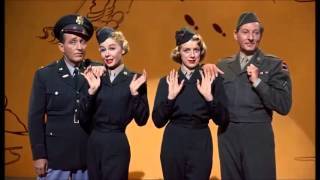
“Gee, I Wish I Was Back in the Army” by Irving Berlin


In 2006, I was riding in a friend’s car down a major thoroughfare in the town in which we lived. We had grown up down the street from each other, had both entered the Army, and had recently ended up as roommates. On this day, a large group of protestors had gathered in the parking lot of a large grocery store near a major intersection. The messages on their placards enraged my friend, who had served in Kuwait, and she rolled down her window to engage in a less-than-friendly conversation with the protestors. One sign in particular grabbed my attention because it stated that soldiers should come home where they belonged, and not be off fighting in a war. What on earth do they think soldiers do? I wondered. War is what we train for, it’s why we spend weeks on end at the range perfecting our marksmanship skills, it’s why we study land navigation and push ourselves to our physical limits during training. It’s not what we want to do, but it’s what we are prepared to do on behalf of our country. How could they say they support soldiers without an awareness of what soldiers do?

I had forgotten about this memory until I began working on a topic for a DBQ project. Initially, I was interested in exploring the theme: What is American manhood? However, after spending time sharing ideas with my fellow classmates, I honed in on a slightly more specific theme to explore: Who is the American soldier? Some of the related questions that came to mind were:

  • How are soldiers expected to behave?
  • How are soldiers viewed (public perception) and treated?
  • How has race changed the makeup of the American military force?
  • How has gender changed the makeup of the American military force?
  • How do socioeconomics relate to the composition of the American fighting force?

As a veteran of the United States Army Reserve, I believe I am uniquely qualified to address this line of questioning. I am well versed in military jargon and familiar with the structure of Field Manuals and other TRADOC (training and doctrine) materials. I am neither embittered or in love with the U.S. military. I also remember many of the early sources of my own information on what it means to be an American soldier. It is an image created from Ernest Hemingway’s A Farewell to Arms, Neil Simon’s Biloxi Blues, and Irving Berlin’s White Christmas. It is an idea informed by Alfred Eisenstaedt’s photograph of a sailor kissing a nurse in Times Square and John Filo’s photographs of Ohio National Guard troops firing on student protestors at Kent State. It is a picture that first formed after watching an Army advertisement on television as a small child, when I misheard the lyrics, and thought that the happy faces of young soldiers were being accompanied by a song that said “be all that you can be, you can lose your life in the Army,” and wondering if the soldiers in the ad knew what lie in store for them.

As I begin assembling this project, I don’t have an established answer in mind. My plan is to follow the documents to see where they lead. Thus far, I have found a wealth of sources related to popular culture, in the form of movies, songs, articles in Time magazine, and Disney and Looney Toons animated cartoons. I plan to explore political cartoons, newsreels, speeches, and newspaper articles. I have not set a specific time frame, but there is such a plethora of documentation for the twentieth and twenty-first centuries that it may be extraneous to include the Revolutionary War, the American Civil War, and the Spanish-American War.