Taking Shape: Thoughts on creating DBQ’s

screenshotAfter spending a few weeks exploring the different avenues available to me for my DBQ, I am finally on a focused track to the finish.  After switching my topic from the more obscure food history topic to the much more document rich Marshall Plan, my issue was not where to find documents, but just the opposite.

There were so many great documents, I found myself following lead after lead on possible directions to take the assignment.  While I learned a tremendous amount about the Marshall Plan, the state of Europe after WWII, and the different opinions throughout U.S. and Europe about the plan, I didn’t feel like I was getting any closer to completing the assignment. But I was finding photos, documents,  and getting more information. Through this research I was able to narrow my focus and choose an angle on which to focus: the differing views on the Marshall Plan from Europe, Russia, and at home in the U.S.. My next challenge was to step away from the history and just look at the documents.  What was I trying to say?  What were the documents telling me?  I finally focused on assembling documents that could tell a story.  Once I had a clear narrative of what I wanted the students to see, the guiding questions practically wrote themselves.

Next up for me is to add the last few pages into iBook Author and begin to fine tune the look and feel.  I will have my classmates review the work to ensure the documents and questions create a clear narrative that will guide the students to address the enduring questions of the unit.

This assignment has been exciting for me on two main levels.  First learning how to write this type of assignment for my students will be something I will continue to work on throughout my career. I am a big believer in having students think like historians.  The other facet is just how much I enjoyed researching the history surrounding the Marshall Plan. Reading all the documents and seeing all the photos was like a DBQ itself.  I will continue to practice, learn, and hopefully inspire my students to do the same.

Practice Makes Perfect?

Teacher Lorraine Lapthorne

As I approached the DBQ assignment, I decided to use images and texts from a literacy class assignment I had just completed. At first, I thought I had a head start, since I had a collection already curated, but as I continued with the assignment I realized I had started in the wrong place. While it was nice to have images and text, I should have started with the essential question AND what I wanted students to experience as they worked through the DBQ.

Working backwards, one of the challenges is finding the essential question that ties everything together. My previous assignment was over a broad topic – the Civil Rights Movement – which I’ve realized is much too broad for a DBQ exercise. Finding the right essential question was key to finding a way to connect the materials together.

The next step was to really think about what I wanted my students to learn as they worked through the DBQ. My first set of materials were loosely related, but would require students to take some large leaps to find the connections. Even with scaffolding questions, it seemed like a stretch. Once I had an essential question identified, then I could focus on the historical thinking skills I wanted students to experience as they worked through the DBQ.

This experience reminds me that the only way to get better at something new is to continue to practice. I have a much better sense of how to organize my thoughts around creating a DBQ and look forward to adding this learning experience to my curriculum development skills.

Image Credit: Teacher, Lorraine Lapthorne conducts her class in the Grade Two room at the Drouin State School, Drouin, Victoria. nla.gov.au/nla.pic-an24229822

Class 13: Working with iBooks Author

History of the Bassandyne BibleThis week we will wrap up our first drafts of our DBQs for inclusion into our collaborative iBook. During the first 2/3s of class students will finalize their content and be sure to have their DBQ reflection written. Then in the last 1/3 of class we will transfer content to iBooks.

Technical aspects
The iBooks will be designed using iBooks Author in the Mac lab. Students will bring digital versions of their DBQs to the lab – including all image and sound files, text files, citations and URLs. Here’s a quick guide to managing your files to get ready for iBooks Author: Get Started with IBA

I’ve created a YouTube channel with some short tutorials that students may wish to refer to. See iBooks Author Tips


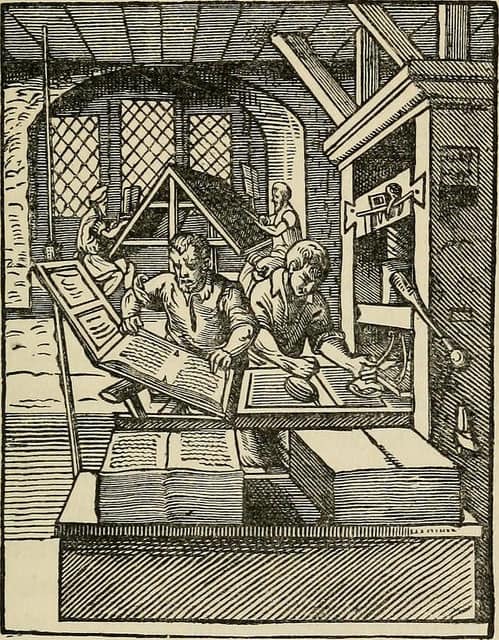
Image credit: Image from page 94 of “History of the Bassandyne Bible, the first printed in Scotland with notices of the early printers of Edinburgh” (1887) William T Dobson,

I get by with a little help from my friends: the gift of peer review

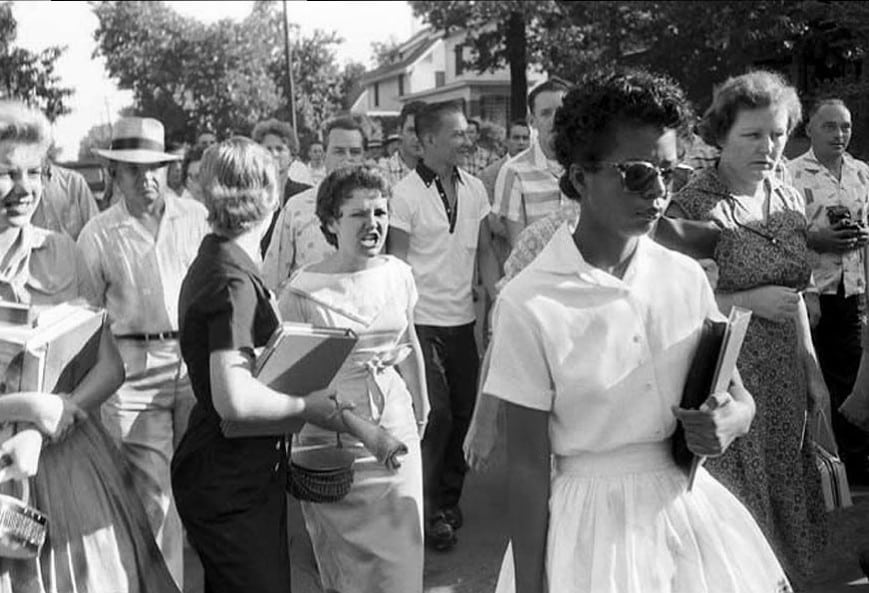
One of the "Little Rock Nine" braves a jeering crowd.
One of the “Little Rock Nine” braves a jeering crowd.

Designing my first DBQ is both exciting and intimidating. Exciting, because I love the idea of having students take ownership of their learning process, but intimidating because I know that a successful lesson requires careful planning and scaffolding. I was grateful that this assignment included a peer review process.

When I came to class last Monday, I had collected primary source documents related to the Civil Rights Movement, but I hadn’t finalized the essential questions or focus of my DBQ. As I talked to my classmates, they challenged me to think about the primary sources I had collected and to focus my question. I realized that my favorite sources were focused on sources that were written by adolescents who were the same ages of my students. I also realized that I needed to find new sources to compliment, “A Poem for My Librarian, Mrs. Long” by Nikki Giovanni and the excerpt of Bone Black by bell hooks.

Peter Pappas suggested finding the iconic photo of the Elizabeth Eckford being taunted and tormented on her way to Little Rock Central High School. While searching for the image, I was able to find an excerpt that tells the story of two teenagers who would become famous that day, Elizabeth and Hazel Bryan.

My classmates were very helpful with this process. As I have discovered in this program, my ideas are even better when I have the chance to talk about my lesson plans and receive feedback on the curriculum ideas. It helps to talk about what I want students to take away from the learning experience and then evaluate the lesson to see if my targets match my activities. Stay tuned for my final product!


Photo Source: http://www.nps.gov/nr/twhp/wwwlps/lessons/crandall/CRvisual5.htm