Literacy DBL Design Project

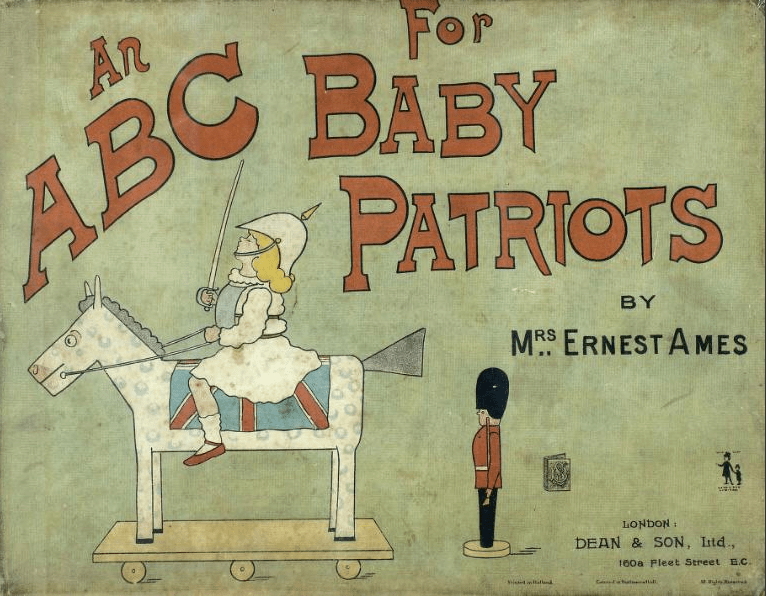
An A B C, for baby patriotsWorking as individuals or in 2 person teams, students will design a document-based lesson (DBL) question suitable for inclusion in our iBook (available at iTunes).

See Class  6 for recommendations for DBLs and Teaching with Documents. Your DBL will include:

  1. Introduction of the DBL with brief historic context as needed.
  2. Generative / essential question
  3. About 5 – 8 related documents (image, text, video, audio) that will assist the students in answering the generative question
  4. Clear statement of what students will be asked to do
  5. Close reading scaffolding question for each document to assist the student in examining the document

A good example of a DBL is Progress and Poverty in Industrial America  This is a pdf version of one of my iBooks. (note: you will not have full function of all the gallery and video widgets). It uses 11 documents, which is a bit more than I expect for your DBL.

The DBL Design Assignment will be accomplished in steps:

Step 1: Develop a proposal which will be submitted for peer review. You should be prepared to deliver a 2 min pitch to class. (not a written assignment to be turned in)
Due date:  10/12.

We’ll do a bit of “speed dating” of our ideas for the DBL Assignment. Students will form two lines and have 2 minutes to pitch their DBL design idea to each other and share some feedback. Then one line will shift and we repeated the pitch exchange. In all students will pitch their idea three times.

The goal of this phase is to gather feedback from peers regarding the following:

  1. You have an interesting generative / essential question worth answering.
  2. Your initial appraisal indicates there are suitable documents available.
  3. You have an idea for how students will be asked interpret your documents.

Step 2: Submit a preliminary idea for your DBL design project for Peter’s feedback by 10/19. It should be posted to a shared Google folder.

Here’s a short video on using shared Google folder

It can be in the form of a Google doc that addresses:

  1. Where will you use it?  Grade, course, etc
  2. An interesting generative / essential question worth answering.
  3. 3 -5 suitable documents (include links).
  4. A brief explanation of “what are the kids going to do?”

Note: This is not intended to be a fully developed lesson. Just an idea of where you intend to go.

Step 3: Prepare content for iBooks Author lab session on 11/23

Workflow? See this guide Getting Ready for iBooks Author 57KB pdf

Step 4: iBooks Author design session 11/23

Step 5: Peer review of draft iBook 11/30

Step 6: Write a reflection on your DBL design process and post to our blog (your final post). It will also be added to your iBook chapter – due 12/6.

Step 7: Final design session in Digital lab 12/7


Title: “An A B C, for baby patriots”
Creator: Ames, Mary Frances
Publisher: Dean & Son
Place of Publication: London (160a Fleet Street E.C.)
Publication Date: [1899]
Archive: University of Florida UF00086056:00001

“I Can Be Your Hero, Baby [America]:” Thomas Hutchinson and Colonial Perception

Thomas Hutchinson

Grade Level: Grade 11 American History

Lesson Context: This lesson is intended to conclude discussion of the loyalists as a part of the American Revolution. The lesson asks them to analyze different images from the colonial period to get a better understanding of loyalism and its impacts in the American colonies.

Essential Question:Was Thomas Hutchinson the villain that many American patriots made him out to be or was he an American hero?

Historical Thinking Skill: Contextualization and Sourcing

Primary Sources: Cited in Bailyn, Thomas Hutchinson in Context, The Ordeal Revisited

The Virtuous Patriot
Image 2 – Nathanael Low’s The Virtuous Patriot,
1775, cited in Bailyn article above
Revere Wicked Statesman
Image 1 – Paul Revere’s Wicked Statesman,
1774

Click to enlarge images

Scaffolding Questions (used for both images):

  1. What kinds of imagery does the artist use to depict Thomas Hutchinson?
  2. What kinds of things would you assume from this print about what people thought of Hutchinson?
  3. Do you think this image is representative of the feelings of all American colonists about Hutchinson?

Rationale: Students will be encouraged to consider the types of images and metaphors that each artist uses to describe Thomas Hutchinson in each image. Students should compare/contrast them.

Scaffolding questions for discussion:

What has changed from image 1 to image 2?

What was going on in the colonies and Great Britain between 1774 and 1775, when these two sources were published?

What other questions would you ask about these sources to better understand Thomas Hutchinson as a historical figure?

Suggested assignment for further analysis:

Based on discussion and students’ answers to the scaffolding questions for each individual image, students should chose the image they find more compelling, and create their own image that reflects similar themes.  For instance, if they decide that loyalists such as Thomas Hutchinson were patriots who wanted freedom but also wanted to maintain relationship with Great Britain, they would choose the second image, and use similar metaphors in their own drawing.

Reflection:

With this particular lesson, it is important to bring the two historical thinking skills (contextualization and sourcing) to the forefront of discussion. Students should begin to recognize that the sources, produced in 1774 and 1775 respectively, by different artists, both in Boston, reflected changing perceptions of loyalists during the war. By 1775, the drama of the American Revolution had escalated, and Thomas Hutchinson was no longer the governor of Massachusetts. The second image, rather than representing his death, represents instead his fall from power, and the mourning of those loyalists who supported him.


Image Credit:

Wikimedia Commons

Massachusetts Colonial Governor, Thomas Hutchinson

1741 by Edward Truman

Affronts, Indignities, and Dangers: Slavery in the Roman Empire

Statue of Pliny the Younger on the façade of the Cathedral of St. Maria Maggiore in Como.

By: Heidi Kershner

Target Students: 6th grade

Historical Thinking Skills: Contextualization, Close Reading, Sourcing

Essential Question: What was the nature of slavery in the Roman Empire?

Rationale: The scaffolding questions listed below ask students to first locate the document within time and space. Having done this, students are then asked to engage both with the provided document and other secondary sources in order to further understand the institution of slavery in a Roman context. Finally, students are called upon to determine what might be unsaid in the document. To answer this, students will need to use what they already know about Roman history and society in order to fill in the blanks of Pliny the Younger’s letter.

Primary Source:

“XXXIII To ACILIUS THE atrocious treatment that Largius Macedo, a man of praetorian rank, lately received at the hands of his slaves is so extremely tragical that it deserves a place rather in public history than in a private letter; though it must at the same time be acknowledged there was a haughtiness and severity in his behaviour towards them which shewed that he little remembered, indeed almost entirely forgot, the fact that his own father had once been in that station of life. He was bathing at his Formian Villa, when he found himself suddenly surrounded by his slaves; one seizes him by the throat, another strikes him on the mouth, whilst others trampled upon his breast, stomach, and even other parts which I need not mention. When they thought the breath must be quite out of his body, they threw him down upon the heated pavement of the bath, to try whether he were still alive, where he lay outstretched and motionless, either really insensible or only feigning to be so, upon which they concluded him to be actually dead. In this condition they brought him out, pretending that he had got suffocated by the heat of the bath. Some of his more trusty servants received him, and his mistresses came about him shrieking and lamenting. The noise of their cries and the fresh air, together, brought him a little to himself; he opened

"The Gladiator Mosaic" at the Galleria Borghese
“The Gladiator Mosaic” at the Galleria Borghese

 his eyes, moved his body, and shewed them (as he now safely might) that he was not quite dead. The murderers immediately made their escape; but most of them have been caught again, and they are after the rest. He was with great difficulty kept alive for a few days, and then expired, having however the satisfaction of finding himself as amply revenged in his lifetime as he would have been after his death. Thus you see to what affronts, indignities, and dangers we are exposed. Lenity and kind treatment are no safeguard; for it is malice and not reflection that arms such ruffians against their masters…I can tell you one further circumstance relating to Macedo, which now occurs to me. As he was in a public bath once, at Rome, a remarkable, and (judging from the manner of his death) an ominous, accident happened to him. A slave of his, in order to make way for his master, laid his hand gently upon a Roman knight, who, turning suddenly round, struck, not the slave who had touched him, but Macedo, so violent a blow with his open palm that he almost knocked him down. Thus the bath by a kind of gradation proved fatal to him; being first the scene of an indignity he suffered, afterwards the scene of his death. Farewell.”

Pliny, the Younger (2011-03-30). The Letters of Pliny the Younger (Kindle Locations 798-810).  . Kindle Edition.

Secondary Sources:

1. Frey, W., J. Bergez, A. Joseph, & Teachers’ Curriculum Institute (2004). History Alive! The Ancient World. Palo Alto, CA: Teachers’ Curriuclum Institute.

2. “The Roman Empire in the First Century.” Retrieved from: PBS 

Scaffolding Questions:

  1. Who wrote this letter? Around when and where was this letter written? Use your textbook and/or this PBS site to answer these questions.
  1. Given what the author tells you about Largius Macedo, what can you infer about slavery in the Roman Empire?

3.  What hasn’t the author told us in this letter–what has been left out?

Summary & Reflection

During this mini-lesson students will be asked to engage with the primary source (Pliny the Younger’s letter) itself as well as use secondary sources (the PBS website and their textbook) in order to discover more information about the primary source. This lesson should occur during a larger unit about ancient Rome so that students will have some background information about ancient Roman society and its stratification. This lesson will serve as a jumping off point to talk about slavery in the ancient Roman Empire and how it compared to manifestations of slavery in other time periods and regions of the world. Once students have answered the above scaffolding questions they will then be called upon to create a 4-5 panel comic strip displaying the events described in the letter from the perspective of Largius Macedo’s slaves. This exercise will call upon students to critically engage with the primary source, especially in terms of “reading the silences”–deciding what has not been said.

I found the design process for a lesson using the SHEG model to be a lot more difficult than I anticipated. It is a very thorough and thoughtful process that I look forward to using again in the future. This particular lesson I think would be a great starting point for a larger lesson about slavery and its various manifestations and/or social class in general.

Image Credits:

“Como – Dom – Fassade – Plinius der Jüngere” by Wolfgang Sauber – Own work. Licensed under CC BY-SA 3.0 via Commons – Link

“Borghese gladiator 1 mosaic dn r2 c2”  Originally from en.wikipedia; description page is/was here.. Licensed under Public Domain via Commons – Link

The Golden Girls: Women’s History of The California Gold Rush

II_img1 

“The Golden Girls”

Target: Middle/High School Social Studies
Skills: Sourcing, Contextualization, Corroboration
Topic: A Women’s History of The California Gold Rush
By: Monica Portugal

EQ: How were women treated in the California Gold Rush?


women1Description: This lesson would best follow a lecture of the California Gold Rush in order to help students create a better connection to the following documents. The purpose of this lesson is to provide a women’s history of this commonly viewed, male centered adventure.

Directions: Students will first write a half page reflection as to what they thought women in the Gold Rush looked like, acted, or did. Students will then read each document in groups of 2-4, and answer the accompanying questions that go with it. As a class we will then share our answers and have an open discussion on the documents we just read.

At the end of this lesson, students will individually reflect on their answers, write a summary about the lesson, and answer the EQ. Students will then compare and contrast the reflection they wrote before the lesson, and the reflection they written after.

Source #1: Newspaper Article 

  • Using prior knowledge about the California Gold Rush, what surprises you in source 1, and how has it changed your image of the Gold Rush?
  • What does this document tell us about the women who ventured to California during the rush? (Occupation, income, attitudes)
Eliza-Farnham-1 Mrs. Farnham In California
(February 27, 1850)

“Women are more in requisition than gold, or anything else Those who came out with me had immediately offers of employment at $75 and $100 per month. If there had been five hundred instead of five, they could all have engaged immediately on similar terms. They must be got here in considerable numbers before society can take any shape or assume any character. I hope that while our good brethren at home are bestirring themselves kindly lo send out clergymen, they will not forget that the best of all missionaries to such a population are resolute, virtuous, intelligent women. One of the chief difficulties that were felt by the women who consulted me, was the fear that they should not be protected against rudeness, or perhaps something worse. I reasoned with them that it would not be so, but it was difficult to convince by argument . Therefore let the fact be known to all who care to know it, that the utmost possible deference and care are shown to females; and that any woman, to experience rudeness or insult here, must expose herself much more imprudently than she would to incur the same risk in your cities. No woman need fear to come here who has the sense and energy to take care of herself elsewhere; and she will have, in her capacity for any occupation suited to her sex. a better capital than the gold mines. If there had 1,000 females sailed last May, they would, all who chose to, be profitable employed this day . Everything is scarcer here than gold.”

-Eliza Farnham

Source #2: Advertisement

  • After reading this document, who do you think the audience is, and what do you think was the purpose of this document?
IMG_2222
A Husband Wanted
 “By a lady who can wash, cook, scour, sew, milk, spin, weave, hoe (can’t plow), cut wood, make fires, feed the pigs, raise chickens, rock the cradle, (gold-rocker, I thank you, Sir!), saw a plank, drive nails, etc. There are a few of the solid branches; now for the ornamental. “Long time ago” she went as far as syntax, reap Murray’s Geography and through two rules in Pike’s Grammar. Could find 6 states on the Atlas. Could read, and you can see she can write. Can - no, could - paint roses, butterflies, ships, etc. Could once dance; can ride a horse, donkey or oxen, beside a great many things too numerous to be named here. Oh I hear you ask, could she scold? No, she cant you --- you---- good-for-nothing----! Now for her terms. Her age is none of your business. She is neither handsome nor a fright, yet an old man need not apply, nor any who not a little more education then she has, and great deal more gold, for there must be $20,000 settled on her before she will bind herself all the above. Address to Dorothy Scraggs, with real name. P.O Marysville.”

VI_img1 Ending Questions:

  • After reading the given documents, what do these sources tell us about women in the Gold Rush?
  • Do you think these sources agree with another, or disagree?
  • What inferences can we make about women who were present in the California during the Gold Rush?

Brief Summary/Reflection:

The combination of these documents and the scaffolding questions that accompany them, are intended for students to reflect on this history, and look at these primary sources in a new light in the context of its history. Students will be required to consider the purpose of these documents, and why the authors would have written them. Students will also be forced to consider how these documents are in dialogue with another, and determine whether these sources provide the evidence needed to support their final claims.

For this mini lesson I wanted to provide primary sources that were fun and interesting to read, while at the same time provide a different perspective on the history of the Gold Rush. I stumbled upon these documents while working on a research paper and loved how it showed a completely different image of the 19th century women. I am currently conducting my student teaching at a high school, and have shared some of the documents I am using for my senior thesis with my students. As I was telling them the story of some of my sources, I was pleased to see their interest light up, and their curiosity  begin to creep in. It is because of reactions such as those that I hope to provide my students with sources that make them question the context of it, and discover a new story to be told.

Image Sources:
http://Photo From: California State Library: https://www.library.ca.gov/goldrush/images/goldrush_pic/II_img1.jpg
https://www.library.ca.gov/goldrush/images/goldrush_pic/VII-2_img2.jpghttp://www.sierracollege.edu/ejournals/jsnhb/v4n2/farnham.html

Source #1:
Ilinois Digital Newspaper Collection: http://idnc.library.illinois.edu/cgi-bin/illinois?a=d&d=SJO18500227.2.146

Source #2:
JoAnn Levy, They The Elephant. (University of Oklahoma Press, 2014), 176.