Source – President Lyndon Johnson signs Medicare into law
Inquiry skills are at the heart of social studies and lessons that provide students with the chance to engage with rich primary sources are unparalleled opportunities for growth. In the document-based lesson (DBL) I prepared for this course, I sought to familiarize high school-aged social studies students with the ways in which the US federal government has changed over time by asking them to engage with samples of popular discourse surrounding Social Security, Medicare, and the Patient Protection and Affordable Care Act (ACA) at various points in the programs’ respective histories.
Students are presented with arguments made by high-profile figures and various forms of public opinion data. They are then asked to use this information as well as their knowledge of the historical contexts in which these debates take place to recognize connections between these debates and themes underlying the ways that US government and politics have shifted in the last century. Students demonstrate their ability to use the documents to arrive at such conclusions in both a class discussion and a written response to the lesson.
The experience of creating this DBL will inform my approach to the development of future lessons. In particular, I feel that incorporating sources that create opportunities for less proficient readers to engage in grade-level inquiry is important. In this case, I included videos, photographs, and a graph. The diverse character of the documents ensures that barriers to participation in the lesson are minimized.
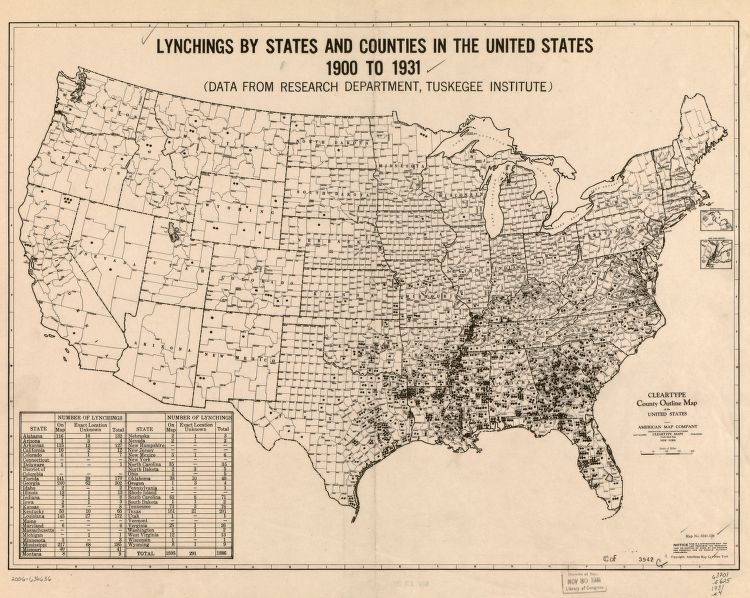
Throughout the entire process of creating my document based lesson I was incredibly engaged. The idea of setting up students to serve as historical detectives was fascinating and doing the research to “uncover” primary sources/information proved incredibly fruitful and fulfilling. I even felt like a historical detective at certain points, especially when the Schomburg Center for Research in Black Culture emailed me the court transcripts from Jesse Washington’s “trial” in Waco, Texas!
Focusing on the lynching of Jesse Washington was certainly a emotionally/spiritually challenging task for me, however, and I initially struggled with the idea of what I wanted students to actually do with this information and what my intention for the lesson was. “Do I want students to get angry over Jesse Washington’s lynching and just sit in that anger? Do I want students to see how groups like the NAACP rose to prominence because of the work they did to quell lynchings? What am I trying to get at?” Ultimately, I ended up deciding that my intention was multifaceted… I am totally fine with students getting upset over historic injustices (after all, who learns about events like the Holocaust or Jim Crow and DOESN’T get upset?) because I believe that will ignite an inner fire/passion to fight against present day injustices and, of course, I want students to feel empowered in their ability to contribute to society for the better so I felt the need to highlight the NAACP’s article in “The Crisis” and Billie Holiday’s “Strange Fruit” as examples of resistance.
I truly appreciated this process and wish I had more opportunities to engage in document based learning during my secondary education career. I fully intend on utilizing this type of lesson in my future classroom in sha Allah.
If anybody who reads my chapter on Jesse Washington and the dark legacy of American lynchings has any feedback or recommendations, I would love to hear from you. Please feel free to contact me on LinkedIn. Much obliged.
For my DBL I designed a lesson that addresses the disaster that happened in the ancient Roman city of Pompeii. Since I am not placed in a history class at the moment I wanted to design my lesson to flow with any history or social studies class that would be studying ancient civilizations or natural disasters. I wanted an interesting lesson that offered a wide range of documents that would allow students to engage fully into the lesson regardless of needs.
Designing a Document Based Lesson, or DBL, has been a great experience. I learned the importance of creating a generative question that serves as a guide for student learning. The hard part was finding documents that best fit this question. I wanted to show the students how devastating the event was and how important it is to look at a variety of sources that are out there. This also puts students into the place of the researcher as they see the evidence that modern historians were faced with in their attempt to understand the catastrophic event.
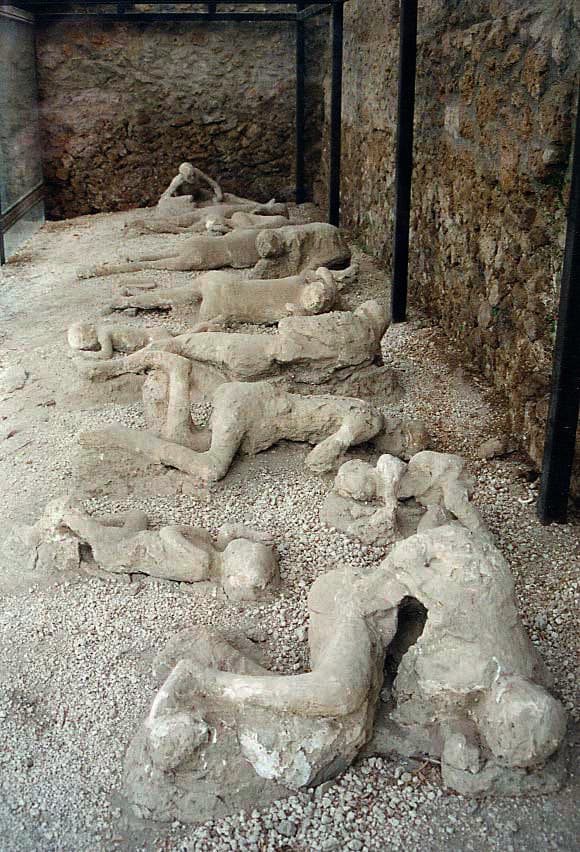
I struggled with what sources I should attach to this DBL. I wanted a first hand experience of the events along with some “modern” photographs. The hard part for me was finding what photographs I would provide the students for the DBL. There are a lot of photographs out there on Pompeii, of many different artifacts as well as the location itself. I wanted to pick photographs that best capture the event in a student friendly fashion. It was important to include the bread loaf that was fossilized by the ash because it is so relate-able to their lives. I could of simply front loaded a bunch of photographs of fossilized victims of Pompeii; however, I felt that this would just distract the students rather then help them understand the event. This could also have felt very de-contextualized.
If I had to do the DLB again I would like to find a few more documents of related to the event. I am happy with the photographs and video I have. That said, I feel that the for the lesson to be truly complete I would like a few more textual sources for students to go over and maybe contextualize between. I will continue to strive to build lesson that scaffold students knowledge and experience.
Caleb Wilson. wilsocal17@up.edu
Lancevortex. (2000) Garden of the Fugitives. (Image). Web Accessed November 11, 2015. Retrieved source
The topic of my document-based lesson project is Japanese warrior identity as shown by Medieval era (1185-1868) depictions of warriors. In the lesson students are asked scaffolding questions that help them look at the underlying biases that go into the varied depictions that we are looking at. By doing this students will be interacting with the sourcing of documents, while forming a contextualization of the time period and society that had its top class dominated by warriors.
Using the sources that I chose, students will be able to engage in the question of how groups of people are depicted and why these depictions and the truth may not actually match up. I intentional choose semi-historical depictions of the Samurai to showcase how depictions reflect the identity of the time period that they were created in.
From the first step in creating this document based lesson I knew that I wanted to do something with Medieval Japan. My mind instantly thought about the many woodblock prints (Ukiyo-E) that became massively popular during the Edo Period of Japanese History (1615-1868). By paring these more recent images of warriors and events, that were popularized by the war tale genre, with the war tales and their definition of valor and bravery, I felt that students would become engaged with this material readily. I knew that I would have to include a source from the war tales themselves to be able to tie all the images together so I picked the ending scene from the Hogen Monogatari. While the inclusion of more documents would help, I think that the depictions that I chose give students the chance to question why these documents were made and why these documents became so well known within Japanese society.
Medieval Japan is a secondary topic of study for most World History classes. The time devoted to Japan is either at the very end of the year, when teachers are looking to fill time, or as an aside to exploration of China. As this document based lesson shows, Japan’s Medieval period is filled with a gold mine of historical inquiry. Japan’s Medieval period is filled with a great many questions that reverberate across the entire world during the Medieval period. The one that this lesson focuses on is, What does it mean to be a warrior. by looking at this question students will have the opportunity to see how extremely different cultures view the same topics and begin to see how different cultures and groups respond to challenges. By engaging in these questions, students will have the opportunity to be junior historians and engage in the material the same way that a historian would.
At the end of the lesson I would have one of two activities. The first activity would be a standard argumentative essay that asks students to show me whether or not the depictions of Samurai offered up by the documents are justified or are they hiding the villainy of an entire group of people behind a facade of fiction. Another activity that could end out this unit would be for groups of students to create a movie poster for a fictional film that depicts Samurai. In doing this students would be asked to show whether or not their film would promote the Samurai or vilify them using the documents and depictions as a base. These two activities allow students to engage with the generative question of these lessons which is, what does it mean to be a warrior? In addition, the second activity allows students to display their understanding of the documents by depicting how the documents only show a side of the warrior class.