We Published an iBook!

Exploring_HistoryJust published at iTunes: Exploring History: Ten Document-Based Questions. 98 pages filled with interactive widgets and videos.

Download free at iTunes and be sure to give us a star rating and / or a review.

Ten engaging questions and historic documents empower students to be the historian in the classroom. The units draw from a fascinating collection of text and multimedia content – documents, posters, photographs, audio, video, letter and other ephemera. “Stop-and-think” prompts based on CCSS skills guide students through analysis of the primary and secondary sources. Essential questions foster critical thinking. All documents include links back to the original source material so readers can remix the content into their own curated collections

It’s a great resource for use in the classroom, and it serves as a model for teacher or student curation of historic content into interactive digital DBQ’s. For more on the content design, click here. For more on how we used iBooks Author, click here.

American and World History chapters include:

  1. “Red Scare Propaganda” by Kristi Convissor and Christina Steiner
  2. “Anne Frank: A Timeless Story” by Erin Deatherage
  3. “Easter: Irish Uprising 1916” by Peter Gallagher
  4. “Images and Emotion: WWII Propaganda” by Aram A. Glick
  5. “Music and the Anti-War Movement of the 1960s” by Samuel T.S. Kelley,
  6. “Cross-Cultural Contact: Native American and European” by Tom Malone
  7. “Visions of Freedom: The American Revolution” by Collin Soderberg-Chase
  8. “The Fight for Civil Rights: Women’s Suffrage in Visual Media” by Heather Treanor and Cory Casanova
  9. “The Power of Propaganda” by Kyle Stephens
  10. “Media and War: An Analysis of Vietnam War Propaganda” by Damian Wierzbicki.
Class 14: Proofing our iBook

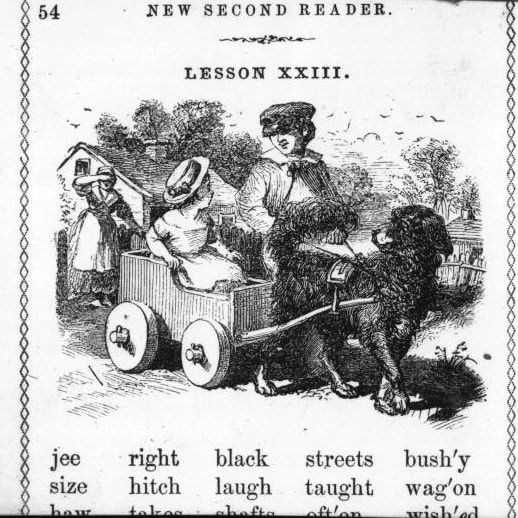
McGuffey's Reader

Here’s our workflow for collaborating on an iBook showcase of student designed DBQs.

During the last class session students used their prewritten text, selected images and video, they used about 2 hours of lab time to complete their chapters. They shared their chapter files and following class, I compiled their chapters into a single iBook and we use some class time to critique and see how chapters fit together. See draft iBook file here. (12.6MB pdf) Note: it still needs a cover, introduction and much editing.

I’ve arranged to have the iBooks draft file loaded on to iPads for the students to use. In Class 14 we will proof the draft and collectively design a cover and intro. After some final edits, I’ll upload to iTunes. Net result a student publication in just a few hours of lab time (with all research and writing done in advance)

Image credit: McGuffey’s Reader illustration n.d.
Miami University Library: nn-1351

Reflecting on the DBQ Assignment

Image

The goal of my DBQ project was for students to gain an appreciation for how one’s perceptions of an event can be manipulated through media. The idea was for students to examine a variety of items, identify the techniques employed in conveying the message, and evaluate whether or not the techniques were effective. After investigating the media content within the lesson, students would apply what they learned by curating a series of media items that depict a certain perspective in a contemporary conflict.

Reading my original proposal for the project, I feel the final product achieves the goals I initially set forth. The lesson contains a variety of media types (print, posters, photos) and each example is accompanied by a set of questions that challenge students to do more than just identify what they see. I’m pleased with what I created because it approaches the study of history through a different lens. I can see this being more enjoyable than reading a history text or listening to lecture on a more traditional topic.

Though I am pleased with what I created, reservations do exist. This product has yet to be used. I don’t know how students or educators will react. Will they learn or appreciate the material I put forth? Will they find it engaging? It’s hard to say; especially since this was the first DBQ project I created. Teachers must always reflect and adapt. The project I created feels like a solid first step, but I want it to be used so I know how to make it better.

Once I decided upon a topic, the process was straightforward. However, I did run into one hurdle: curating the media. Selecting relevant pieces was challenging and time consuming. There is so much iconic media from the Vietnam era, but not all it was applicable to my objective. Using the wrong piece could lead to confusion and undermine what students are supposed to take away from the lesson.

A link to the final product on Learnist: Media & War

Image Credit: Louisiana State University Library 

LSU student Luana Henderson participated in a peaceful protest against the Vietnam War held in 1970 on the LSU campus. The poster behind her refers to the killing of four students by National Guardsmen during a protest that turned violent at Kent State University in Ohio. University Archives, LSU Public Relations.

This DBQ is part of our class-produced, multi-touch iBook. Available free at iTunes

Women’s Suffrage Reflection Part II

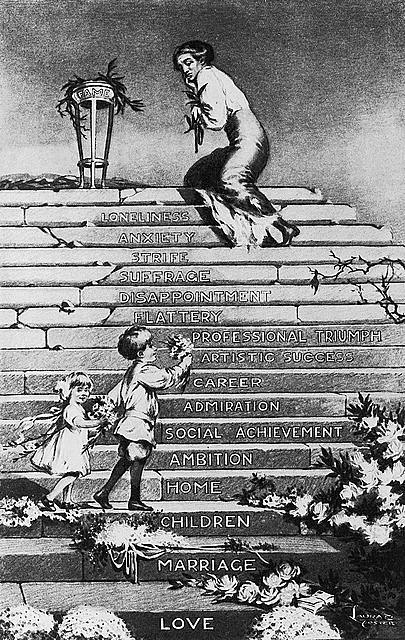
Looking backward  -Laura E. FosterWhen we first started working on this DBQ we knew that we wanted to educate students on how to best analyze propaganda, understanding what each piece is trying to say, being able to discover how each piece goes about conveying its message, and what historical events are transpiring to bring about such pieces of work. At the beginning of this DBQ lesson there was talk of only showing pro-women’s suffrage propaganda, but we discovered that if the students had only positive propaganda to view, then the lesson loses some of its strength. As a result we had to make a slight change my overall lesson. Instead of using only pro-suffrage pieces, we would also use anti-suffrage pieces and  the students would compare, contrast, and analyze these pieces as a whole as well instead of independently.

I personally believe that the final project achieved all of my learning goals. My partner had a large amount of excellent material that we used and as a result we were able to created a DBQ that pushes students to both compare and contrast multiple pictures, as well as analyze individual pictures at a deep level.

The biggest lesson that I learned while working on this DBQ is that you have to be careful with what photographic material you use. Pictures are one of the most important parts of a DBQ and if the DBQ has poorly chosen pictures than the overall quality of it will suffer greatly. I also learned that you need to be careful when choosing a topic. While something such as the women’s suffrage movement is well documented through images and propaganda, there are other events that are either lacking sufficient pictures or lack any diversity in their imagery.

This DBQ is part of our class-produced, multi-touch iBook. Available free at iTunes

You can find our DBQ at Learnist

Image credit:  Library of Congress:  LC-DIG-ppmsca-02940
Title: Looking backward / Laura E. Foster.
Creator(s): Foster, Laura E., artist
Date Created/Published: c1912 August 22.