
Class 7: Close Reading Historical Documents

Close Reading Historical Documents

Overview

This class concludes a multi-class examination of historical thinking skills based on the work by Stanford History Education Group. (SHEG). Today we will examine Close Reading the last of our four key historical thinking skills – Sourcing, Contextualization, Corroboration and Close Reading. See Historical Thinking Chart  (pdf in English and Spanish at SHEG).

Then students will offer brief pitches with ideas for their demonstration lessons after fall break.

Class Session

Teachers can use historical documents to build literacy skills in a content area while empowering students to be the historian in the classroom. But document-based  instruction in this context requires four key elements to be successful:

  1. The right documents. (shouldn’t be reliant on background knowledge)
  2. Knowing how to “read” the historical document.
  3. Letting students discover their own patterns, then asking students to describe, compare and defend what they found.
  4. Basing the task on enduring questions, the kind that students might actually want to answer.

In Class 7 we will practice some strategies for assisting students to more closely read a document (in all their multimedia formats) by answering three questions. Broad version:

  1. What does it say?
  2. How does it say it?
  3. What’s it mean to me?

More specifically, what do we mean by close reading? Teachers can guide students with scaffolding questions that explore “texts” (in all their formats).

Key Ideas and Details:

What does the text say? Identify the key ideas. What claims does the author make? What evidence does the author use to support those claims?

Craft and Structure:

Who created the document? What’s their point of view / purpose? How did the text say it? How does it reflect its historic time period?

Integration of Knowledge and ideas: 

Distinguish among fact, opinion, and reasoned judgment in a text. Recognize disparities between multiple accounts. Compare text to other media / genres. How does it connect to what we’re learning? 

And what’s it mean to me?

How does the document connect to my life and views? The author is trying to convince me of … I do (or don’t) trust this document because … What historic “voices” are missing?


Assignment 6: Teach a Lesson | Student lessons 21-A6

Students will develop and deliver a 25-30 min lesson in their assigned class. Student should be prepared to deliver the lesson via Zoom in our Oct 18th class. 

About the lesson   The lesson should teach historical thinking skill(s). Specific content of lesson is up to you. 

  1. This lesson should be delivered as if we were your class.
  2. Your peers will serve as participant observers noting lesson content, nature of the student task, lesson delivery and student workflow.
  3. Feel free to design a flipped lesson in advance and let the class know of your plans and required viewing.
  4. If you have a significant amount of reading required, send it to us in advance.

About the post. The lesson should be supported / explained in a post due by Oct 16th.

Think of your audience as another teacher who might want to borrow this lesson. Do they have all the resources and explanation they need?

The post should include:

  1. Interesting title and relevant featured image
  2. Target audience and setting – what class and how might this be used?
  3. Content – what will be studied? Why is it interesting or important?
  4. Process – what will you do – what will students do?
  5. Resources for lessons – what do you plan to provide the students?

Class 6: Progress and Poverty in Industrial America

Fourteen year old spinner in a[?] Brazos Valley Cotton Mill at West. Violation of the law. Matty Lott runs six sides.

Featured image: Lewis Hine Library of Congress

Overview

We will continue our examination of historical thinking skills based on the work by Stanford History Education Group. (SHEG). This curriculum teaches students how to investigate historical questions by employing reading strategies such as sourcing, contextualizing, corroborating, and close reading. This session will use a selection of documents from the late 19th century to explore corroborating in the context of the rise of industrial America.


Class Session

Students will work in teams to explore the documents in  Progress and Poverty in Industrial America (available free at iTunes). Also available online as a Microsoft Sway. Both adapted from PDF version Work, Culture and Society in Industrial America.

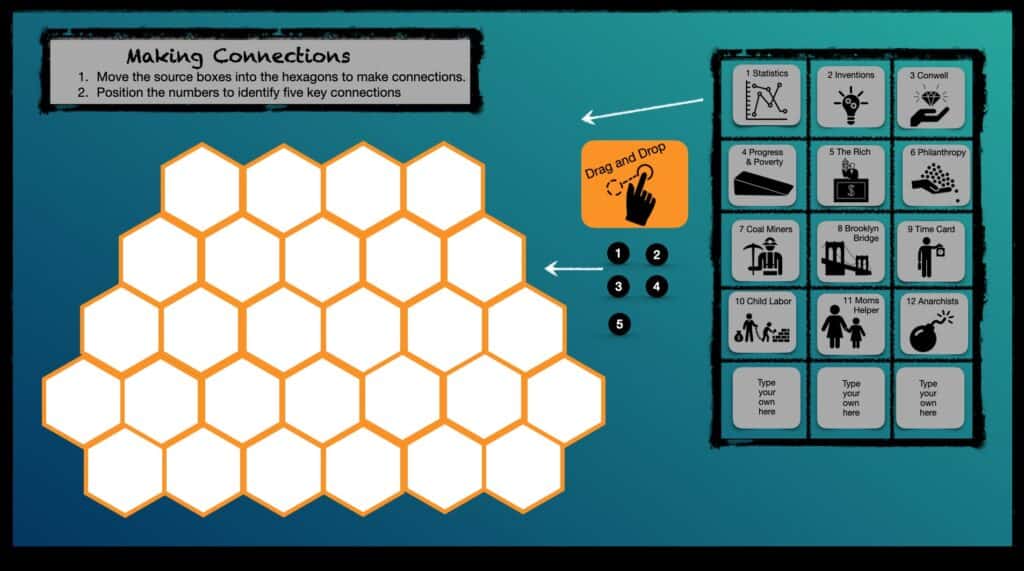
We will be using the 11 sources to create a graphic organizer that responds to the essential question: “How do we evaluate the social costs and benefits of technological innovations?”

Students will be supplied with the “Hexagonal Thinking Corroboration Tool” in Keynote. Corroboration prompts are from SHEG. This thinking tool inspired by this post. Keynote design adapted from here.

Hexagonal Thinking Corroboration Tool – Keynote and PowerPoint versions will be shared with students.

After our review of the 19th century documents, we will consider the same essential question in the context of contemporary America. 


Assignment 6: NO PUBLISHED POST THIS WEEK

There is no published post for this week. Instead, student will prepare a lesson idea pitch to deliver in next week’s class. The pitch should be planned to take 5 – 8 minutes. After the pitch, the class and instructor will give feedback.

NOTE: You don’t need to share the resources you will use or do any “teaching” during your pitch. You are tossing out an idea for us to give you feedback. Students may want to try out a few ideas to see which one “works” the best.

Topics to cover in your pitch

  1. Lesson Background: Subject, audience, context as part of larger lesson (ie. intro, check for understanding, etc)
  2. Instuctional goal: What will students know or be able to do at conclusion?
  3. Resources: What resources are needed?
  4. Process: What will the teacher  do? Students do?
  5. Logistics / timing: Have you thought through the delivery? Any special considerations – reading required, working via Zoom, other apps, etc?

Example of my “Pitch” I would have done to describe today’s class.

  1. Lesson Background: We have been studying historical thinking skills. Today’s lesson will illustrate corroboration.
  2. Instuctional goal: I want to get the students working in teams to corroborate a variety of primary and secondary sources from the Industrial Era of late 19th century. Illustrate the power of an essential question by revisiting the theme in the current world. Show students how they might curate a collection of sources to support a lesson. See if a tech tool can support learning.
  3. Resources: Re-use some content I had previously created – eBook and Sway presentation. Create a virtual way to interact with symbols to illustrate corroboration.
  4. Process: Teacher introduces the task and tools. Manages the time and reporting of each task. Manage breakout groups and task timing. Support discussion of results.
    Students will: 1. Identify details in individual sources. 2. Work in teams using the Keynote tool to make connections between sources. 3. Breakout groups share connections. 4 Use shared Jamboard to create a modern equivalent answering the same essential question.
  5. Logistics / timing: Make sure each group has at least one member with Keynote or PowerPoint apps available. Share templates. Should be achievable in about an hour. Note: I’m not held to shorter lesson timing.

Looking Ahead -Teach a Lesson After Fall Break

Students will develop and deliver a 20-25 min lesson in their assigned class. Student should be prepared to deliver the lesson via Zoom in our Oct 18th class. 

About the lesson   The lesson should teach historical thinking skill(s). Specific content of lesson is up to you. 

  1. This lesson should be delivered as if we were your class.
  2. Your peers will serve as participant observers noting lesson content, nature of the student task, lesson delivery and student workflow.
  3. Feel free to design a flipped lesson in advance and let the class know of your plans and required viewing.
  4. If you have a significant amount of reading required, send it to us in advance.

Class 5: Looking Back – Was Lincoln a Racist?

Featured image: Emancipation statue at Lincoln Park

Looking ahead

You should begin planning a 20 min learning activity to teach to class. On 10/4 you will present a pitch idea to class for feedback.  They will be taught beginning on 10/18 and spread out over few classes. Regardless of when you present, all of you will have your “lesson post” due on 10/18. 

Overview

We will continue our examination of historical thinking skills based on the work by Stanford History Education Group. (SHEG). In this class our focus will be on Contextualization. See Historical Thinking Chart  (pdf in English and Spanish at SHEG).

For content, in this class session will will consider the roots of American racism seen through the lens of US Civil War era.


Class Session

Peter will lead a short demonstration of contextualization. Then we will do an activity with a debate that highlights the role of context in historical thinking.

Class explore “racism in context” using the framework of “Structured Academic Controversy”  (SAC). Not all issues can be easily debated as pro / con positions. SAC provides students with a framework for addressing complex issues in a productive manner that builds their skills in reading, analyzing, listening, and discussion. It shifts the goal from “winning” the argument to active listening to opposing viewpoints and distilling areas of agreement. 

SAC questions

Question A:  Was Abraham Lincoln a racist? 250kb PDF. 
Breakout 1 argues that Lincoln was a racist.
Breakout 2 argues that Lincoln was not a racist.

Question B: Were African Americans free during Reconstruction? 750kb PDF. 
Breakout 3 argues African Americans were free during Reconstruction. 
Breakout 4 argues African Americans were not free during Reconstruction.

Format

Position Presentation
1. Side A presents their position using supporting evidence from the texts.
2. Side B restates to Side A’s satisfaction.
3. Side B presents their position using supporting evidence from the texts.
4. Side A restates to Side B’s satisfaction.
Consensus-Building
5. Abandon roles.
6. Build consensus regarding the question (or at least clarify where your differences lie), using supporting evidence.
7. Consider the question: How should we judge people from the past?


Assignment 5: Historical Thinking with Google Forms | Google Forms 21-A5

ASSIGNED READING: 

In our next class we will be exploring the impact of industrialization in the late 1800s. Please download and review Progress and Poverty in Industrial America available free at iTunes.  Also available online as a Microsoft Sway for non-Mac folks. We will be using the 11 sources to create a graphic organizer that responds to the essential question: “How do we evaluate the social costs and benefits of technological innovations?” 

ASSIGNED ACTIVITY:

Design a learning activity that focuses on historical thinking skills. (Much like we have already done – historical documents, sources, prompts and replies.) But this time we will use a Google Form to make the activity – interactive – either a self graded quiz or a differentiated (choose our own path) form.

The self-graded quiz is an objective test, so you should find some historical source material that lends itself to objective questions. The “differentiated / “choose your own path” form gives the user a chance to navigate to different content sections. It can also include questions for response which differentiate the next content section.

Start a Google Form here


Here’s a sample post from 2020.
Find more examples from 2020 here.
Note: 2020 students did a shorter version of both.
I’m assigning you folks a more detailed version of just one style or the other.

Your Google self graded quiz form  should include:

  1. Title
  2. Historical document(s) as prompt for questions.
  3. Where you got the document(s). Include working URL. (Be sure it’s in public domain)
  4. Tests should have at least 10 questions for user to answer. 
  5. Answer key that gives feedback for correct / incorrect answers.

Your Google differentiated / “choose your own path” form  should include

  1. Title
  2. Historical document(s) as content.
  3. Where you got the document(s). Include working URL. (Be sure it’s in public domain)
  4. At least 2 alternative paths to different sections based on user selection or response to a question.
  5. At least 1 question or open response at the end of each path

Embed the your Google forms in post (more instructions below). 

Be sure your blog post has: 

  1. Featured image and clever title
  2. Target student group. Grade, course.
  3. Quiz context – for example – introduction, pre-assessment, etc
  4. Direct link to Google Forms
  5. Embedded Google Forms using “Custom HTML” block in WordPress

TECH RESOURCES FOR THIS LESSON

Self grading form – students will see how they did on each question. And you can provide feedback / “reteaching” for questions they missed.

How to make Self Graded Quiz Link

How to make Self Graded Quiz where “wrong answer” leads to remediation Link

Differentiated form – There are two sub sets. A differentiated is self graded, except if they get correct or wrong answers they follow different paths. For example if they miss question 1, they go to instructional info and then retake the question. If they get question 1 correct, they go directly to question. A choose your own path gives them a choice on what they want to “study” – “Do you want to study A, B or C?

How to make a “choose your own path” Link
Here’s a good planning tool for “choose your own path” Link

Once you have created your Google form (any type) here’s how to get an embed code. Start by going to the “Share” tab in upper right corner of Google form.


Then paste your Google embed code into a “Custom HTML” block in your WordPress post.

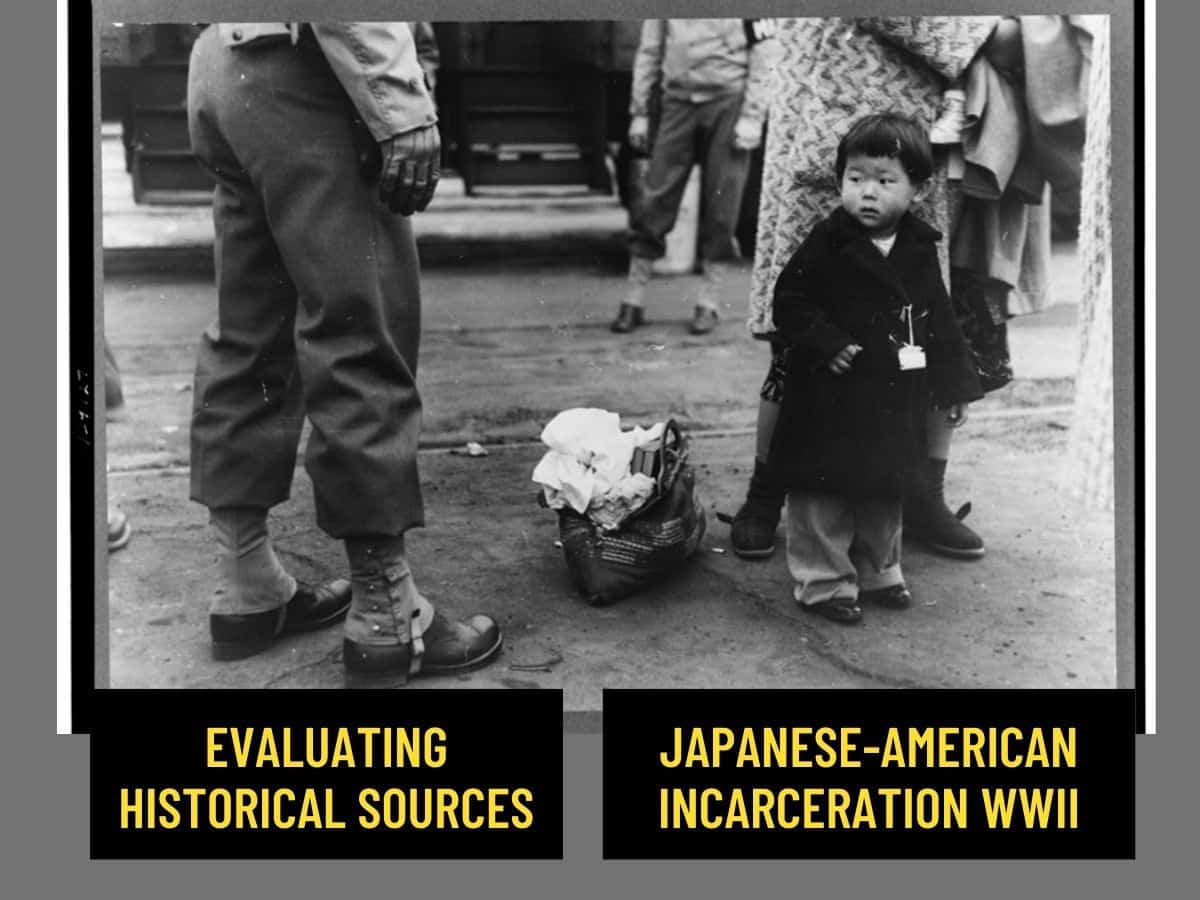
Class 4: Evaluating Historical Sources – Japanese-American Incarceration WWII

Evaluating Historical Sources - Japanese-American Incarceration WWII

Overview

This class will begin a multi-class examination of historical thinking skills based on the work by Stanford History Education Group. (SHEG). We will focus on four key historical thinking skills – Sourcing, Contextualization, Corroboration and Close Reading. See Historical Thinking Chart  (pdf in English and Spanish at SHEG). 

For content, in this class session we will examine the WWII incarceration of Japanese Americans.


Class Session

Class will open with some introductory activities both evaluating the work from last week’s class and the assigned flipped lesson Who is the historian in your classroom? Created at TEDed.

We will have an initial review of the topic using the multitouch iBook,  Portland’s Japantown Revealed (free at iTunes).

Students will then use a modification of this evaluation guide to compare the two videos below. Students will collaborate via VoiveThread

How does the video say it?

  • Who made these videos and what was their purpose in making the videos?
  • What was the essential message of each video? What makes you think that?
  • What audio and visual elements are used to support the message of the video? Cite specifics.
  • How effective are these videos in communicating their message?

How does the video connect to me?

  • How is each video a product of its time? Do the videos rely on fact or opinion? Do they appeal to the viewer’s reason or emotion? Cite specifics
  • How do these videos communicate in ways that would differ from a textbook?
  • What is my reaction to the videos and the treatment of Japanese Americans during World War II? 
  • How might others see these videos in different ways than me?

From the Uprooted Project

Assignment 4: Design a Sourcing Activity | Sourcing 21-A4

Design an activity that gives students a chance to consider the historical thinking skill of sourcing. You could create a single “comparative” activity using both documents. Or create two separate sourcing activities.

Your post should include

  1. Featured image and clever title
  2. At least two documents to be considered – could include images, videos, or short text passages)
  3. Background for documents, as needed.
  4. Archival sources of documents (be sure it’s in public domain) with active hyperlink back to source.
  5. At least 3 questions for user to answer. Could be separate questions for each documents or collective questions for both.
  6. Instructional goal(s) plus “model” answers and / or student insights.

Sample Sourcing Activity (using only one document)

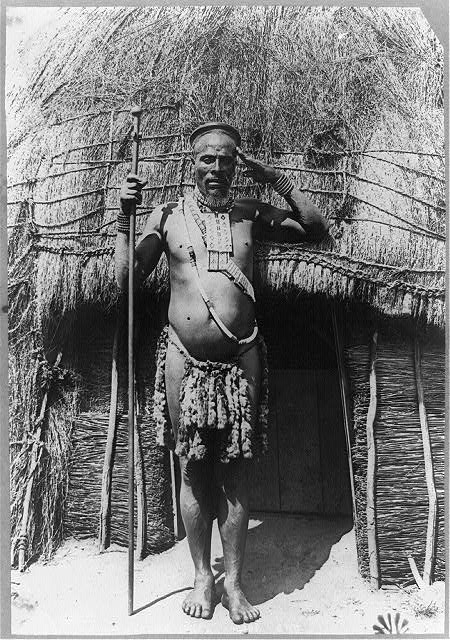
Background information: Students will use this photograph to explore the reliability of the source. In this case, the photograph was taken by a famous American travel writer and photographer, Frank G. Carpenter. It appears to be staged with a “western” salute.

Image Source: LC-USZ62-93982
Questions for students

Question 1: Why do you thing that Frank Carpenter created this photograph and what might have been the intended audience?

Question 2: What is one feature of the photo that might lead you to question its reliability? Explain your reasoning.

Question 3: What is one thing you would want to know about either Frank Carpenter or how he took this photo to better determine its reliability?

Instructional Goals and Model answers:

Students must reason about the content of the photograph and the circumstances of its creation to evaluate its reliability as evidence.

Question 1: I would guess he intended to sell the image to American market. He might hope that the exotic nature of the chief would appeal to American stereotypes. “Look how primitive African culture is – a half naked chief!”

Question 2: I would expect that most students would realize that the “salute” is a western gesture and might not be authentic to Zulu culture.

Question 3: Asks students to think about what information might help corroborate the evidence in the photograph. I would expect they might want to find out if Carpenter had any formal training as an anthropologist or was just out taking travel photos to sell.