1:1 Classroom: Disaster Waiting?

Prompt:  Assume you have your first full time teaching job and the principal tells you that you’ve been selected to pilot the  “1 to 1 Project.”  What are your thoughts about the opportunities and challenges that  presents?

There is no doubt that technology in the classrooms has huge potential. Access to technology creates huge possibilities for learning. If I were to have my own 1:1 classroom, I would want my students to have access to iPads. iPads, when used to their full potential, have huge potential for many different uses. Students will be able to create their own content, whether it is a short presentation on an app like Haiku Deck, or a short video made using the camera app, there are many opportunities for students to showcase their learning. As you can see, I have a very positive outlook on the use of technology, besides its obvious use as an aid in research and writing. The use of technology to create gives students the chance to make their learning interesting for themselves.

In my 1:1 classroom, I would also use technology to allow students to explore the content. We would still use textbooks and the occasional lecture, but by using tech like iPads, students can find ibooks and content on the internet to explore an event or topic deeper. In my classroom, I would want my technology to be an asset, rather than a distraction. That would require the finding of sources of learning that keep students interested in the work that they are doing, rather than as an excuse for them to get on their social media. While there is high possibility for students to get easily distracted, there is even greater potential for students to become that much more engaged in their learning.


Image Credit:  https://upload.wikimedia.org/wikipedia/commons/8/84/Hindenburg_burning.jpg

Description: The Hindenburg Zeppelin as it caught fire and crashed in Lakehurst, New Jersey in 1937.

Class 9: Digital History

The Kaiserpanorama is a form of stereoscopic entertainment medium - 19th century
The Kaiserpanorama is a form of stereoscopic entertainment medium – 19th century

Digital historians:

  • Find, decode and critically source information.
  • Responsibly curate and archive collections with available digital tools.
  • Collaborate and share their findings with the world.

This class leads off with a live demo of professional networking on Twitter.  Social studies teachers make frequent use of of the hashtag #sschat. Adding it to their tweet makes it searchable by others. On Mondays 4-5 PM (Pacific) many social studies teachers log into Twitter at the same time and post using #sschat. Chats are archived here.

 We’ll use the event to explore how to use Twitter to build a personal learning network (PLN). Students that have not already done so , will be asked to create Twitter accounts. More on Twitter hashtags here. Article on Twitter for teachers here.


Next I will give a demo of GapMinder – a web tool that provided easy access to and visualization of historic economic, social and demographic data. GapMinder for Teachers here.


Finally, students will work with NGram Viewer and NYTimes Chronicle – web tools that quantify and visualize word usage. More on using nGram viewer and NYTimes Chronicle 


As part of an in-class demo of the power of  word frequency research, students will share their results via a Twitter hashtag: #WordFreq   We did this activity in our fall ’14 class and used Storify to curate a social media stream and create a Storify archive of our research Need some Storify ideas? 4 Ways to Use Storify in the Classroom

Books Ngram Viewer and NY Times Chronicle have many interesting applications in the classroom. For example, they can both be used to introduce the research method – form a hypothesis, gather and analyze data, revise hypothesis (as needed), draw conclusions, assess research methods. Working in teams students can easily pose research questions, run the data, revise and assess their research strategy. Students can quickly make and test predictions. They can then present and defend their conclusions to other classroom groups. All skills called for by the new Common Core standards. Ideas for classroom use Books Ngram Viewer and NY Times Chronicle.


Assignments for class 11

  1. By 11/1 write a blog post responding to our exploration of digital history in today’s class.
    What’s your reaction to using tools like Twitter, Storify, GapMinder, Books Ngram Viewer or NY Times Chronicle? How can historians leverage new digital tools for research, instruction, or professional growth?  Or you might design a short lesson using one of these tools.
  2. Come to our class on 11/2 with an idea for a flipped lesson. That night we will meet in the Digital Lab to design a flipped lesson using either a QuickTime screencast Samples or TEDed lesson built from a YouTube video Sample. You will have class time on 11/2 to create your flipped lesson, but you should arrive with an idea.

Image credit: The Kaiserpanorama (or Kaiser-Panorama) is a form of stereoscopic entertainment medium used chiefly in the 19th and early 20th centuries, a precursor to film, invented by August Fuhrmann (1844 – 1925). It was patented by the inventor ca. 1890. There would be a number of viewing stations through which people would peer through a pair of lenses showing a number of rotating stereoscopic glass slides. By 1910 he is said to have controlled exhibitions in over 250 branches across Europe, and in the central archive have up to 100,000 slides stored.

Effective 1:1 Teaching or Lost on Deserted Island?

CCC boy, asleep, Bar Harbor, Mt. Desert Island, Maine

Prompt:  Assume you have your first full time teaching job and the principal tells you that you’ve been selected to pilot the  “1 to 1 Project.”  What are your thoughts about the opportunities and challenges that  presents?

I honestly felt a bit confused and scared by the “1:1” teaching with the iPads. I do a fairly decent job with technology and am not really worried about that issue. The greater challenge was seeing the class progress from an excited group of highly educated adults to adolescent teenagers taking obscure pictures of each other and searching for unrelated data within 15 minutes.

I think properly implementing the technology of “1:1” in the class room would take a real commitment on the part of the teacher. Strict guidelines and clear expectations would have to be in place as well as a focused and usable format in order to get the most out of the opportunity. It’s not just enough “use it because we have it” as far as tech. A poorly designed and poorly delivered PowerPoint/iPad presentation can bore a student’s to tears just as quickly as a standard lecture.

Image Credit:

http://www.loc.gov/resource/cph.3c27616/

Title

[CCC boy, asleep, Bar Harbor, Mt. Desert Island, Maine]

Call Number

LOT 12736, no. 1320 [P&P]

Source Collection

Van Vechten, Carl, 1880-1964. American scenes

Library of Congress Catalog Number

2004663787

1 to 1 and Done?

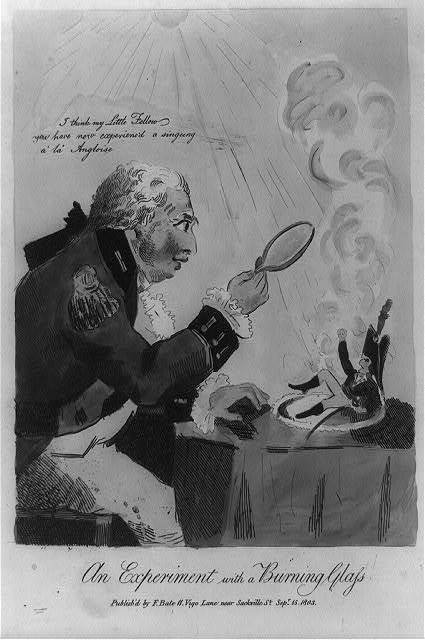
Experiment

Prompt:  Assume you have your first full time teaching job and the principal tells you that you’ve been selected to pilot the  “1 to 1 Project.”  What are your thoughts about the opportunities and challenges that presents?

Technology has always been a double edged sword to me – it wields the power to serve as a tool for immense learning or act as a weapon of mass distraction. So when presented with the hypothetical task of piloting my school’s “1 to 1 Project”, I proceed with a bit of trepidation. However, I believe that with adequate preparation and a solid intention/plan for how the technology would be used, I could alleviate some of my worries.

The intention I could see myself setting for the technology is to see them used as tools for creation/production. By handing out iPads/Chrome books/etc. it’d be hard to manage what students are using them for at all times but by requiring students to produce something with the equipment, it’s easy to hold kids accountable. Also, as a teacher, I’d want to ensure that my students have reliable access to quality information – to do this, I’d need to be responsible for getting that information to my students (or giving them specific locations to retrieve it themselves). I see this point as an issue of equity/access and would take advantage of this step to down play a student’s prior access (or lack thereof) to technology/research. 

Ultimately, anything worth trying usually doesn’t come without risk and the 1 to 1 Project is no exception. If implemented haphazardly it’ll backfire but with strong intentionality, it should provide immense opportunity for learning and growth – after all, technology is embedded in pretty much every aspect of our lives so why should the classroom be any different?

Image Credit

Site: http://www.loc.gov/item/89712629/

Call NumberPC 3 – 1803 – An Experiment with a burning (A size) [P&P]

Library of Congress Catalog Number: 89712629

Reproduction Numbe: rLC-USZ62-97643 (b&w film copy neg.)