Digital History: Using Tech (Effectively) in the Classroom

digital history

Prompt: Write a blog post in response to our class on digital history. 

In this week’s class, we played with various methods to incorporate technology directly in our classrooms. We used tools such as Twitter, GapMinder, nGramViewer, and NYTimes Chronicle to explore different ways to present information to students and engage them in research and information-seeking. While we were working with these tools, it wasn’t difficult to think of ways that I could incorporate these tools into lesson plans, such as having students search different names for classifying people in the NYTimes Chronicle tool to analyze changes (see my example here). However, whenever I think of incorporating technology into my lessons, I always try to ask myself whether or not the addition of technology is effective, or if the lesson could help students learn just as well without the use of technology.

I think, when it comes to technology, teachers like the idea of incorporating it into their lessons, but often get stuck with the same sorts of technology, always using the same resources and never really analyzing whether or not the technology is helping students. For this reason, I was skeptical of our use of Twitter in this class. I’ve seen various teachers use Twitter as a tool to encourage students to summarize their ideas “in 140 characters or less.” This is great when it comes to some lessons/content, but doing it after every lesson can get monotonous. I don’t think this is Twitter’s most effective use in the classroom.

One thing that I highly valued in our class-time engagement with twitter was the session in which we participated in a live chat. We had the opportunity to share our ideas and learn from other teachers across the country. It was a great lesson in collaboration, not to mention self-validation (when teachers across the country favorited or re-tweeted my comments, it made me feel that I had some good ideas, even though I may not have had much classroom experience).

I think there might be a way to use Twitter (real Twitter, and not just the Twitter format) in our classrooms as well. Giving students the opportunity to share their work and seek help or comments from people they might never meet could be a great way to engage and motivate students. In many ways, allowing them to share their best work with someone other than a teacher or family member gives them perspective they might not get otherwise, and shows them that they can be proud with a certain product. I don’t think this necessarily requires Twitter or other social media. But I do think their is value in using those types of digital information gathering and sharing to inform how we create our lessons.


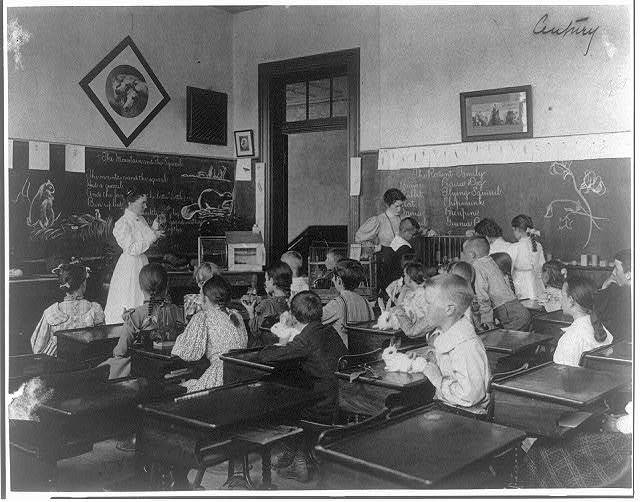
Image Credit: Library of Congress

  • Title: Washington, D.C. Public Schools – classroom scenes and school activities
  • Creator(s): Johnston, Frances Benjamin, 1864-1952, photographer
  • Date Created/Published:  ca 1899

Flipped Class with Screencast

Citation Needed
Citation Needed

Prompt: Students were asked to design a flipped lesson and then write a blog post that showcases their flipped lesson and reaction to designing it. 

Last class we explored the flipped lesson and the means in which it could be used to move a lecture from the class into homework and the tasks that would be commonly relegated to homework into class time. I explored the options and opportunities that screecasting gave me in moving instruction from the classroom to homework. I found this to be most useful for reinforcing pieces of an assignment or paper that are important throughout the class. I can see me creating a screecast for different methods of citations that would be a reference material for students if they are not confident in their abilities in citing. Since providing correct citations are becoming an increasingly important part of writing a paper I think that providing students a means to check their work with a step by step guide would be used to help students using a citation style. The problems of access or if students don’t watch the videos are reduced if the videos aren’t needed for instruction. I think that the determination to use a flipped classroom more often will depend on whether or not I think that my students have access to a computer at home or that they are responsible enough to do the flipped lesson at home. It is at times like these that knowing my students is a determinant factor in how the class works.


Image Credit: [Citation Needed] Retrieved from: http://ringling.libguides.com/content.php?pid=179647&sid=4649364


Class 11: Role Play

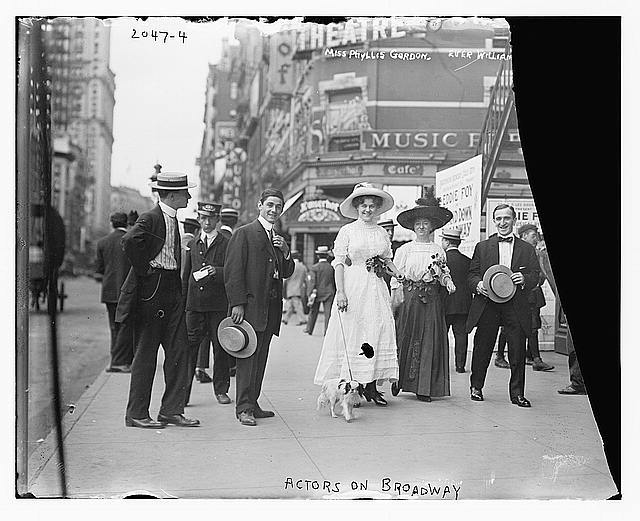
actors on broadway
The goal of this class is to experience the role-play as teaching method. Students will be introduced to (and receive) a hands-on curriculum (from Choices Program) that uses primary sources, case studies, videos, and role-play simulations to engage students in an exploration of the concept of human rights and the challenges of international enforcement. The curriculum also introduces students to various human rights actors, and examines the current debate on U.S. human rights policy. Emphasis is placed on helping students develop the skills and habits needed for active citizenship.

Choices ProgramChoices Program ~ The program’s curriculum units draw upon multiple primary source documents and culminate in a rigorous student-centered role-playing activity. Students will take part in a Choices lesson entitled Human Rights: Competing Visions of Human Rights – Questions for U.S. Policy.

Working cooperatively, students will examine the evolving role that human rights has played in international politics and explore the current debate on U.S. human rights policy.

The lesson was delivered by guest  – Tim Graham. Tim is currently a teacher at Cleveland High School in Portland, OR. He has taught social studies for 12 years in the Portland Public Schools district, working at Roosevelt, Benson, and Franklin high schools in addition to his current placement at Cleveland.

Tim is an excellent role model  – innovative, lifelong learner, veteran educator. We’ll have a chance to pick his brain on the challenges and opportunities for teachers in PPS.

He has attended teaching seminars with the Gilder Lehrman Institute of American History, National Endowment for the Humanities, and Watson Institute for International Studies at Brown University. He is currently a Choices Teaching Fellow. Tim maintains two class blogs – IB 20th Century  and IB HOTA.

Role Playing
Participants in role playing assignments adopt and act out the role of characters in particular situations. They may take on the personalities, motivation, backgrounds, mannerisms, and behaviors of people different from themselves.

Closely related: simulations (which may have a game element) and reenactments (which may employ costumes or other theatrical elements).

When creating role play activities, we are often focused on making the experience memorable. This can lead to lessons that are fun – “we dressed in togas” – but from which students gain little academically.

The most impactful role-playing activities (like Choices, above or Zinn, below) feature debate, decision-making or problem solving from the perspectives of historical figures. 

Good role play activities found here:
From Zinn Education Project Link
From Thinking History (primarily in European history) Link

A document-based lesson can be enhanced by role-playing the documents’ creators or audience. For example, these SHEG lessons could easily be modified to add a role play.


Assignment: Continue research / design for DBL (iBooks Author lab work on 11/23)

Workflow? See this guide Getting Ready for iBooks Author 57KB pdf


Image credit:  Library of Congress: Actors on Broadway Miss Phyllis Gordon

  • Creator(s): Bain News Service, publisher
  • Date Created/Published: [no date recorded on caption card]
  • Reproduction Number: LC-DIG-ggbain-08296 (digital file from original neg.)
  • Rights Advisory: No known restrictions on publication.
  • Call Number: LC-B2- 2047-4 [P&P]

Possibilities of Flipped Learning

The basic structure of TEDed Flipped Lessons.

Prompt: Students were asked to design a flipped lesson and then write a blog post that showcases their flipped lesson and reaction to designing it. 

I found creating a TEDed flipped lesson to be both challenging and interesting. As a future teacher, websites like TEDed present the possibility for students to take their learning into their own hands, especially when showing that they can be responsible for what they learn content-wise.  Flipped lessons, while versatile, don’t easily lend themselves to those students who do not have internet access. I do find it to be an interesting site in terms of supplementing content and classroom time. I feel like it would be great for reviewing information.

In my lesson, I used a Crash Course US History video on the American Revolution as my flipped lesson. This particular lesson was challenging, because the video is 11 minutes long, and making sure that the “Think” section had different multi-choice questions on each part of the video was difficult. I feel like TEDed works perfectly if you have the precise video and have gone over the information in class before.

While I find that these flipped lessons give me the chance to think deeply about what I believe to be important information for my students to know, it is also difficult to create. The difficulty comes in part from having to watch these videos and having to scrounge for the exact points I want the focus to be on. While it might not sound difficult, it actually is, as  I noticed when working on my previous mentioned flipped lesson. The particular video I used contained a lot of fast talking and a lot of information.

If I were to use TEDed in my classroom, I would want it to be used in a situation where it would serve as review or prove to be supplemental. I believe that TEDed could be well used more in the supplemental area, because it would allow those students who might not have understood in class the chance to hear information from a different source and manner. In that manner, students also become enabled to work at their own pace, which is especially good for those students who like working at a slow pace.

While it might not be my first choice in creating new kinds of interactions in the classroom, I definitely look forward to the possibilities created by the use of TEDed flipped lessons.