DBQ Reflection

When I started my DBQ project I wanted to show how propaganda was used throughout history and see how propaganda evolved throughout the years.  However, I decided to focus my attention at WWII and the Cold War Era.  I was able to find some great documents showing the propaganda used during that time.  I wanted to somehow link the idea of propaganda to today’s society and challenge the students to think about how propaganda may be used today.  However, I didn’t come up with a great way to do that without making the project much larger in scope. See my DBQ –“The Power of Propaganda”

I think I should have focused my attention to either WWII or the Cold War exclusively.  I think I would have been able to dive in deeper with one of them, rather than trying to span over a long time and different conflicts.  However, this DBQ could be used to try to connect the two events and show how propaganda played a part in both of these.

This DBQ is part of our class-produced, multi-touch iBook. Available free at iTunes

Propaganda_

DBQ Creation and Reflection

Image

A few weeks ago Kristi Convissor and I started creating a DBQ project. We first started with a general outline the DBQ would take. We asked ourselves “What do we want students to learn from the DBQ overall?” To answer that we came up with a generative question to help guide our designing processing and to help the students when they are using the DBQ. The generative question was: “How does a nation develop such an intense fear and enemy, creating mass hysteria?”

From there we narrowed it down to look specifically at the Red Scare in 1950s America. We wanted students to learn about Americans fear of communism during the time. We wanted students to not only be aware of the hysteria but to understand where that fear developed from. One of the goals of the DBQ was to get students to think about what kind of words, actions, depictions lead to fear and what kind of outlets are needed to create mass hysteria. If students understand that then they can see how the Red Scare came to encapsulate so much of the 1950s.The design of DBQs lends well to this kind of investigation.

When creating the DBQ, we chose documents that helped answer the generative question. We had found some cool documents, but they side tracked too far from our question, so we cut them. Having the generative question kept us focused on the main point of the DBQ. In addition we also created follow-up question to each document, which helped us pick quality documents. If the document could only address one question then it probably was not the best source we could use. We made sure to use sources that could be asked several questions because they held a decent amount of information in them for students to discover.

The final project which can be found on Learnist and soon on an iBook, met our goals. Our DBQ allows students to see for themselves how America came to have such an intense fear of communism through films, articles, and posters. Our DBQ took a media lens to the issue, examining the creation of an enemy based on characterizations rather than on facts or true events.

Image Credit: Digital History retrieved from Library of Congress
Media type: poster
Museum Number: LC-USZ62-80757

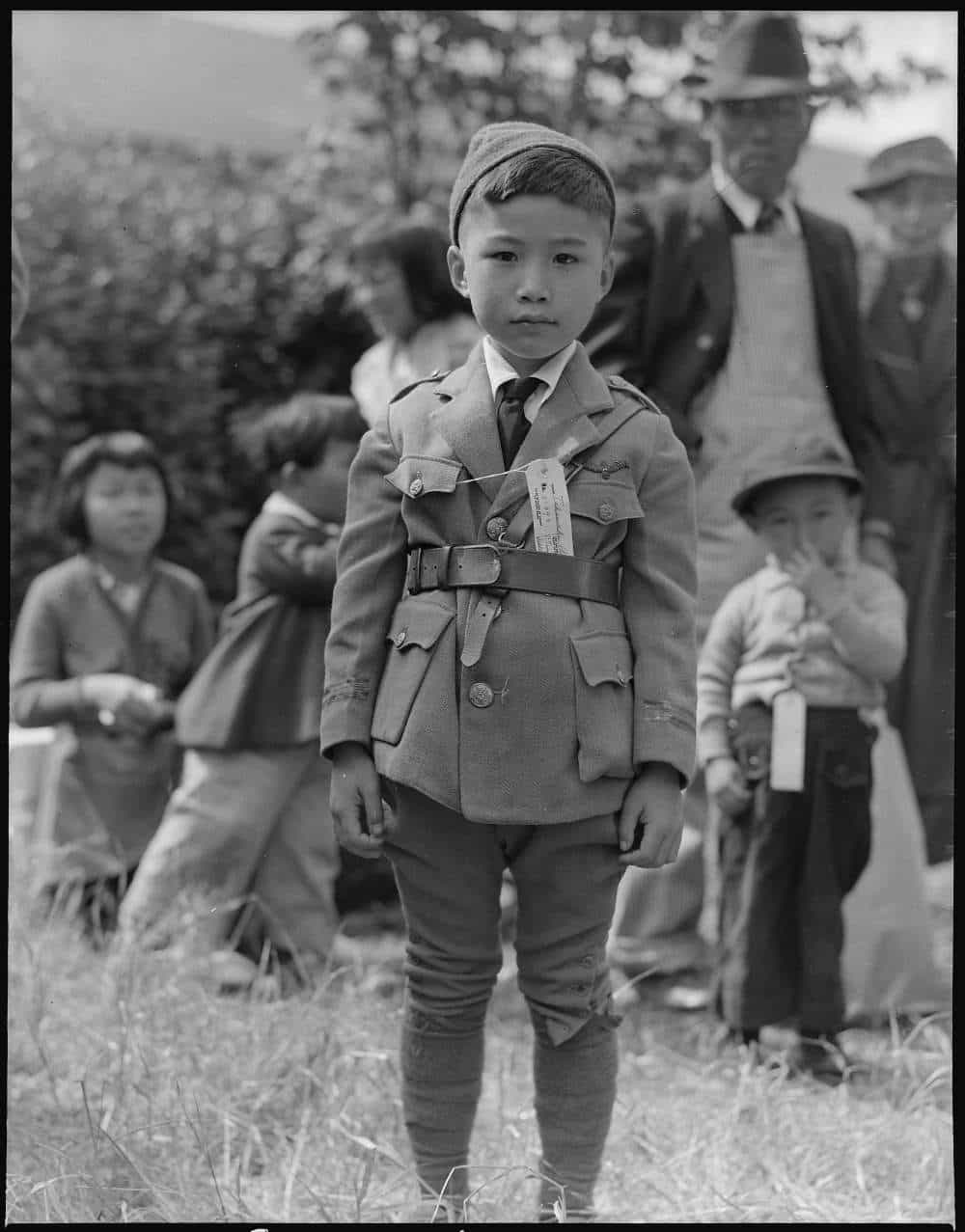
Bringing Primary Sources to the Classroom: Nikkei Center Suitcase Lesson

           ImageFor the EdMethods class a few peers and I have created a set of lessons for the Nikkei Legacy Center (a museum located in Portland, OR) to pair with the museum’s suitcases. Educators can check out the suitcases, which contain numerous primary sources about Japanese Americans in Portland and their time spent in incarceration camps. The lessons we created range from elementary, middle to high school level.

Creating lessons is always a bit of a challenge but it is even more of a challenge when making them for someone else. The suitcase project has been a great way to practice my lesson making skills by making sure the lessons are thorough in explanations, complete in resources but still flexible so teachers can adapt them to their classrooms.

My lesson is for a middle school social studies classroom. The lesson (that can be broken up into two days) focuses on the incarceration of Japanese Americans from a cultural perspective. The lesson will show students the daily life of internees. The lesson uses readings, videos, and primary source documents with individual and group activities. The lesson would be best used in a class that has already covered World War II.

Here is the procedure of the lesson. For a PDF of the whole lesson click here Suitcase Lesson. (138KB pdf)

Overview: Today’s lesson will focus on the incarceration of Japanese Americans from a cultural perspective. This lesson would fit in after learning about WWII.

Goals: To understand the experience of Japanese Americans being incarcerated during the WWII.

Objective(s): Students will be able to identify the key aspects of life for Japanese Americans in incarceration camps during WWII.

Standards:

CCSS.ELA-Literacy.RH.6-8.1 Cite specific textual evidence to support analysis of primary and secondary sources.

CCSS.ELA-Literacy.RH.6-8.2 Determine the central ideas or information of a primary or secondary source; provide an accurate summary of the source distinct from prior knowledge or opinions.

CCSS.ELA-Literacy.RH.6-8.9 Analyze the relationship between a primary and secondary source on the same topic.

CCSS.ELA-Literacy.RH.6-8.7 Integrate visual information (e.g., in charts, graphs, photographs, videos, or maps) with other information in print and digital texts.

Resources: suitcase, pencil/pen, paper, projector, internet access, printed documents included in lesson plan

Procedure:

  • Ask students if they know the following terms: interned, incarceration, Japanese-American, Nisei and Issei. If not, go over as a class making the definition together using previous knowledge.
  • Read them Scenario A. Have them write a short paragraph on how they would feel, what would they do. Then share with a partner. Have a few students share with the class aloud. [Attached to lesson plan. Called “SCENARIO A”]
  • Have students read brief background on why the Japanese Americans were incarcerated. Either read aloud, popcorn style or at teacher discretion. [Attached to lesson plan. Called “HISTORICAL CONTEXT”]. Answer follow up questions.
  • Have students watch a short interview with George Takei about leaving behind his life to go to an incarceration camp. Answer follow up questions [Attached to lesson plan. Called “Video Questions.”]
  • Have students read about life in the incarceration camps. Split up students into different groups based on the sections. Then have them create a poster depicting their section. Share with class. Have class answer as a whole the follow up questions. [Attached to lesson plan. Called Behind the Fence: Life in the Incareration Camp]
  • Show pictures of incarceration camps. Have students draw connections between what they read and what they see in the pictures. Have class discussion. [Pictures in suitcase. Choose from the following images: G3, G2, I6, I5, D2, I3, I4, H2, F2, G1]
  • For the remainder of class and homework, have students write a letter home to a friend pretending to be an incarcerated Japanese American. Have them use material that they learned about from the day. Have them express their feelings of being interned, and have them tell their friend if they still feel like an American after this experience.

Formative Assessment: Students will answer follow up questions to readings, and the class will go over them as a whole.

Summative Assessment: Students will write a letter pretending to be an incarcerated Japanese American.

Photo Credit: A Japanese Child in an incarceration Camp from http://all-that-is-interesting.com/japanese-internment-camp

Learning To Interpret Primary Sources

In my DBQ assignment, students will begin to interpret the language in a set of primary sources. Each source will be directly related to the topic covered in the classroom. The students will be given a journal, which contains each primary source in the original language on the left pages. On the right will be my interpretation of the document, rewritten into student friendly language. Each lesson will examine a new primary source in the journal. Starting at the beginning, students will read both the original source as well as my interpretation. This will be followed by a class discussion of the document, both in the content of the document as well as any language nuances or syntax. As the lessons progress, and the students advance through the journal, my interpretations on the right pages will begin to disappear, leaving large blanks for the students to fill in for themselves. Then the class will discuss the content and meaning of the primary source, focusing on the blanks in the interpretation.  Eventually, the students will be writing their own full interpretations of the documents. Each lesson will include a class discussion to make sure that everyone is on the same page (or close to it) on the meaning of the documents.