Class 8 / 9: Lesson Study 2

Lesson Study II

Lesson study is a form of classroom inquiry in which several teachers collaboratively plan, teach, observe, revise and share the results of a single class lesson.  (Learn more about the “formal” process here)

We are modifying that formal process into a simple one. Each student in the class will “teach” a 25-30 minute lesson. The rest of the class will act as participate / observers – serving as “students” during the lesson and afterwards, giving feedback to the “teacher.”

Assignment 5 – lesson Study II / blog post

Class 8 (10/22). Nicole  |  Nick K  |  Gabe
Class 9 (10/29). Jana  |  Nick C  |  Jordan

“Teachers” have prepared a lesson and written an anticipatory blog post following guidelines outlined here.

Participate / observers will use the following prompts to guide their feedback  immediately following the lesson.

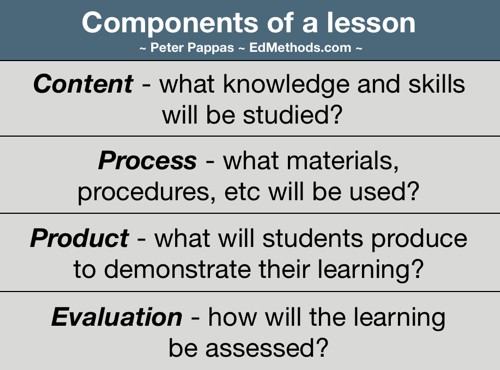
  1. Content: as a student, what were you learning – facts, skills, insights?
  2. Process: what did you see the teacher do to set up and deliver the lesson?
  3. Product: what were you, as a student, tasked to “do / produce” to demonstrate your learning?
  4. Assessment: as an observer, how did the lesson go? Insights on content, delivery, workflow. Suggestions?
Assignment 6 | Completed reflections here

“Teachers” will write a blog post that reflects on how your intent was realized in your delivery. Possible prompts: Did you accomplish your goals? What worked well? What didn’t?  How about your timing, delivery and workflow? What did you learn from the experience?

Assignment 7

Students will begin planning their historical thinking lesson plan for inclusion in our final showcase publication. At our Nov 5 class, you should be ready to  give an 3 min “elevator pitch” on your lesson idea.

This lesson should be designed for direct use by students and include:

  1. Introduction of the lesson with brief historic context as needed.
  2. Essential / generative  question
  3. About 5 – 8 related documents (image, text, video, audio) that will assist the students in answering the generative question
  4. Clear statement of what students will be asked to do
  5. Close reading scaffolding question for each document to assist the student in examining the documents

For inspiration for turning historical documents into a lesson see:
How did Americans change their lives to support the war effort?  (894KB pdf) and Re-Defining the Role of Women in Industrial America (492KB pdf)

Class 7: Close Reading Historical Documents

Close Reading Historical Documents

Prep for this class – in advance students should complete these two lessons.

Teachers can use historical documents to build literacy skills in a content area while empowering students to be the historian in the classroom. But document-based  instruction in this context requires four key elements to be successful:

  1. The right documents. (shouldn’t be reliant on background knowledge)
  2. Knowing how to “read” the historical document.
  3. Letting students discover their own patterns, then asking students to describe, compare and defend what they found.
  4. Basing the task on enduring questions, the kind that students might actually want to answer.

Class 7 offers strategies for assisting students to more closely read a document (in all their multimedia formats) by answering three Common Core questions.

Broad version

  1. What does it say?
  2. How does it say it?
  3. What’s it mean to me?

More specifically, what do we mean by close reading? Teachers can guide students with scaffolding questions that explore “texts” (in all their forms).

  • Key Ideas and Details:
 What does the text say? Identify the key ideas. What claims does the author make? What evidence does the author use to support those claims?
  • Craft and Structure:
 Who created the document? What’s their point of view / purpose? How did the text say it? How does it reflect its historic time period?
  • Integration of Knowledge and ideas: 
Distinguish among fact, opinion, and reasoned judgment in a text. Recognize disparities between multiple accounts. Compare text to other media / genres. How does it connect to what we’re learning? 
And what’s it mean to me?
Assignment 5

Students will prepare to teach their second lesson to peers during the two classes noted below. As they did last time they will do a blog post to introduce the lesson and following the lesson. Students are strongly encouraged to try integrating some tech into the lesson. Here’s ideas for using Google tools.

The introductory blog post can highlight:

  • target audience
  • content (what will be studied)
  • process (what will you do – what will students do)
  • resources for lessons

Class 8 (10/22)  Nicole  |  Nick K  |  Gabe
Class 9 (10/29)  Jana  |  Nick C  |  Jordan

I’m also recommending that students join the Teaching With Primary Sources Network. A great place to discover and share classroom ideas. It’s free and member only – so no spammy social media stuff. Sign up info here.

Class 5 / 6: Lesson Study 1

Lesson Study 1

Lesson study is a form of classroom inquiry in which several teachers collaboratively plan, teach, observe, revise and share the results of a single class lesson.  (Learn more about the “formal” process here)

We are modifying that formal process into a simple one. Each student in the class will “teach” a 25-30 minute lesson. The rest of the class will act as participate / observers – serving as “students” during the lesson and afterwards, giving feedback to the “teacher.”

Assignment 3 – teaching a lesson / blog post

Class 5 (9/24). Nicole  |  Nick K  |  Gabe
Class 6 (10/1). Jana  |  Nick C  |  Jordan

“Teachers” have prepared a lesson and written an anticipatory blog post following guidelines outlined here.

Participate / observers will use the following prompts to guide their feedback  immediately following the lesson.

  1. Content: as a student, what were you learning – facts, skills, insights?
  2. Process: what did you see the teacher do to set up and deliver the lesson?
  3. Product: what were you, as a student, tasked to “do / produce” to demonstrate your learning?
  4. Assessment: as an observer, how did the lesson go? Insights on content, delivery, workflow. Suggestions?
Assignment 4 | Completed reflections here

“Teachers” will write a blog post that reflects on how your intent was realized in your delivery. Possible prompts: Did you accomplish your goals? What worked well? What didn’t?  How about your timing, delivery and workflow? What did you learn from the experience?

Class 4: Crafting a Lesson

Crafting a Lesson

This class will begin with a review of the learning activities designed by students in our last assignment. Next we will discuss critical components of a good learning activity.

Assignment 3

Students will develop and deliver a 30 min lesson in their assigned class

  • 9/24 – Nicole, Nick K, Gabe
  • 10/1 – Jana, Nick C, Jordan

Students should also do a blog post that previews the lesson – noting:

  • target audience
  • content (what will be studied)
  • process (what will you do – what will students do)
  • resources for lessons
About the lesson
The lesson should a historical thinking skills lesson. Specific content of lesson is up to you. If you can get the timing right, we can offer you feedback before you use it with your students.
  1. This lesson should be delivered as if we were your class.
  2. Your peers will serve as participant observers noting lesson content, nature of the student task, lesson delivery and student workflow.
  3. Feel free to design a flipped lesson in advance and let the class know of your plans and required viewing.
  4. If you have a significant amount of reading required, send it to us in advance.
  5. After your delivery of the lesson go back and edit your post with synopsis of what you learned from our class feedback.